
Idea 1
How to Make a Difference People Love
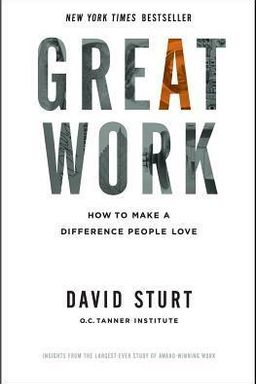
Have you ever wondered why some people seem to make work that inspires others—while most of us simply complete tasks? In Great Work: How to Make a Difference People Love, David Sturt tackles this question head-on. He argues that making a lasting impact isn’t reserved for geniuses or CEOs—it’s available to anyone willing to approach their work differently. Sturt contends that great work begins not when we chase perfection or clock hours, but when we ask what others would deeply love—then learn how to deliver it.
The book was born out of a massive study conducted by the O.C. Tanner Institute, analyzing over 1.7 million examples of award-winning work across industries. Sturt and his team discovered that great work isn’t a gift bestowed on a lucky few; it follows patterns and skills that anyone can learn. These insights crystalize into five practices people use to create admired, meaningful contributions: Reframe Your Role, Work with What You’ve Got, Ask the Right Question, See for Yourself, Talk to Your Outer Circle, Improve the Mix, and Deliver the Difference.
The Core Idea: The Art of Difference-Making
Sturt defines great work as “making a difference people love.” This deceptively simple phrase hides a profound truth: greatness is measured by impact, not position or intelligence. Whether you clean hospital rooms, lead a tech team, or run a school, you can create outcomes that engage hearts and minds. Great work happens when people move beyond following job descriptions and start thinking like difference makers—connecting their work to how it helps others thrive.
The book opens with a real-world transformation: Skip Hults, superintendent of Newcomb Central School in rural New York, managed to revive a dying school by introducing international students into a tiny community. His idea brought diversity, growth, and pride to a declining town. Hults didn’t invent something “new”; he reimagined his existing situation to create a difference others loved. This story captures Sturt’s central argument—the difference between good and great is not resources or genius, but perspective and intentionality.
Why Good Is the Foundation of Great
A common misconception, Sturt notes, is that “good” is the enemy of “great.” In reality, good work provides the raw material for greatness. Great work stands on the shoulders of what’s already good, refining and reimagining it for new impact. He illustrates this through Dr. Seuss’s creation of The Cat in the Hat, built under strict constraints (only 225 words a child could read). What might have felt limiting instead fueled invention. Like architect Frank Gehry’s view of creative limitations, constraints are not barriers—they’re ladders to innovation.
The Skills That Create Great Work
Across thousands of studies, Sturt isolates common behaviors among difference makers:
- Reframe Your Role: See yourself not as a task-doer but as someone who makes meaningful change. (Like hospital janitor Moses, who saw himself as part of the healing team, not just maintenance.)
- Work with What You’ve Got: Use the materials at hand—constraints breed creativity.
- Ask the Right Question: Pause and wonder, “What would people love?” instead of rushing into routine.
- See for Yourself: Engage firsthand; observation triggers passion and insight.
- Talk to Your Outer Circle: Collaborate beyond familiar voices—novel insights come from outsiders.
- Improve the Mix: Add, remove, and refine ideas until they fit together seamlessly.
- Deliver the Difference: Stay engaged until your work genuinely delights its recipients.
Why These Ideas Matter
Sturt’s findings challenge the myth that only visionary leaders create breakthroughs. Everyone—from janitors to engineers—has unique perspectives that reveal unseen possibilities. The act of looking, asking, and iterating ignites passion: according to Sturt’s data, people who look for improvements are 17 times more likely to feel passionate about their work. That passion, in turn, inspires enthusiasm across teams and raises results by 35 percent (as confirmed in Forbes’ follow-up studies).
Ultimately, Great Work is both research-based and deeply human. It’s a roadmap for anyone ready to move beyond routine and contribute something others genuinely appreciate. Throughout the coming sections, you’ll see examples—from Netflix’s ingenious envelope design to Dyson’s bagless vacuum, from IDEO’s stroller redesign to Malaysia’s zero-landfill factory—that reveal a single truth: anyone can make a difference people love if they choose to look, question, and persist.