
Idea 1
It’s Not the How or the What but the Who
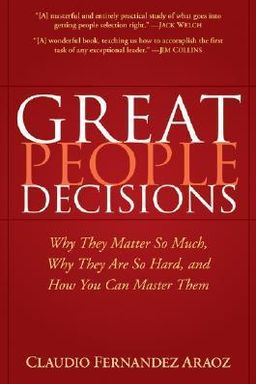
How can you transform your career, your organization, and even society itself—not by what you do, but by who you surround yourself with? In It’s Not the How or the What but the Who, leadership expert Claudio Fernández-Aráoz argues that success isn’t primarily about strategy or tactics—it’s about people. The best leaders, companies, and even nations rise by mastering one core skill: making brilliant “who decisions.”
Drawing on nearly three decades as a global executive search consultant, Fernández-Aráoz distills lessons from the world’s most effective leaders—including Jeff Bezos of Amazon, Roger Agnelli of Vale, Steve Jobs of Apple, and Yun Jong-Yong of Samsung. Despite vast differences in culture, industry, and background, these leaders share one common practice: they obsessively and deliberately choose, develop, and align themselves with exceptional people. The book explores how honing this ability can radically alter the trajectory of your work, life, and broader society.
Why the “Who” Matters More Than the “How”
Aráoz begins the book with two astonishing corporate stories: Jeff Bezos growing Amazon from a garage to a trillion-dollar enterprise, and Roger Agnelli turning a former state-run Brazilian mining firm into one of the most valuable companies on earth. What links them isn’t technology, geography, or timing—it’s how each man built great teams. Bezos famously said that a company’s questions evolve from “how?” to “what?” to “who?” As Amazon scaled, his role became finding and empowering the right people, not managing processes. Agnelli, too, credited Vale’s transformation to a disciplined meritocracy: “A great team,” he told Fernández-Aráoz, “is the key to success.”
This principle—putting “who” first—defines not just business success but excellence in every human endeavor. Fernández-Aráoz argues that when you choose the right people, they bring or create the right strategies. When you get the wrong ones, no brilliant plan can save you. It’s a philosophical shift echoed across thought leaders from Jim Collins (Good to Great) to Patrick Lencioni (The Five Dysfunctions of a Team): great people are the ultimate strategy.
A Journey Through the Six Parts of the Book
The book unfolds across six parts, each revealing a new dimension of the “who” challenge. Part One, “The Enemy Within,” shows how our own evolutionary biases and emotional impulses—such as overconfidence, inertia, favoritism, and decision fatigue—often sabotage our ability to choose and develop the right people. We are, Fernández-Aráoz says, “prehistoric hardware running on Victorian software.” Modern leaders must consciously reprogram these instincts.
Part Two, “Outside Obstacles and Opportunities,” examines the external forces that complicate talent selection—from shrinking global talent pools and lying candidates to flawed hiring democracies and perverse incentives. The section offers practical solutions for building fair, evidence-based and high-quality people decisions in even the most complex organizations.
Part Three, “The Right People,” moves from diagnosis to remedy. It offers robust frameworks for identifying high potential, emotional intelligence, and leadership competencies that drive long-term performance. Here Fernández-Aráoz draws on both psychological science and his firm’s massive database of executive assessments. He describes the “Magic Number” of candidates to consider, the importance of structured checklists over gut-feel interviews, and the eight core leadership competencies that consistently predict success.
From Individual to Collective Greatness
But finding great people isn’t enough—you must make them shine together. In Part Four, “The Bright Future,” and Part Five, “Teams That Thrive,” Fernández-Aráoz explains how to integrate, motivate, and align your stars into cohesive teams. He offers insights from neuroscience, emotional intelligence, and behavioral economics on how to sustain energy, fairness, and purpose across diverse groups. He insists that thriving teams depend on both rigor (merit, structure, and discipline) and love (trust, compassion, and shared purpose).
Finally, Part Six, “A Better Society,” scales this philosophy outward—from companies to institutions, nations, and religions. Fernández-Aráoz makes a daring case: if societies could make better people decisions—selecting qualified, ethical, and purpose-driven leaders instead of merely familiar or popular ones—the world itself would change. He points to Singapore’s talent-first governance model and Pope Francis’s ascension as examples of how intentional selection can renew even vast, complex systems.
Why This Matters for You
Whether you’re hiring your next employee, choosing a business partner, evaluating a mentor, or even deciding whom to marry, Fernández-Aráoz argues that better “who” decisions shape every aspect of our success and fulfillment. The book serves as a masterclass in overcoming biases, designing disciplined processes, and developing people after they’re chosen. By combining behavioral science, leadership wisdom, and compelling global case studies, It’s Not the How or the What but the Who provides both an intellectual framework and a moral exhortation: surround yourself with the best—and become better yourself through them.