
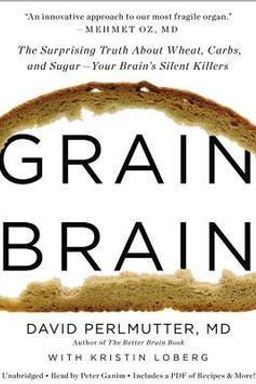
Grain Brain cover

Grain Brain

by David Perlmutter

Grain Brain by David Perlmutter reveals the surprising impact of carbohydrates and sugar on brain health, linking them to disorders like Alzheimer''s and diabetes. This book guides readers in adopting a low-carb, high-fat diet to enhance cognitive function, prevent chronic illnesses, and boost overall well-being.

Reclaiming Brain Health Through Whole-Life Choices

When was the last time you really thought about what your daily choices—your breakfast, your sleep patterns, your stress levels—are doing to your brain? In The Grain Brain Whole Life Plan, neurologist Dr. David Perlmutter argues that modern lifestyle habits—especially our love affair with processed foods and high-carbohydrate diets—are silently starving and inflaming our brains. He contends that most chronic illnesses, from Alzheimer’s and ADHD to anxiety and obesity, share common roots: systemic inflammation, disrupted gut health, and self-destructive daily routines.

Perlmutter’s central claim is revolutionary yet remarkably simple: you can take control of your brain’s destiny by taking control of your lifestyle. Your daily actions—what you eat, how you move, the way you manage stress, and even your relationships—send constant signals to your body’s cells, activating or silencing genes that shape your long-term health. In his view, brain health isn’t a mystery governed by luck or heredity; it’s a reflection of the environment you build for yourself every day.

The Crisis We’re Facing

Perlmutter opens with a stark reality: diet-related diseases now kill more people than war, terrorism, and accidents combined. Alzheimer’s, depression, diabetes, and obesity are all rising exponentially—and he sees them as interconnected. He notes that deaths from brain disease have increased by an alarming 66% in men and 92% in women since 1979. Depression now rivals heart disease as a leading cause of disability worldwide, and one in four women in their prime takes an antidepressant. To Perlmutter, this isn’t a genetic fluke—it’s the logical outcome of a society that lives on refined carbs, vegetable oils, and stress.

He describes obesity as a kind of malnutrition: people are “overfed but undernourished.” The root cause, he says, lies in poor gut health and the chronic inflammation triggered by foods like gluten, added sugars, and industrial seed oils. Drawing on decades of research in neurology and nutritional medicine, Perlmutter presents an integrated framework for reversing these patterns through what he calls a whole life plan—a way of living that nourishes every system of the body.

Food Is Information

A cornerstone of the book is the concept of epigenetics—the idea that environment and lifestyle determine how our genes express themselves. Food, Perlmutter insists, isn’t just fuel; it’s information. Every bite sends biochemical instructions to your DNA, influencing whether genes associated with disease or vitality are activated. He’s passionate about showing readers that real power lies not in genetics but in daily choices—particularly those that promote a healthy microbiome and reduce inflammation.

This leads him to his now-famous stance against modern grains. Building on the arguments from Grain Brain and Brain Maker, he shows how gluten and high-glycemic carbohydrates disrupt gut integrity, inflame the brain, and contribute to nearly every chronic condition imaginable—from migraines and mood swings to dementia and diabetes. The solution? A low-carb, high-fat, fiber-rich diet that restores metabolic flexibility and primes the brain to run on its preferred fuel: fat.

Beyond Food: A 360° Health Blueprint

Importantly, Perlmutter expands beyond nutrition. He argues that brain health is not only about what you eat, but how you live. The Grain Brain Whole Life Plan integrates five central pillars: diet, exercise, sleep, stress management, and detoxifying your environment. Each is interconnected through inflammation, hormones, and the gut-brain axis. For example, poor sleep raises inflammation and alters the gut microbiome, which affects mood and decision-making; chronic stress depletes beneficial bacteria and increases leaky gut. The key, he says, is to create an entire lifestyle that supports your biological “ecosystem.”

He introduces readers to practical frameworks: a three-step action plan (edit your diet and pill-popping, add support strategies, plan accordingly); detailed food “yes/no” lists; risk assessments; lab test recommendations; and even a 14-day meal plan with recipes like Baked Eggs and Greens and Cauliflower Soup. Perlmutter shows that these habits don’t just prevent disease—they can reverse damage and enhance mental sharpness within days.

Why It Matters Now

Why does this matter so urgently? Because despite technological breakthroughs, Perlmutter argues that medicine has failed to address the root causes of modern disease. While we’ve conquered infectious threats, we’re losing the battle against preventable lifestyle conditions. His message is that we’ve been “looking in the wrong place.” The keys to brain resilience aren’t found in new pills or hospitals—they’re in the kitchen, in daily walks, and in the quality of our sleep and social bonds.

Perlmutter’s philosophy resonates with modern integrative medicine (see also Dr. Mark Hyman’s Eat Fat, Get Thin and Dr. Kelly Brogan’s A Mind of Your Own), all of which argue that real health starts with lifestyle, not prescriptions. His program promises not only optimized brain function but freedom: freedom from fatigue, anxiety, and dependency on pharmaceuticals. It’s an invitation to rethink health as a whole-life journey rather than disease management.

At its heart, The Grain Brain Whole Life Plan is both a manifesto and a manual. It insists that you are not a bystander to your biology. Every choice you make—each meal, movement, breath, and bedtime—writes your future brain story. Whether you’re struggling with mental fog or simply want to age vibrantly, Perlmutter’s message is unambiguous: your mind’s destiny lies, quite literally, in your hands.


Inflammation: The Silent Fire Behind Disease

Dr. Perlmutter calls inflammation the body’s double-edged sword—vital for healing but disastrous when chronic. He makes the radical claim that inflammation, not cholesterol or aging, is the fundamental cause of most degenerative diseases, especially those of the brain. This ongoing ‘silent fire’ begins in the gut and spreads systemically, impairing neurons, altering hormones, and triggering conditions like Alzheimer’s, depression, and diabetes.

Understanding Chronic Inflammation

Inflammation becomes chronic when poor diet, stress, toxins, or sedentary habits keep the immune system in overdrive. Instead of helping you heal, your immune system mistakenly turns against your own tissues, producing harmful substances like cytokines that damage cells. In the brain, this process is especially destructive—Perlmutter calls it the “slow burn” that quietly erodes cognitive health.

He lists familiar culprits: refined carbs, added sugars, gluten, artificial sweeteners, processed vegetable oils, lack of sleep, and emotional stress. Every one of these fuels inflammation. He draws attention to research showing that inflammatory markers such as C-reactive protein and homocysteine are powerful predictors of Alzheimer’s and heart disease, yet they are rarely measured early enough to prevent damage.

Anti-inflammatory Living

The Grain Brain Whole Life Plan is fundamentally an anti-inflammatory lifestyle. Perlmutter recommends foods that “silence” inflammatory genes: omega-3-rich fish, turmeric, olive oil, leafy greens, and fermented vegetables. He’s especially enthusiastic about turmeric and DHA, showing that both activate the Nrf2 pathway—a genetic switch that boosts antioxidants and detox enzymes while turning off inflammation. Simple habits, such as sleeping before 11 p.m. or walking briskly daily, also regulate inflammatory hormones like cortisol.

Perlmutter closes this chapter with optimism: inflammation is not fate. Within weeks of adopting anti-inflammatory habits, he says, you can lower markers like C-reactive protein, boost brain-derived neurotrophic factor (BDNF), and feel tangible improvements—brighter mood, sharper thinking, fewer aches. In essence, cooling this internal fire is the modern path to vitality.


The Gut-Brain Connection

One of Perlmutter’s most persuasive ideas is that your gut—not your brain—is the true starting point of mental health. He describes the gut microbiome as a vast ecosystem of 100 trillion microbes that produce neurotransmitters, regulate immunity, and even influence mood and decision-making. When this delicate ecosystem is disturbed—by antibiotics, stress, sugar, or gluten—the gut lining becomes ‘leaky,’ letting toxins into the bloodstream and triggering inflammation that affects the brain.

How Digestive Health Shapes Your Mind

Perlmutter explains how intestinal permeability, or ‘leaky gut,’ sets off an inflammatory cascade spanning the entire body. As the gut wall breaks down, foreign particles like bacterial toxins (LPS) enter the circulation. These toxins trigger an immune response that increases the permeability of another critical barrier—the blood-brain barrier. He notes that gliadin, a component of gluten, can cause both a leaky gut and a “leaky brain,” linking bread directly to brain fog and neurological illness.

Restoring Balance Through Microbial Allies

Healing begins by nourishing beneficial bacteria with prebiotics (fibers that feed good microbes) and probiotics (beneficial bacteria themselves). Foods like garlic, onions, Jerusalem artichokes, and fermented vegetables are key. He recommends probiotic strains such as Lactobacillus plantarum and Bifidobacterium longum for brain health. These microbes, research shows, can reduce anxiety, regulate neurotransmitters, and even improve cognitive function. The message is clear: by tending your gut garden, you tend your mind.

(This aligns with findings from Brain Maker and studies by Stanford’s Justin Sonnenburg and Harvard’s Alessio Fasano, both confirming that the gut’s microbiota are central to immunity and emotion.)


Food Rules for Cognitive Longevity

Perlmutter’s dietary philosophy overturns decades of conventional wisdom: forget low-fat diets and calorie counts. Your brain thrives on fat, not carbohydrates. His “food rules” are grounded in modern studies like Tulane’s research showing low-carb diets outperform low-fat ones for weight loss and heart health. He argues that eating fat doesn’t make you fat—sugar does.

Evict Gluten, Fear Not Fat

Gluten, even in non-celiac individuals, can cause inflammation, insulin resistance, and cognitive issues. Perlmutter positions modern wheat as one of the greatest threats to neurological health. Meanwhile, saturated fats from sources like olive oil, eggs, and grass-fed meats are rehabilitated as essential brain nutrients. The 2015 U.S. dietary guidelines’ elimination of cholesterol restrictions—he notes—finally vindicates what nature knew all along.

Ditch Sugar and Embrace Ketosis

He urges you to abandon sugar in all forms—even fruit juice—and adopt a low-carb, high-fat, and higher-fiber diet that induces mild ketosis. In this metabolic state, your body burns fat for fuel, producing ketones, which nourish neurons and protect the brain. This ketogenic shift has been used since the 1920s to treat epilepsy, but today it’s recognized for cognitive enhancement and disease prevention.

Finally, Perlmutter warns about GMOs and glyphosate, labeling them the “tobacco of our generation.” Glyphosate, he writes, kills gut bacteria, mimics hormones, and disrupts immunity. His solution: eat organic, go non-GMO, avoid processed foods, and use olive or coconut oil freely. In short, eat like your ancestors, not like a food commercial.


Harnessing the Power of Epigenetics

Genetics load the gun, Perlmutter reminds you, but lifestyle pulls the trigger. His discussion of epigenetics—how behavior and environment shape gene expression—transforms health from fate to responsibility. Through food, stress, exercise, and thought, you can literally turn off disease-promoting genes and activate ones that protect you.

The Nrf2 Pathway and Genetic Resilience

Perlmutter highlights a ‘master switch’ protein called Nrf2 that activates hundreds of antioxidant and detox genes. Nutrients like curcumin, green tea extract, and omega-3 DHA—along with calorie restriction and fasting—activate this pathway, lowering inflammation and extending health span. Even certain probiotics stimulate Nrf2, illustrating how gut health and genetics merge.

Telomeres and Aging

He also explores telomeres, the protective caps on chromosomes that shorten with stress and sugar but lengthen with exercise and omega-3s. Telomere length, he writes, predicts biological—not chronological—age. By living anti-inflammatory, you essentially “de-age” your genes and slow cognitive decline. His motto: you can’t change the code, but you can change the conversation with your DNA.


The Lifestyle Equation: Movement, Sleep, and Calm

If food rewires your metabolism, lifestyle habits rebuild your brain. Perlmutter details how non-nutritional factors—exercise, sleep, stress, and social connection—are biochemical levers as powerful as diet. He cites studies revealing that regular aerobic exercise increases hippocampal size (our memory center) and halves the risk of Alzheimer’s. Movement, he says, is nature’s antidepressant and neurogenesis trigger.

Move, Sleep, and Reset

His recommendations are simple but potent: cardio six days a week, strength training three, and stretching daily. Exercise activates BDNF—the brain’s growth factor—while improving insulin sensitivity and mood. Sleep, too, becomes a brain detox tool; during deep rest, your brain ‘cleans house,’ clearing amyloid plaque and resetting hormones. Lack of sleep, he warns, may double dementia risk.

Stress, Gratitude, and Relationships

Finally, Perlmutter weaves in mindfulness, gratitude journaling, and social connection—the psychological nutrients of longevity. Chronic stress floods the body with cortisol, depleting the microbiome and shortening telomeres. He offers intimate stories—including a personal health crisis that taught him the healing power of love—to underscore that emotional balance is as neurochemical as nutrition. Loving others, he concludes, is one of life’s most powerful brain therapies.


A Practical Whole-Life Blueprint

Perlmutter doesn’t stop at theory; he’s intent on making transformation actionable. His program unfolds in three stages: Edit Your Diet and Pill-Popping, Add Support Strategies, and Plan Accordingly. Each step combines modern science with behavioral coaching to simplify total lifestyle change. He includes risk quizzes, lab tests (like fasting insulin and homocysteine), and daily checklists for sleep, exercise, and journaling.

Tools for Change

He recommends fasting occasionally (24-hour or multi-day) to enhance metabolism and increase ketones. Journaling becomes a self-awareness practice, helping you connect emotions to behaviors. He even provides cleaner household-product guides to reduce toxin exposure—from ditching plastics to using vinegar-based cleaners. The 14-day meal plan and recipes make the lifestyle tangible, not abstract.

Progress, Not Perfection

For those daunted by change, Perlmutter is compassionate: focus on consistency, not perfection. His 90/10 rule—follow the plan 90% of the time, allow 10% flexibility—keeps motivation sustainable. Within days, he promises clearer thinking, stable energy, and better sleep. The first sign of progress isn’t always weight loss; it’s relief—feeling alive again.

(Readers of The Blue Zones by Dan Buettner will notice shared themes: strong relationships, nutrient-dense diets, and purposeful daily movement. Perlmutter adds neuroscientific depth, proving that these habits literally rewire your brain.)

Dig Deeper

Get personalized prompts to apply these lessons to your life and deepen your understanding.

Go Deeper

Get the Full Experience

Download Insight Books for AI-powered reflections, quizzes, and more.