
Idea 1
Capturing Attention in an Age of Distraction
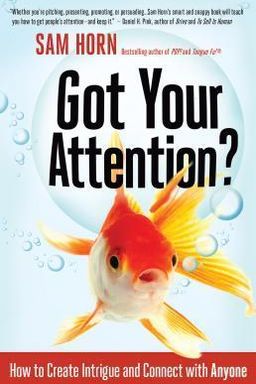
How can you get and keep people's attention in a world where goldfish outlast us in focus? In Got Your Attention?, communication strategist Sam Horn argues that success in life and business depends on one skill: the ability to earn and hold meaningful attention in an impatient, distracted age. If you can’t get people’s attention, she warns, you’ll never get their connection.
Horn introduces a method she calls INTRIGUE—a framework for creating communications that grab attention immediately, earn respect, and turn one-way exchanges into memorable two-way connections. Each letter—Intro, New, Time-efficient, Repeatable, Interact, Give, Useful, and Examples—represents an ingredient for crafting messages that people actually notice, remember, and repeat. The book combines psychological insight, storytelling, and real-world case studies from entrepreneurs, speakers, and everyday professionals who learned how to become intriguingly clear rather than boringly thorough.
The Attention Crisis
Horn begins with alarming facts: human attention spans average eight seconds—less than that of a goldfish. People swipe, skip, and scan endlessly. We are living in what she calls an age of attention bankruptcy. The result? Disconnection. Our pitches fall flat, our messages get ignored, our relationships remain shallow. Drawing inspiration from Dale Carnegie’s timeless advice, Horn reimagines influence for the modern era: instead of forcing people to listen, we must first give our attention if we want to earn theirs.
Introducing INTRIGUE: The New Recipe for Connection
Horn has spent two decades coaching leaders at NASA, Boeing, Cisco, and entrepreneurs at conferences worldwide. She distilled her observations into a practical roadmap. The eight steps of INTRIGUE help you design communications that are not only heard but felt:
- I = INTRO: Start strong. Hook people at hello with curiosity-based intros that replace bland openings.
- N = NEW: Offer fresh perspectives that stand out. Being right isn’t enough—you must be different.
- T = TIME-EFFICIENT: Respect attention as the new currency. Be brief, clear, and high-value.
- R = REPEATABLE: Craft phrases-that-pay—memorable sound-bites others can share and quote.
- I = INTERACT: Transform monologues into dialogues. Make communication a two-way exchange.
- G = GIVE: Give attention before expecting it; focus on others' needs instead of self-promotion.
- U = USEFUL: Make your insights actionable. Offer real-world relevance, not abstract talk.
- E = EXAMPLES: Replace fluffy theory with vivid, true examples that make ideas real.
Horn contends that when you align your communication with all eight ingredients, you earn what she calls an “ROI: Return on Intrigue.” People not only listen; they repeat your message, act on it, and share it with others.
Why Attention Is the Gateway to Connection
“Only connect,” novelist E. M. Forster urged a century ago. Horn takes that call into the digital age. We are drowning in INFObesity—too much content, too little connection. The real challenge isn’t creating more information; it’s fostering interactions infused with empathy, curiosity, and usefulness. Horn’s stories—from a mother helping her son land a NASA job to entrepreneurs winning investor buy-in—prove that intrigued attention leads to influence.
Unlike traditional communication guides that focus on persuasion or performance, Got Your Attention? focuses on emotional resonance. Horn believes true communication isn’t what you say; it’s what the receiver takes away. If people can’t repeat or apply your message, you’ve failed. When they want to share it because it struck a chord, you’ve succeeded. The INTRIGUE framework turns communication into an act of giving, not grabbing.
What to Expect from the Journey
Throughout the book, Horn takes you from mastering quick introductions (“Did you know?” questions) to crafting memorable rally cries (“We will prevail”). You’ll learn how to make your message repeatable, how to illustrate ideas through empathy-driven examples, and how to build connections through listening and interactive meetings. Every principle ends with concrete Action Questions—Horn’s signature coaching move—so readers can immediately transfer concepts into their own communication routines.
In essence, this isn’t a book about marketing or speaking—it’s a manifesto for human connection. Horn urges readers to replace old defaults of information overload with new defaults of curiosity, brevity, and empathy. The payoff, she promises, isn’t just better business results but stronger relationships, influence, and joy. After all, attention is love made visible.