
Idea 1
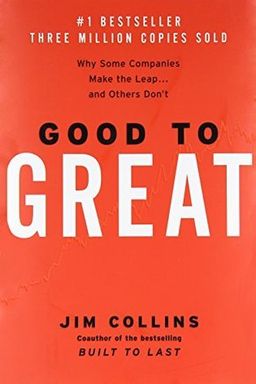
From Good to Great: How Companies Build Enduring Excellence
Why do some companies make the leap from mediocrity to enduring greatness while others remain merely good? In Good to Great, Jim Collins and his research team spend five years analyzing companies that outperformed the market by at least threefold over fifteen years. Their surprising conclusion: greatness is not primarily the result of revolutionary change or charismatic leadership, but of disciplined people, disciplined thought, and disciplined action applied consistently over time. The transformation feels more like pushing a heavy flywheel turn by turn than achieving a single defining breakthrough.
The Building Blocks of Transformation
Collins identifies a framework of interlocking concepts that together explain the transition from good to great. It begins with Level 5 Leadership—a paradoxical blend of personal humility and fierce professional will. These leaders prioritize the success of their companies over their own egos, credit others for victories, and accept responsibility for failures. You then need the right people—what Collins calls First Who, Then What. Great leaders don’t start by defining strategy; they start by assembling a team of self-disciplined, capable individuals who can adapt to changing circumstances.
Facing Facts Before Hope
Once the right people are in place, a company must Confront the Brutal Facts without losing faith. This approach, embodied in Admiral Jim Stockdale’s paradox of realism and optimism, allows an organization to make rational adjustments without succumbing to despair. Kroger’s willingness to shut down its old stores and invest heavily in superstores contrasts sharply with A&P’s denial of the coming retail revolution. By candidly accepting reality, Kroger built a more resilient business model that could sustain performance across decades.
Discovering the Hedgehog Concept
Next, greatness depends on clarity of focus. The Hedgehog Concept is a deep understanding of the intersection between what you can be the best in the world at, what drives your economic engine, and what you are deeply passionate about. Like the hedgehog, great companies simplify strategy around one unifying idea. Walgreens, for example, defined its Hedgehog Concept as maximizing profit per customer visit, which guided every decision—from location placement to technology investments.
From Discipline to Momentum
With clarity of purpose, the next step is to build a Culture of Discipline, one where free and responsible people take disciplined action without excessive bureaucracy or control. Nucor exemplified this principle through a lean headquarters, pay-for-performance systems, and shared sacrifice during downturns. Good-to-great companies manage with rigor, not ruthlessness: they make clear people decisions, stop doing what doesn’t fit the Hedgehog, and channel creativity inside disciplined boundaries.
Once discipline becomes the norm, leaders focus on developing the Flywheel Effect—small, consistent efforts that compound over time until momentum builds and visible success emerges. Each turn of the flywheel—better hiring, smarter decisions, refined products—feeds the next. Collins contrasts this with the Doom Loop, where companies chase dramatic reforms, restructure repeatedly, or bet on acquisitions, never allowing momentum to accumulate.
Technology and Long-Term Vision
Technology plays a supporting role, acting as an accelerator rather than a creator of momentum. Great companies align new tools directly with their Hedgehog Concepts. Walgreens’ investment in satellite-linked pharmacies and web services amplified their convenience focus; Kroger’s barcode scanning unlocked capital for modernization. The lesson: use technology strategically, not reactively.
Finally, Collins connects the good-to-great framework to long-term sustainability. Enduring greatness requires a core ideology—values and purpose that remain constant—and bold, well-chosen BHAGs (Big Hairy Audacious Goals) that stimulate progress. Boeing’s bet on commercial jets or Merck’s devotion to patient-centered innovation demonstrate how informed audacity sustains ambition without sacrificing discipline.
Core Message
Greatness is not a function of circumstance; it’s a matter of conscious choice and consistent discipline. Build the right culture, face truth, define your Hedgehog Concept, and turn the flywheel daily. When you do, greatness becomes inevitable—though seldom dramatic at first.