
Idea 1
Living Alone as a Modern Revolution
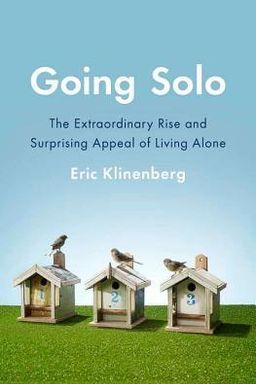
Have you ever wondered why so many people today choose to live alone—and not feel lonely doing it? In Going Solo: The Extraordinary Rise and Surprising Appeal of Living Alone, sociologist Eric Klinenberg unpacks one of the most significant yet misunderstood social transformations of our time: the explosive growth of one-person households. What was once considered a sign of isolation or failure has become an emblem of freedom, independence, and modern adulthood.
The Rise of the Singleton Society
Klinenberg begins with a staggering fact: nearly half of adults in developed nations now live alone. In cities such as Stockholm, Manhattan, and Tokyo, single dwellers make up between 40–60% of households. Rather than viewing this as evidence of social decay, Klinenberg reinterprets it as a triumph of modern civilization—a result of economic prosperity, gender equality, urban development, and communication technologies that allow people to stay connected while living independently.
Our ancestors needed the family unit for survival—mutual labor, economic production, and caregiving. But modern societies, especially those with strong welfare systems, liberated individuals from those constraints. As Klinenberg writes, this new form of living is not a withdrawal from society but a different way of being social.
Why This Shift Matters
Klinenberg calls our age “the singleton society.” It reveals what happens when the basic building block of civilization shifts from the family unit to the individual. Living alone enables people to pursue what he calls the “sacred modern values”—freedom, personal control, and self-realization. For many, solitude is not isolation but restoration—a necessary retreat for creativity and self-discovery. Yet he also recognizes its paradox: the same autonomy that empowers us can, for others, deepen vulnerability, especially among the elderly and poor.
To understand the full story, Klinenberg explores the experience of living alone at every stage of life: the young professionals postponing marriage, middle-aged divorcees rediscovering independence, urban poor using solitude as self-protection, and elderly adults aging in solitude. Across these groups, he finds that living alone is rarely antisocial—it is often a way to build healthier, more intentional relationships in an era defined by connection overload.
From Fear of Isolation to Embracing Solitude
The book also challenges older narratives that equate living alone with loneliness. Klinenberg revisits classics like Bowling Alone by Robert Putnam, which lamented the demise of civic life, and turns the lens around: instead of being disconnected, singletons often have richer social lives. They frequent cafés, volunteer organizations, and community events more than their married counterparts. Living alone becomes less a retreat from people than a reorganization of how we engage with them.
He acknowledges, however, that the freedom to live alone is unevenly distributed. For the affluent, a solo apartment may mean sanctuary; for the poor, isolation can become a trap. Through vivid case studies—from Manhattan journalists to recovering addicts in New York’s single-room occupancy hotels—Klinenberg shows how economic security determines whether solitude heals or harms.
A Mirror of Modern Values
At its heart, Going Solo is not just about housing policy or lifestyle trends. It is a meditation on what it means to live a meaningful life in an individualistic, hyperconnected age. Klinenberg’s interviews reveal that solitude today is not self-absorption—it’s a stage for personal renewal, creativity, and emotional clarity. But he tempers enthusiasm with realism: living alone also exposes social inequities in care systems, city planning, and the treatment of aging citizens.
Ultimately, Klinenberg invites us to see the rise of the singleton society not as a crisis but as a collective adaptation—a natural evolution of human connection in modern life. Whether we celebrate or fear this shift depends less on who lives alone and more on how societies choose to support their single dwellers. The question isn’t why so many live alone, but how we can ensure that doing so helps us live better.