
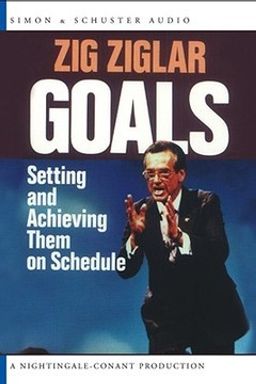
Goals cover

Goals

by Zig Ziglar

Goals (2019) by Zig Ziglar offers an empowering guide to setting and achieving your life''s ambitions. By mastering goal-setting techniques and maintaining daily commitment, this book provides the tools needed to unlock your potential and transform dreams into reality.

Goals as the Blueprint for a Meaningful Life

Have you ever wondered why some people seem to get everything they want out of life—while others drift aimlessly from one job or relationship to another, never quite fulfilled? In Goals: How to Get the Most Out of Your Life, Zig Ziglar argues that the difference lies in one foundational skill: setting and pursuing clear, meaningful goals. This book is not simply about ambition; it’s about purposefully designing your life. Ziglar contends that success without significance will leave you empty, but a life guided by well-defined goals can give you both achievement and meaning.

According to Ziglar, most people underestimate the transformative power of goal setting because they either fear failure, doubt their abilities, or simply don’t know how to set goals effectively. “You were designed for accomplishment, engineered for success, and endowed with the seeds of greatness,” he reminds us. His core message is that goal setting is not a sterile exercise—it’s the process that activates those seeds of greatness and helps you become a “meaningful specific” instead of a “wandering generality.”

From Success to Significance

Ziglar begins by challenging the reader’s assumptions about success. Financial or career achievements are worthwhile, he says, but they often leave people feeling hollow once they attain them. True prosperity means moving from success to significance—achieving goals that align with your core values and contribute positively to others. You don’t just reach goals to accumulate rewards; you pursue them to express the fullness of who you can become.

This shift—from acquiring things to becoming someone—runs through the entire book. It echoes ideas found in Napoleon Hill’s Think and Grow Rich and Stephen Covey’s The 7 Habits of Highly Effective People. Both authors, like Ziglar, emphasize that success begins in the mind but must be lived through disciplined daily action.

Why Most People Don’t Set Goals

In the book’s first chapters, Ziglar describes four reasons people fail to set goals: fear, poor self-image, no belief in the process (no buy-in), and ignorance about how goal setting works. Fear often manifests as what he calls “False Evidence Appearing Real”—a mental trick that convinces you failure or ridicule is inevitable. Poor self-image limits what you attempt because you can’t imagine deserving more. No buy-in stems from cynicism or conditioning, and not knowing how means people never start. Ziglar illustrates each reason with anecdotes—like the story of Thom Hartmann, a man who turned his life around after rewriting his self-image through Ziglar’s teachings.

These barriers are universal. They’re not flaws—they’re defaults we must consciously overcome. Ziglar argues that once you set meaningful goals, fear begins to dissipate because clarity and momentum replace uncertainty.

Turning Effort into Reward

A major metaphor in Ziglar’s opening chapter likens life to a cafeteria line—you pay before you eat. In other words, you must first put in effort before you reap the benefits. Whether earning a degree, cultivating a marriage, or saving money, the process demands discipline up front. “You first put in the effort, then you receive the benefits.” This simple truth anchors every strategy he explores later. It’s echoed again when he tells us that mastering daily habits leads to lasting motivation—because motivation follows action, not the reverse.

The Step-by-Step Formula

The heart of Goals lies in Ziglar’s nine-step formula for setting and achieving goals. He urges you to write every desire down (what he calls “Wild Ideas”), ask yourself why each one matters, and eliminate anything that doesn’t resonate deeply. You then categorize your goals into seven areas—physical, mental, spiritual, social, financial, career, and family—and balance them to avoid becoming warped in one dimension. Finally, you narrow your focus to four major goals that you can realistically pursue with passion.

Each step shifts goal-setting from dreaming to doing. It’s practical psychology in action—very similar to what modern coaches call “SMART goals,” but richer in spirit. Ziglar doesn’t just ask you to be specific and measurable; he asks you to align goals with ethics, faith, and emotional commitment.

Day-by-Day Discipline

Once goals are set, the Day-by-Day Formula provides thirteen daily attributes—from commitment and accountability to persistence and team spirit—that transform your aspirations into habits. He tells stories, including those of Lou Holtz, Ben Hogan, and others who personify commitment under pressure. Ziglar insists discipline must be daily; he even suggests keeping a planner under your pillow so that you record your progress before bed. This ritual enforces accountability—the bedrock of achievement.

He connects discipline with joy, arguing that what begins as sacrifice transforms into enjoyment. “You don’t pay the price for success—you enjoy the benefits of success,” he claims. That distinction turns struggle into motivation.

Desire: The Spark of Possibility

As the book progresses, Ziglar shifts from instruction to inspiration. He defines desire as the “steam of success”—the emotional force that moves you from potential to performance. Through stories of Ben Hogan, Dan Jansen, and David Lofchick (a boy who overcame cerebral palsy through relentless effort), Ziglar demonstrates how setbacks can become stepping stones when fueled by belief and effort. His recurring phrase, “making lemonade from lemons,” frames adversity not as punishment but as fertilizer for growth.

Work, Attitude, and the Joy of Effort

Later chapters reinforce an old but unshakable truth—there’s “no free lunch.” Work is not just the price of success; it’s the source of dignity, purpose, and self-respect. Ziglar encourages you to “autograph your work with excellence,” to treat every task as an extension of your character. Combined with the final chapter’s call to love your job—to see it not as something you have to do but something you get to do—these lessons complete Ziglar’s vision of goal-driven living.

Ultimately, Goals is a manual for the human spirit. It’s about transforming desire into tangible progress. Ziglar’s blend of storytelling, humor, and moral conviction makes his ideas accessible—yet profound. He reminds you that success is not a destination but a habit: built word by word, day by day, and choice by choice. You don’t wait for life to happen—you design it.


Four Reasons People Don’t Set Goals

Zig Ziglar identifies four primary reasons why people fail to set meaningful goals—fear, poor self-image, lack of belief, and ignorance about process. These roadblocks, he asserts, are not signs of weakness but reflections of how society conditions us to expect failure. Before people can grow, they must first dismantle these mental barriers that keep ambition dormant.

Fear: False Evidence Appearing Real

Fear masquerades as truth. Ziglar quips that FEAR stands for “False Evidence Appearing Real.” Most people act as though imagined obstacles were actual threats. He points out that an 18-year-old has been told “no” or “you can’t” more than 148,000 times, conditioning the subconscious for defeat. His stories—from fake bank robberies to soap-bar hijackings—illustrate how fear paralyzes action even when danger isn’t real. To counter fear, Ziglar prescribes positive input: replace self-defeating narratives with constructive belief.

Poor Self-Image: The Limiting Mirror

Your performance mirrors your self-image. People without a vision of themselves as capable will unconsciously sabotage success. Ziglar’s vivid account of Thom Hartmann—a man who attended one of his seminars while physically, financially, and spiritually bankrupt—shows how changing that inner picture can transform a life. Hartmann’s journey from 407 pounds to a successful, confident leader exemplifies self-image at work. As Ziglar puts it, “When you tell someone often enough that they are important and can do things, they will eventually believe it.”

No Buy-In: Why Motivation Must Be Sold

Ziglar admits his career goal is to “sell people on having goals.” Without belief, no technique will matter. He demonstrates that once you establish direction, you can fully engage: you work when you work, play when you play, and waste less mental energy. Clarity creates balance. This idea echoes Peter Drucker’s observation: “Direction creates time, and motivation creates energy.” Ziglar insists that when purpose centers your life, efficiency and happiness rise together.

Don’t Know How: Ignorance Is Expensive

Not knowing how to set goals is perhaps the most practical barrier. Ziglar estimates that real goal planning takes ten to twenty hours—but once done properly, it can save three to ten hours a week for life. His analogy of writing a personal book titled “What I Think You Ought to Do to Get the Most Out of Life” encourages reflective goal creation. He reminds us that learning to set one goal effectively teaches you how to set all goals—physical, mental, spiritual, or financial—because each follows the same formula.

By dispelling these four myths, you uncover the freedom to design life instead of reacting to it. Ziglar’s message: the only thing scarier than failing is never trying at all.


The Nine Steps to Setting Goals

Ziglar’s most actionable framework appears in his nine-step goal-setting process—a blend of psychology, practicality, and self-honesty that transforms wishes into structured action. It’s meticulous but deeply rewarding, emphasizing discipline and reflection as twin engines for success.

Write It Down

Step one is deceptively simple: write down everything you want to be, do, and have. Writing solidifies commitment and engages both left (logical) and right (creative) brain functions. Ziglar calls the list “Wild Ideas”—urging unrestricted imagination at first. Within an hour, you’ll list most meaningful desires because clarity emerges through writing.

Ask Why and Eliminate

Once written, interrogate each desire with one word—“Why?” If you can’t explain why it matters in a single sentence, eliminate it. “Say no to the good so you can say yes to the best,” Ziglar advises. The process prunes shallow wants and exposes authentic goals that resonate emotionally.

Balance and Explore

Ziglar insists on holistic balance across seven life dimensions: physical, mental, spiritual, social, financial, career, and family. Neglecting one leads to distortion. You then “explore” each goal using seven diagnostic questions: Will this make me happier, healthier, or more secure? Will it improve relationships or peace of mind? Anything failing these tests must go. This ensures your ambitions foster well-being, not stress.

Stretch, Check for Negativity, and Ask the Five Questions

Stretch goals expand your capacity—“go as far as you can see, and you will see farther.” But aspirations must remain visible and realistic; out-of-sight fantasies breed depression. Each goal must pass five filters: Is it truly mine? Is it morally right and fair? Will it bring me closer to my major objective? Can I emotionally commit to start and finish? Can I visualize success? These checks merge ethics with psychology, ensuring integrity-built goals.

Choose Your Top Four

Finally, narrow everything to four primary goals. Most people can fully commit to only a handful. He details his own weight-loss story to illustrate—setting a target (165 pounds, 34-inch waist), identifying benefits, confronting obstacles (love of food, irregular schedule), acquiring necessary knowledge (diet and exercise), engaging supporters (family and colleagues), and crafting an action plan (weekly dessert treat, fork discipline, travel grapefruit). He concludes with a profound truth: “A goal properly set is halfway reached.”

Ziglar’s process converts vague dreams into executable steps. Where many motivational books stop at inspiration, Ziglar gives procedural clarity—the bridge from vision to victory.


Thirteen Steps to Reaching Goals

After setting goals, Ziglar teaches thirteen practical behaviors—the “Day-by-Day Formula”—that help you reach them. Each represents a facet of disciplined living, from commitment to visualization, creating a coherent pattern of sustained progress.

Commitment and Accountability

Commitment begins with ownership. He recounts Lou Holtz’s journey from fired football coach to legendary success, proving that true dedication outlasts setbacks. Accountability follows commitment; Ziglar insists on daily documentation—your written record of progress. He cites Peter Drucker’s words, “Time is the scarcest resource,” to stress daily planning as non-negotiable.

Foundation, Vocabulary, and Small Bites

Success rests on a moral foundation—honesty, integrity, loyalty, and faith. Without it, no achievement sustains itself. Then, shift your vocabulary: success is not a price you pay, but a benefit you enjoy. Viewing actions through that lens turns discipline into joy. Divide each challenge into “small bites.” Losing 37 pounds? Focus on ounces per day. Writing a 384-page book? One and one-fourth pages daily. These atomic goals eliminate overwhelm.

Shape Up and Handle Disappointment

Ziglar bridges physical fitness and mental clarity, citing research showing high achievers maintain better health and spiritual balance. When setbacks occur—as when Notre Dame’s player dropped the game-winning pass—Ziglar reminds, “It’s not what happens to us, but how we handle what happens to us.” Resilience matters more than perfection.

Discipline, Direction, and Sharing Goals

Motivation follows action. Discipline means recording and planning nightly, even if you’re tired. Then maintain direction—obstacles may require detours but never abandonment. Share your “go-up” goals cautiously (with those who encourage you), but broadcast your “give-up” goals (habits to quit) broadly for external support. This protects ambition from envy while inviting accountability.

Teamwork, Breaking Barriers, and Seeing the Future

Teamwork amplifies results, illustrated by geese flying in a V formation for efficiency and football teams winning through unity. Breaking psychological barriers—like the four-minute mile—shows that limitations are mental, not physical. “Don’t be a SNIOP,” he warns—Susceptible to the Negative Influence of Other People. Visualization completes the cycle. Imagine yourself already achieving the goal; “when the outlook isn’t good, try the uplook—it’s always good.” Ziglar’s routine of visualizing trim success every day proves that seeing precedes being.

Together, these thirteen steps convert goals from paper to performance—a daily rhythm of action, faith, and joy.


Desire and the Power of Intelligent Ignorance

Desire, Ziglar says, is the heat that turns water into steam—the energy that propels a locomotive across a continent. Without it, intelligence and skill remain idle. This chapter explores how raw determination, even when mixed with naivety (“intelligent ignorance”), often beats experience.

Desire as the Equalizer

A Harvard study found that “outstanding people have one thing in common—an absolute sense of mission.” Ziglar agrees: winners don’t go to work; they go on a mission. From Pete Gray, the one-armed baseball player who made the major leagues, to Ben Hogan, who reclaimed glory after a near-fatal car crash, desire transforms obstacles into stepping stones. These stories show how greatness is less about resources and more about resolve.

Intelligent Ignorance

Sometimes not knowing what is “impossible” is the greatest advantage. Ziglar relates how Henry Ford insisted his engineers build a V8 engine despite their claims that it couldn’t be done—and they eventually did. Intelligent ignorance fuels innovation because it bypasses fear. Like the bumblebee, which flies despite aerodynamic theory, passionate ignorance breaks limits that knowledge alone might enforce. (In The Magic of Thinking Big, David Schwartz similarly argues that “belief plus action equals results.”)

I Can vs. I Can’t

Through humorist Miss Mamie McCullough’s classroom experiment, Ziglar dramatizes attitude: there’s no such thing as an “I can’t” you can touch, but “I can” exists in every form and shape. Cultivate an “I can” spirit and intelligent optimism—even in bleak situations. He cites General Creighton Abrams, surrounded by enemies yet seeing opportunity: “For the first time in history we can attack in any direction we choose.”

Desire doesn’t guarantee easy victories—it guarantees effort when logic would quit. It’s what turns setbacks into breakthroughs and transforms “can’t” into “can.”


Making Lemonade from Adversity

If life hands you lemons, Ziglar insists you can make lemonade—but only if you add desire. The chapter opens with examples of innovators who literally turned setbacks into inventions: Charles Kettering’s broken arm birthed the electric starter; Jacob Schick’s frozen shave led to the electric razor. Each story reinforces a pattern: adversity plus creativity equals progress.

Adversity as Catalyst

Ziglar’s vivid account of Enterprise, Alabama’s boll weevil monument captures this perfectly. The town, ruined by insect blight, diversified its farming and prospered. Instead of resentment, they built a statue to honor the bug that forced growth. Likewise, Gene Tunney’s broken hands transformed him from slugger into scientific boxer—making him world champion. “If you have enough desire,” Ziglar concludes, “it will make a difference.”

David Lofchick’s Triumph

The centerpiece of the chapter is the story of David Lofchick, born with cerebral palsy and told he’d never walk or talk. His parents refused the diagnosis and dedicated fifteen years to relentless physical and emotional training. David ultimately ran six miles, excelled in school, and even qualified for life insurance—something thought impossible for cerebral palsy patients. His story illustrates Ziglar’s principles in motion: honesty, integrity, loyalty, trust, love, optimism, and relentless desire. They turned suffering into triumph.

The Ripple of Persistence

Perhaps the most touching part of the story is its chain reaction. After Ziglar shared David’s experience in a seminar, another family sought help and discovered their child was misdiagnosed. One life transformed another—proof that perseverance radiates outward. Ziglar’s moral: when you push hard enough through adversity, you don’t just change your life; you alter the possibilities of those watching you.

Adversity doesn’t define who you are—it reveals who you can become when faith and persistence converge.


Work, Discipline, and the Joy of Effort

Ziglar’s sixth major idea—there’s no free lunch—reframes work not merely as labor but as life’s dignity. He argues that effort is both the price and the reward of success, a philosophy echoing Benjamin Franklin’s adage: “Energy and persistence conquer all things.”

Work: The Foundation of Excellence

The wise king’s proverb—“There ain’t no free lunch”—summarizes Ziglar’s worldview. Work is “the foundation of business, the source of prosperity, and the parent of genius.” He criticizes society’s fascination with gambling or get-rich-quick schemes, arguing that moral integrity and effort sustain nations and individuals alike. “Autograph your work with excellence,” he urges, meaning treat every task as a signature of your character.

Learning through Effort

Ziglar’s boyhood in Depression-era Mississippi taught him the value of diligence. In his grocery store anecdote, young runner Charlie Scott’s enthusiasm earned him promotions and wealth later in life. Ziglar’s lesson: “When you do more than you’re paid to do, you’ll eventually be paid more for what you do.” This progressive cycle—effort breeding opportunity—is timeless.

Doing It Well

Whether pouring water in a restaurant or digging holes with pride, Ziglar reminds readers that “every job is a self-portrait of the person who did it.” Excellence is contagious; it builds character faster than it builds resumes. “Work gives us more than a living—it gives us our life, our dignity, and our destiny.” His comparison of wild hogs lured by free grain underscores the danger of dependency: ease destroys resourcefulness. Only work and self-reliance preserve freedom.

For Ziglar, loving your work transforms effort into fulfillment. You no longer have to work—you get to work. Through that attitude shift, joy becomes the ultimate byproduct of discipline.


Loving Your Job and Living Your Purpose

Ziglar closes with one powerful idea—redefine your attitude about work. The difference between drudgery and joy, he says, lies entirely in perspective. “Quit the best job I ever had? Are you kidding me?” one of his favorite anecdotes asks rhetorically. By changing thoughts, people changed their environments and outcomes.

Attitude Creates Reality

Two disgruntled workers decide to quit but spend their last day acting enthusiastic, grateful, and service-oriented. By the day’s end, they rediscover purpose: the work hasn’t changed—their attitude has. Ziglar proves that reaction dictates experience. As he once told a sullen airline agent, “You’re doing far better than you were one minute ago.” That positivity not only uplifted the agent’s mood—it upgraded Ziglar’s seat.

Demand More of Yourself

The path to fulfillment demands effort and values. Ziglar cites John Wooden’s doctrine: “Failure is not fatal, but failure to change might be.” He references studies of millionaires and executives showing common traits: hard work, integrity, family loyalty, and persistence—virtues over glamour. True success is built on consistency, not luck.

Persistence, Discipline, and the Pump

The book’s final metaphor—the old chrome pump—ties everything together. You only get water once you commit to priming and pumping steadily. Stop too soon and you lose progress. Keep pumping, and eventually the water flows effortlessly. “When you stop, the water goes all the way back down,” Ziglar warns. Hard work builds momentum; persistence sustains it. When effort feels repetitive, remember the bamboo tree—it grows underground for years before shooting 90 feet in six weeks. Success is slow—and then sudden.

Ziglar concludes that every principle—goal setting, desire, discipline, integrity—is accessible to everyone. Age, gender, race, or education don’t matter. The key is willingness. You can indeed have everything you want if you help enough other people get what they want. That, he says, is the best job ever—the job of living your potential.

Dig Deeper

Get personalized prompts to apply these lessons to your life and deepen your understanding.

Go Deeper

Get the Full Experience

Download Insight Books for AI-powered reflections, quizzes, and more.