
Idea 1
Going Wild: Reclaiming Our Natural Design
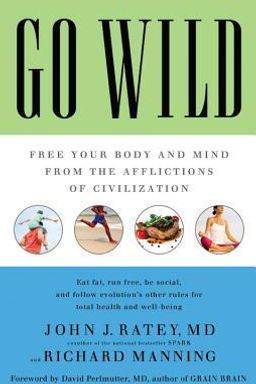
How can you live in the modern world without feeling constantly drained by its noise, pace, and artificial demands? In Go Wild, Harvard psychiatrist John Ratey and journalist Richard Manning argue that the secret to restoring physical and mental health lies in rediscovering our natural design—our wild origins. They contend that human beings were made to live, move, eat, sleep, and connect in ways shaped by hundreds of millennia of evolution, not the last few centuries of civilization. Yet in taming ourselves for comfort and convenience, we’ve drifted dangerously far from that design. The result is the explosion of what they call “diseases of civilization”—obesity, depression, anxiety, heart disease, diabetes, and many others—all rooted in ignoring the conditions that our bodies evolved to thrive in.
Their thesis challenges the notion that evolution has kept pace with technology or that human progress equals human health. Instead, Go Wild urges you to recover what evolution intended: to reconnect with nature, variety, movement, and authentic human connection. Both authors blend neuroscience, anthropology, medicine, and personal experience into one sweeping argument that being truly well isn't about cutting calories or taking pills—it's about returning to the practices that shaped Homo sapiens in the first place.
Why “Going Wild” Matters
The book opens with a provocative contrast: wild versus tame. Ratey and Manning use wolves and dogs, bison and cattle as symbols—the wild thrive within nature’s design; the tame survive only inside human constraints. Humans, they say, have become tame animals, adapted not to the outdoors but to fluorescent lights, processed food, and constant sedentary stimulation. Civilization—though it has prolonged our lives and comfort—has also stripped away the natural rhythms and challenges that kept us healthy. The authors draw on evolutionary biology to argue that our genes are still the same ones that served Paleolithic hunter-gatherers 50,000 years ago. But those genes now operate in alien conditions: packed urban living, constant artificial light, and diets dominated by sugar and refined grain. This mismatch, evolutionary discordance, explains why so many of us are sick despite having more resources than ever.
They invite readers to imagine humanity before domestication—the “Human 1.0” who hunted, gathered, slept under the stars, and relied on tribe, movement, and mindfulness to survive. Once agriculture domesticated plants and people alike, we became sedentary, stressed, and disconnected. The message isn’t to abandon civilization but to learn from our wild programming. To “go wild” is not to live in caves but to recognize that wild conditions—movement, natural foods, meaningful social bonds, rest, and awareness—are the blueprint for a healthy mind and body.
The Wild Systems That Heal Us
Each chapter builds from the same principle: human health emerges when our daily life mirrors nature’s design. You’ll learn how evolution made us Born to Run (borrowing from Daniel Lieberman and David Carrier’s research), how eating processed carbohydrates damages the wild balance of our body, how psychological disorders stem from social isolation, and how sleep evolved as a collective, environmental process—not a solitary one in a closed room. The authors explore topics ranging from meditation and mindfulness to the neuroscience of hunting, stress hormones like cortisol, and the empathy circuits powered by oxytocin. The wild mind, they argue, is attuned—not tranquilized. Meditation, physical movement, and spending time outdoors recreate that state of alert preparedness that sustained ancient hunters. Contrary to modern notions, peace is not the absence of challenge—it’s alertness in balance with safety.
Later chapters trace how every modern dysfunction—from autoimmune disease to depression and even violence—can be understood through evolved mechanisms gone haywire. Ratey and Manning highlight leading scientists who connect biology to behavior—Robert Sapolsky on stress, Richard Davidson on mindfulness, Sue Carter and Stephen Porges on oxytocin and the vagus nerve, and pioneers like Carol Worthman and Allan Hobson on sleep’s social context. Every thread returns to one insight: well-being requires reconnection—to your body, community, and the wild world.
A Conversational Call to Rewild Your Life
By the end, you’ve traveled through anthropology, neuroscience, psychology, and personal transformation. Both authors share how adopting wild practices—natural movement, low-carb diets, and social connection—transformed their lives. You’re urged to find your own “lever,” the first small change that cascades into others. Sleep leads to better diet; mindfulness leads to empathy; movement leads to joy. Go Wild closes not with rigid prescriptions but with encouragement: experiment, observe your body’s response, and let curiosity guide you back to nature’s design. As the authors write, going wild isn’t rebellion—it’s restoration. In relearning to eat, move, rest, and connect as evolution shaped us, you rediscover not only good health but a deeper form of happiness—one that every animal already knows.