
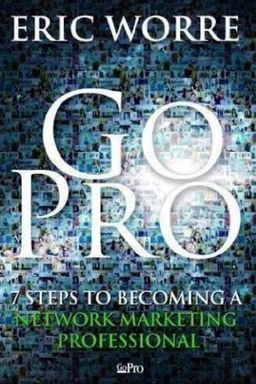
Go Pro cover

Go Pro

by Eric Worre

Go Pro is your ultimate guide to becoming a network marketing professional. Eric Worre shares seven essential steps to transform your career and unlock unlimited income potential. Discover the skills, mindset, and strategies needed to succeed in this dynamic field, while empowering others to achieve their dreams.

Becoming a Network Marketing Professional

Have you ever wondered why some people seem to thrive in business while others struggle endlessly despite working just as hard? In Go Pro: 7 Steps to Becoming a Network Marketing Professional, Eric Worre argues that the difference lies not in luck or timing but in professionalism. Network marketing, he explains, is often misunderstood as a get-rich-quick gig or a side hustle built on charm and luck. In reality, it’s a legitimate profession that rewards those who intentionally develop their skills, adopt a long-term mindset, and treat it like any other career of mastery.

Worre’s core argument is simple but powerful: network marketing isn’t perfect—it’s just better. It offers a uniquely accessible and flexible business model that aligns with the new, performance-based economy, but only for those willing to go beyond dabbling and “Go Pro.” That means replacing hope with skill, enthusiasm with mastery, and gimmicks with discipline. The book is Worre’s testament to this transformation, laid out through a seven-skill framework supported by personal stories, clear systems, and a candid discussion of what it truly takes to succeed.

Rethinking Work in the New Economy

Worre begins by contextualizing why network marketing matters now more than ever. We are no longer living in a world where climbing the corporate ladder guarantees safety. Between automation, outsourcing, and the shift toward a performance economy (where pay increasingly depends on measurable results, not hours logged), traditional jobs look less secure and less fulfilling than ever. This “New Economy,” he argues, demands entrepreneurial thinking and rewards those who can create value independently.

In that environment, network marketing fits perfectly. It provides an opportunity to leverage low start-up costs, flexible hours, and unlimited potential without the traditional business risks. Yet unlike salaried work or even traditional small business ownership, success here depends entirely on your ability to master people-centered skills—prospecting, inviting, presenting, following up, closing, supporting, and event-building. In other words, skill replaces luck.

From Amateur to Professional

Worre divides participants in the network marketing world into three groups: Posers, Amateurs, and Professionals. Posers treat it like a lottery ticket, hoping for a miracle sign-up that makes them rich. Amateurs approach it with enthusiasm but focus too much on timing, positioning, or catching the next big trend. Professionals, in contrast, focus relentlessly on mastering duplicable skills that can be taught and passed through a team. This distinction forms the heart of Worre’s philosophy—he insists that success in MLM, like success in medicine, law, or engineering, comes from deliberate practice, not fast luck.

In one pivotal story, Worre recounts his own turning point. After years of setbacks, he realized during a company event that becoming an expert was a conscious choice, not a gift. Just as a surgeon trains for thousands of hours before operating, a network marketer must deliberately study and practice communication, recruitment, and leadership. Drawing on Malcolm Gladwell’s Outliers, he notes that true world-class mastery demands at least 10,000 hours of practice—and in network marketing, the forgiving structure of the business allows you to “earn while you learn.”

The Seven Skills of the Professional

Once this mindset is in place, Worre provides a step-by-step breakdown of seven professional skills every network marketer must master: finding prospects, inviting them to learn more, presenting the product or opportunity, following up effectively, closing the sale, helping new distributors get started right, and promoting events. These aren’t abstract ideas; Worre illustrates each with practical scripts, real-life stories, and field-tested systems drawn from decades of experience.

What’s striking is how Worre reframes selling—from a process of persuasion to one of education and understanding. The goal isn’t to convince but to connect. Professionals, he insists, are not hunters chasing quick kills; they’re farmers cultivating relationships that yield long-term growth. Each skill draws on this philosophy of empathy and authenticity, transforming what might otherwise feel like “sales tactics” into acts of service and mentorship.

Character, Consistency, and the Long Game

Beyond mechanics, Worre emphasizes character. You must learn to embrace rejection, stay consistent, and replace excuses with ownership. The early chapters describe “Posers” who lose motivation after hearing “no” too often. But Worre argues that persistence pays: most recruits say yes only after 4–6 exposures, and true success often takes years, not weeks. He frames this in his 1/3/5/7 Formula: one year to get competent, three years to go full time, five years to earn six figures, and seven years to become an expert. Compare that to the decade-plus investment required for a traditional degree, and network marketing’s timeline feels refreshingly attainable.

Through this long-game philosophy, Worre connects network marketing to broader principles of mastery and entrepreneurship. Like Jim Rohn and John Maxwell, he views business not as a means to an end but as a vehicle for personal growth. Network marketing, he writes, “is an incubator for leadership.” Success demands personal transformation—developing discipline, learning communication, and confronting one’s fears. The true reward isn’t the commission check but the person you become in the process.

Why It Matters

In an era of automation, layoffs, and shifting markets, Go Pro presents network marketing as a timely and empowering alternative. It’s not for everyone—it requires resilience, humility, and a willingness to face skepticism—but for those who genuinely commit, it offers a path to freedom. Worre closes with a call to return dignity to this misunderstood profession: “It’s not perfect, but it’s just better.” By reframing MLM from hustle to profession, he challenges readers to raise their standards, learn real skills, and share that better way with the world.


Network Marketing is Better, Not Perfect

Eric Worre opens his book with a simple truth: Network marketing isn’t perfect—it’s just better. This idea challenges two extremes: on one hand, critics who dismiss MLM as a scam, and on the other, dreamers who treat it like a ticket to instant wealth. Worre avoids both illusions, presenting a grounded argument for why this business model offers genuine advantages over traditional work, especially in the shifting global economy.

The Death of the Old Economy

For decades, the path to success was simple: go to school, get a degree, find a stable job, and stay loyal until retirement. That system no longer works. Worre calls it the Old Economy—an era built on security and predictability that technology has now obliterated. Automation, outsourcing, and recession cycles have eroded job stability. What remains is what he calls a performance economy: companies pay only for results, not hours, and they need fewer workers to do more. (In this, Worre echoes Daniel Pink’s argument in Free Agent Nation, that individuals must think of themselves as “free agents” if they want long-term security.)

According to Worre, this massive shift exposes the myth of job security. What were once safe white-collar jobs are now either automated or outsourced. Even the dream of entrepreneurship—launching one’s own company—is out of reach for most because of high costs, long hours, and near-constant stress. So what’s left? A model that blends the entrepreneurial upside with low risk, low start-up cost, and unlimited potential: network marketing.

The Case for Network Marketing

Worre frequently plays a game with audiences: “Let’s design the perfect career.” People list desirable traits—no boss, no commute, low startup costs, unlimited income, international reach, meaningful impact, time and financial freedom—and by the end of the exercise, they’re describing what network marketing already provides. While no form of work eliminates risk completely, network marketing checks most of the boxes for personal autonomy and scalability. It aligns perfectly with the New Economy because it rewards results and allows individuals to leverage networks rather than hierarchies.

At the same time, Worre acknowledges that network marketing has an image problem. Many outsiders see it as pyramid-like or socially awkward. Why? Because too many people treat it like a lottery—signing up with no intention of mastering the profession. When amateurs depend on hype instead of skill, they fail, blame the system, and tarnish its reputation. Professionals, by contrast, treat it as a genuine business: they learn, practice, and duplicate success across teams. The industry’s strength lies in this very duplication—the power of leverage through mentorship and training.

Facing the Catch

Of course, there’s a catch. To join network marketing successfully, you must endure what Worre calls a “temporary loss of social esteem from ignorant people.” You’ll be misunderstood, even ridiculed, by those who can’t see beyond traditional models of employment. The stigma often stems from amateurs who failed previously and then broadcast their disappointment as proof that “it doesn’t work.” Worre insists that professionals must accept, even embrace, this resistance—it’s a sign they’re moving ahead of the crowd. The best leaders throughout history, from Mandela to Jobs, achieved breakthroughs because they prioritized truth over perception.

Why It’s Better

In the end, network marketing is better because it reflects how today’s economy actually operates. It lets you be paid for performance, not time. It allows you to start small, fail safely, and grow over time. It offers low barriers to entry but high potential for mastery and leadership. It’s not perfect—it depends on human skill, discipline, and character—but it is, undeniably, one of the few remaining vehicles where the average person can achieve extraordinary freedom if they’re willing to go pro.


The Decision to Go Pro

The most crucial moment in Eric Worre’s life came when he decided to Go Pro—to stop pretending, stop blaming, and start treating network marketing as a profession worthy of mastery. His concept of “going pro” is both a mindset shift and a commitment to long-term skill development. It’s about moving from chance to choice, from luck to learning, and from enthusiasm to expertise.

Posers, Amateurs, and Professionals

Worre divides participants into three clear categories. Posers treat network marketing like a lottery ticket; they expect success without effort. They may talk to a few friends, get rejected, and quit. Roughly 80% of distributors start in this camp. Amateurs go further—they study scripts, attend meetings, and show excitement—but they fixate on luck, timing, or catching the perfect recruit. They’re always chasing shortcuts instead of mastering fundamentals. Finally, Professionals focus on skills. They understand that duplication, not flashy gimmicks, drives sustainable income. This progression mirrors the classic “competence development” ladder found in any trade: from unconscious incompetence to conscious mastery.

For Worre, the professional mindset begins when you stop treating network marketing as a side project and start viewing it as a career. Just as doctors or athletes commit to their crafts through years of study and discipline, so must network marketers. He cites Malcolm Gladwell’s “10,000-Hour Rule” to emphasize the importance of practice—around seven years of consistent daily effort to become world class. Yet unlike traditional professions, you can earn while you learn, turning each conversation and meeting into a mini classroom.

Replacing Enthusiasm with Skill

A popular saying in network circles is, “Ignorance on fire is better than knowledge on ice.” Worre disagrees. Enthusiasm is powerful, but without skill, it’s unsustainable. He compares it to a doctor who’s “passionate but untrained”—someone you wouldn’t trust with your health. Passion must be paired with professional competence. That’s why his model emphasizes continuous learning and mechanical excellence in seven fundamental skills.

When Worre shifted his focus from chasing luck to developing expertise, his results transformed. His team grew automatically, drawn by his newfound posture and calm confidence. Professionals attract others not through charisma, but through competence—it’s visible in how they carry themselves, communicate, and handle challenges. People sense when you’re serious and want to follow your lead.

Leadership by Example

Professionalism also creates a ripple effect. When you decide to go pro, your team sees it, feels it, and mirrors it. Worre encourages readers to call themselves “Network Marketing Professionals” with pride, just as others say “I’m a doctor” or “I’m an engineer.” He believes this language shift restores dignity to the profession and challenges outdated stigmas. Since launching NetworkMarketingPro.com in 2009, millions have adopted this identity, turning it from a punchline into a respected career path.

Ultimately, deciding to go pro is an act of self-respect. It means you’re no longer dabbling in half-measures or apologizing for your goals. It’s about embracing a process of becoming—the daily grind that turns amateurs into experts. Like any true professional, you commit to excellence whether eyes are on you or not. The payoff isn’t just higher income, Worre reminds us—it’s freedom, mastery, and the quiet confidence that comes from knowing you’ve earned your place.


The Seven Core Skills of a Professional

At the heart of Go Pro lies Worre’s practical roadmap: the seven core skills that transform average participants into network marketing professionals. Each skill builds on the others to create a system of predictable growth that anyone can replicate. Mastering these fundamentals is what separates those who survive from those who thrive.

1. Finding Prospects

Professionals are always adding to their “Active Candidate List.” Unlike amateurs, they don’t rely on a handful of friends; they network intentionally everywhere. Worre borrows lessons from business author Harvey Mackay, who built a list of over 12,000 personal contacts by staying in touch creatively. Professionals expand their lists daily—adding two new names every day means over 3,000 new contacts in five years. Networking becomes second nature when you approach it with curiosity, not desperation.

2. Inviting Prospects to Learn More

This is the “gateway skill.” Worre describes a precise eight-step formula for making effective invitations—from being in a hurry to using the powerful phrase, “If I, would you?” (e.g., “If I give you a link to a short video, would you watch it?”). Professionals focus on educating rather than persuading. They detach emotionally from the outcome and respect the prospect’s choice, knowing their role is to spark curiosity, not enforce compliance.

3. Presenting

“You are the messenger, not the message,” Worre insists. Professionals use tools—videos, recorded calls, live events—instead of personal charisma to present their opportunity. This ensures duplication and removes the fear that beginners must “sell.” He also teaches how to tell your personal story effectively: your past, your pain, how network marketing found you, and your hopeful future. Storytelling, not statistics, builds belief.

4. Following Up

Most people fail here. Follow-up means doing what you said you’d do when you said you’d do it—showing reliability in an unreliable world. Worre reminds you that it takes an average of four to six exposures for someone to join. Successful professionals “condense the exposures”—offering multiple touchpoints in a short time to sustain interest. Using empathy-based techniques like “Feel, Felt, Found” helps overcome objections gracefully while maintaining trust.

5. Closing

Professionals close with questions, not pressure. Worre teaches the “Four Question Close” to guide prospects logically toward commitment: (1) How much would you need to earn monthly for this to be worth your time? (2) How many hours weekly can you commit? (3) How many months would you work to reach that income? (4) If I could show you how, would you get started? This consultative approach builds self-belief and positions you as a partner, not a pusher.

6. Helping New Distributors Get Started Right

The first few days are everything. Worre models this step after mentor Michael Nelson’s “Game Plan Interview,” which sets expectations, outlines immediate tasks, and builds confidence. New recruits must understand that success depends on their own actions—not their upline’s help. The sponsor’s goal is independence, not dependency. Early wins—like a first customer or commission check—push new distributors “over the line,” where continuing feels easier than quitting.

7. Promoting Events

For Worre, events are the heartbeat of network marketing. Destination conventions act as emotional fuel—refocusing people, creating social proof, and renewing belief. He learned early on that income correlates directly with how many team members attend. As one mentor told him, “If you just keep showing up to every event while others drop off, you’ll end up at the top.” Promoters never “announce” events—they passionately sell the experience, sharing stories that move people to decide for themselves. Mastering event promotion, he says, is as close as you’ll get to the industry’s secret formula.


Patience, Practice, and the Long View

If most people abandon network marketing, Worre says, it’s because they misunderstand time. They expect to get rich in three months when they should be measuring progress over years. In traditional business, investors expect to lose money before breaking even. Ironically, network marketers call it a failure if they haven’t profited by month two. Worre’s message is blunt: anything worthwhile takes time.

The 1/3/5/7 Formula

Worre’s benchmark for professional growth is the 1/3/5/7 formula: one year to become competent and profitable; three to go full-time; five to earn six figures; and seven to become an expert. He argues that these expectations are far more realistic—and generous—than those of most careers. Medical school takes 10 years; law students graduate deep in debt; entrepreneurs often fail multiple times. In network marketing, your “tuition” is low, and you earn while you learn. The only real cost is your persistence.

The Discipline of Learning

Worre outlines a learning model built on continuous improvement. Borrowing from the High Scope Educational Foundation, he teaches a three-step method called Plan-Do-Review: make a plan, execute it, review the results, and adjust. Every conversation, success, or failure becomes a case study in your personal MBA of network marketing. There are no “bad experiences,” only learning ones. Each repetition builds muscle memory until action becomes instinct.

He also stresses being an “active student.” Read daily (he recommends 10 pages a day), listen to audios, attend events, and replicate successful behaviors from mentors. Learning, however, must translate to action. “You can’t look good and get better at the same time,” he warns. Growth demands vulnerability—making mistakes publicly until you improve. Teaching others accelerates this process, since explaining concepts burns them into your brain.

Influence and Association

Another powerful lesson Worre borrows from Jim Rohn is the Law of Association: you become the average of the five people you spend the most time with. If your five are cynical or complacent, your mindset will match. Leaders deliberately upgrade their circles—reducing time with negative people, expanding time with positive achievers, and disassociating from toxicity when necessary. Every six months, one of your top five relationships will likely change, so choose replacements wisely. Who you learn from is as important as what you learn.

Work Hard, Play Free

Finally, Worre reminds readers that freedom isn’t free. The top earners he’s studied all share one trait: an extraordinary work ethic. They don’t mistake flexibility for laziness. They treat network marketing as a calling, not a hobby. The irony, he says, is that the harder you work at first, the freer you become later. Consistent daily effort—prospecting, presenting, following up—compounds over time into something priceless: a business that runs on leadership and belief rather than luck and fatigue.


Freedom, Contribution, and Transformation

In the final chapters, Eric Worre zooms out from tactics to purpose. Why endure the rejection, late nights, and long learning curve? Because, he says, it’s all worth it. The rewards of going pro go far beyond income. They include freedom, contribution, meaningful relationships, and personal transformation—the kind of growth that feeds every part of your life.

Freedom

For Worre, freedom means self-direction—the ability to choose when, where, and how you work. He paints a vivid picture: waking when you’re done sleeping, spending time with people you love, traveling the world, and contributing to causes that matter. Network marketing, he argues, offers one of the most accessible paths to this kind of freedom. Unlike traditional careers that trade time for money, this business builds residual value—you work hard once and continue benefiting from those efforts for years. True success, though, only comes after years of skill-building and consistency.

Contribution

Worre also emphasizes contribution as both a moral responsibility and a source of joy. Drawing insight from Harvey Mackay, who was instructed by his father to devote 25% of his life to volunteerism, he urges professionals to give back through money, time, and influence. Financial contributions matter, but so does volunteering time and mobilizing your network to amplify impact. Influence, he says, is your greatest resource—once you’ve built it through integrity and results, use it to make the world better.

Relationships and Community

Network marketing, by its nature, expands your world. You meet mentors, business partners, and lifelong friends who share your values. For Worre, these relationships have been priceless. He recounts how the profession introduced him to global heroes and even to his wife, Marina, whom he met while speaking in Moscow. This expanding network is a perpetual source of collaboration, learning, and inspiration—proof that success is a social experience, not a solitary one.

Transformation

Ultimately, Worre concludes that the greatest reward of all isn’t money or freedom—it’s who you become in the process. Network marketing is a “leadership lab” that forces you to grow. You learn to handle fear, rejection, communication, leadership, and vision. The process turns insecurities into strengths and confusion into clarity. It teaches resilience, humility, and empathy—traits that carry into every other area of life.

That’s why Worre ends each of his training videos and his book with the same message: “My wish for you is that you decide to become a Network Marketing Professional—that you decide to Go Pro—because it is a stone-cold fact that we have a better way.” Through dedication and purpose, network marketing becomes not just a profession but a personal evolution—a better way to work, live, and lead.

Dig Deeper

Get personalized prompts to apply these lessons to your life and deepen your understanding.

Go Deeper

Get the Full Experience

Download Insight Books for AI-powered reflections, quizzes, and more.