
Idea 1
Speed, Power, and the Making of Modern Competition
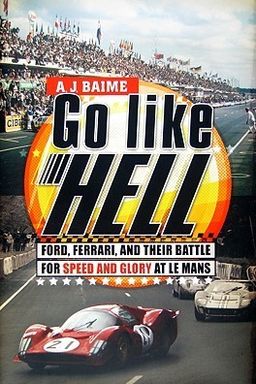
Why would an American corporation pour millions into the perilous world of endurance racing? The answer lies at the nexus of pride, marketing, and technological ambition. This book traces how Ford’s 1960s campaign against Ferrari transformed both racing and corporate identity. It is not just a motorsport story; it is an industrial epic revealing how competition—mechanical, personal, and national—shaped an era.
At the heart is Henry Ford II’s quest to defeat Enzo Ferrari at Le Mans. After a failed acquisition attempt in 1963, what began as a marketing project turns into corporate obsession. Ford’s leadership sees racing as more than sport—it is the ultimate stage for proving technical superiority, selling cars, and reclaiming American prestige abroad. Le Mans becomes the proving ground for industrial willpower.
From Marketing Campaign to Corporate Crusade
In the early 1960s, Lee Iacocca and Ford’s marketing division interpret racing through the lens of advertising. Their strategy, branded as “Total Performance,” ties showroom cars to racetrack victories. The youth demographic demands excitement; winning on Sunday promises sales on Monday. When Iacocca markets the Mustang and the 427 Galaxie alongside Daytona wins, he turns engineering feats into lifestyle icons. (Note: this philosophy anticipates modern brand storytelling, where performance, design, and emotion intertwine.)
After Ferrari snubs Ford’s purchase bid, Henry II reacts personally: “We’ll beat his ass. We’re going to race him.” This vow unleashes resources that transform Ford into a temporary motorsport empire. Teams form on multiple continents, budgets balloon, and engineers like Roy Lunn and John Wyer are tasked with creating a car capable of surviving the world’s most brutal race. Pride becomes policy.
Enzo Ferrari’s World: Grief, Perfection, and Control
To understand the feud, you must also understand the man at Maranello. Enzo Ferrari, scarred by personal tragedy—the death of his son Dino—and accused of indifference after the Mille Miglia and Monza disasters, rules his factory as a blend of workshop and shrine. He turns grief into innovation, binding emotion to mechanics. Each car is not merely built—it is consecrated. For Ferrari, racing is art; for Ford, it is industrial science. The cultural conflict could not be sharper.
These contrasting philosophies animate the decade’s battles. Where Ford throws manpower, data, and money, Ferrari deploys intuition, craftsmanship, and selective genius. Each victory or failure is a referendum on two ways of making the modern machine.
Engineering as Warfare
From the first GT40 prototypes to the monstrous 427-powered Mk IIs, Ford’s effort becomes an engineering arms race. Early tests at Le Mans in 1964 and 1965 produce speed records—and catastrophic mechanical collapses. Gearboxes detonate, fuel hoses ignite, and suspension failures nearly kill drivers. The lesson is stark: endurance requires discipline, not just horsepower. After losses, Ford relocates the program to Carroll Shelby’s operation in California, where Ken Miles leads intense development, transforming panic into progress.
By 1966, Ford perfects the formula—industrial rigor fused with racer intuition. The GT40 Mk II embodies brute American muscle tamed by data, testing, and relentless iteration. Ferrari, constrained by smaller budgets and internal fractures, fights valiantly but cannot match the onslaught.
Culture, Commerce, and Consequence
You also see racing evolve into spectacle and geopolitical theater. In the television age, racing is culture: Ford’s victories double as brand campaigns, dealers trade on triumphs, and youth culture fuses cars with identity. Yet this triumph carries moral cost. Crashes kill drivers and spectators; regulators and writers like Ralph Nader decry the industry’s disregard for safety. Ford’s executives oscillate between congressional hearings and race podiums, illustrating the paradox of progress—innovation and tragedy entwined.
Ultimately, this saga is about more than Ford or Ferrari. It is about how ambition, grief, and competition create technological revolutions and human cost. The GT40’s victory in 1966—marred by a staging controversy that robs Ken Miles of his rightful win—symbolizes both triumph and moral complexity. By the time the dust settles, Ford has conquered Le Mans and redefined what a corporation can do with enough capital and conviction. Ferrari, wounded but undiminished, immortalizes the other side: craftsmanship as resistance. Together, they embody the twin engines of modern industry—speed and sacrifice.