
Idea 1
How Glossier Rewrote (and Survived) the Girlboss Era
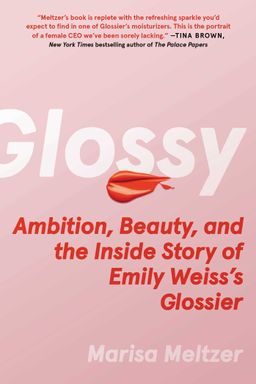
What does it really take to build a brand people line up for—and what happens when the culture that crowned you decides it prefers your downfall? In Glossy, Marisa Meltzer argues that Emily Weiss’s Glossier wasn’t just a beauty company; it was the defining millennial brand that fused content, community, and commerce into a new playbook—then had to unlearn its own myths to survive. Meltzer contends that Glossier’s rise and reckoning mirror a bigger cultural shift: the boom-and-backlash of the “girlboss,” the limits of direct-to-consumer tech optimism, and the messy work of maturing from aesthetic phenomenon to durable business.
The book traces Weiss’s path from MTV’s The Hills “Superintern” to founder of the cult beauty blog Into the Gloss, and then CEO of Glossier, a company once valued at $1.8 billion. It shows you how Weiss built a brand on the intimacy of bathroom-shelf confessions, translated that into products people flaunted as identity, and codified a look—dewy skin, Boy Brow, and millennial pink—that saturated Instagram and the beauty industry. It also shows how the same forces that powered Glossier—social media, founder worship, and frictionless DTC growth—would later test it: with staffing missteps, an ill-fated sub-brand (Play), inclusivity blind spots, a pandemic retail collapse, and the cultural takedown of the girlboss archetype.
From insider blog to billion-dollar brand
Weiss’s pivotal insight came with Into the Gloss (2010): treat beauty as part of style, but democratize it through voyeuristic, candid Top Shelf interviews (think: Jenna Lyons, Catherine Deneuve, Kim Kardashian). The formula mixed utility with intimacy and cast readers as contributors, not spectators. This became the seed of Glossier (2014), a line Weiss pitched as “born from content; fueled by community.” She flipped Clinique’s old department-store funnel into a digital loop: observe, co-create, and launch—then watch Instagram turn packaging into a social signal (those pink bubble-wrap pouches became airport-line semaphore).
The brand as a personality test
Glossier’s genius wasn’t inventing never-before-seen formulas; it was choreographing an accessible fantasy. A $12 Balm Dotcom and a dewy sheen said, “I’m effortless, modern, inclusive—and in on the vibe.” Weiss set the tone: “skin first, makeup second, smile always.” The brand voice read like your cooler friend texting at brunch. Products worked well enough, looked great on shelfies, and came with a wink (“Krispy Kreme glazed” skin for Haloscope highlighter). In the process, Glossier made community a growth engine long before loyalty platforms were fashionable. (Compare to Goop’s wellness media-to-commerce arc and Nike’s community-led run clubs, but with a softer, pinker vernacular.)
The tech-company mirage—and the reckoning
Flush with VC backing (led by Forerunner, Thrive, IVP, Sequoia), Weiss tried to transcend “beauty” and become a tech platform: imagine shoppable Top Shelves and a social graph of your routine. But software cadence and beauty product cycles rarely sync, and a secretive app effort stalled. Meanwhile, operational strain (waitlists, a manufacturer chasing Kylie Cosmetics, reformulations), cultural misfires (Glossier Play’s glitter, limited Skin Tint shades), and internal complaints—culminating in @outtathegloss allegations from former retail editors—collided with the girlboss backlash sweeping Away, The Wing, and Refinery29. Weiss’s carefully guarded persona helped, but Glossier had to evolve: new leadership (CEO Kyle Leahy), sharper operations, and a pragmatic channel shift from DTC purism to a Sephora partnership.
Why this story matters to you
If you build products, lead teams, or steward a brand, Glossy is a case study in turning audience intimacy into durable advantage—and in the costs of mistaking mood for moat. You’ll see how to architect a cult brand without cultishness; how to honor community input without ceding strategy; how to invest in operations as aggressively as aesthetics; and how to confront culture-forward critiques (inclusivity, labor, pay) as part of your value proposition. You’ll also learn the founder lesson embedded in Shoe Dog and The Everything Store (both fixtures on Weiss’s shelf): at scale, storytelling must meet systems—and sometimes the visionary isn’t the best CEO for Act II.
Big promise, sober pivot
Meltzer’s core argument: Glossier reframed “beauty as identity,” turned bathrooms into focus groups, and set a new commercial grammar for digital brands. Its survival—via leadership change and omnichannel pragmatism—shows what it takes to outlive an era you helped create.
Across the chapters ahead, you’ll explore: Weiss’s origin story and the alchemy of Into the Gloss; how Glossier engineered a cult through packaging, product, and voice; the fundraising-fueled attempt to be a tech company; the cultural and operational crises that forced a reckoning; the ill-fated Play experiment; and the post-girlboss pivot to Sephora, new leadership, and sustainable growth. Read it as a mirror: the same forces shaping your feeds—and perhaps your ambitions—are the ones Glossier surfed, and then had to master, to keep going.