
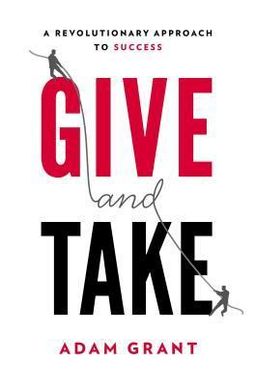
Give and Take cover

Give and Take

by Adam Grant

Give and Take revolutionizes traditional success paradigms by illustrating how giving, rather than taking, fosters profound achievement. Backed by robust research, Adam Grant explores how generosity can catalyze both personal and collective progress, unlocking new avenues for fulfillment and influence.

Giving, Taking, and Matching: The Hidden Economy of Human Success

When you think about what makes people thrive—at work, in friendships, or even in marriage—what comes to mind first? Intelligence? Ambition? Luck? The book Givers, Takers, and Matchers invites you to consider something deceptively simple yet profoundly powerful: the way we exchange value with others. Every interaction, it argues, belongs to one of three styles—giving, taking, or matching—and understanding these can completely reshape how you pursue success and satisfaction in life.

At its core, the book contends that generosity is not just a moral virtue—it’s also a strategic advantage. But it’s not unrestrained altruism that wins; it’s smart, sustained, purposeful giving. The author builds a compelling case that while takers may enjoy temporary success, they often crash under the weight of their damaged reputations. Matchers, who focus on fairness and reciprocity, keep the world balanced but rarely soar. Givers, when protected from burnout and exploitation, rise to the top—because they multiply opportunities for everyone, including themselves.

Three Fundamental Styles of Interaction

The book begins by defining the three dominant exchange styles. Givers contribute more than they receive, driven by altruism and the desire for collective success. Matchers maintain fairness—it’s give-and-take, strictly balanced. Takers, however, focus on maximizing their own gain, often at others’ expense. You’ll quickly see yourself reflected somewhere on this spectrum, as we all shift between these roles depending on context.

The brilliance of the book lies in showing how these styles play out not only in individual relationships but across organizations, communities, and careers. You’ll read about writers like George Meyer of The Simpsons, who gave away ideas without claiming credit; about matchers who navigate fairness as a social norm; and about notorious takers like Frank Lloyd Wright and Jonas Salk, whose reputations suffered from selfishness. Each example crystallizes how our choices ripple outward—supporting success or slowly undermining it.

Why Giving Wins—But With Balance

While givers earn admiration, the book warns that generosity can sometimes backfire. Some givers end up depleted or exploited—sacrificing themselves for others’ benefit. The goal, then, is not to abandon giving but to refine it. You’ll learn how successful givers combine empathy with strategy: they focus their efforts on meaningful, high-impact help, shield themselves from chronic takers, and maintain energy by witnessing their contributions' effects. This balanced approach allows givers to thrive sustainably.

“Generosity isn’t weakness—it’s leverage. When you help others succeed, you strengthen the network that ultimately sustains you.”

The Social Influence Behind Our Choices

Another fascinating layer of the book explores how our social environments affect whether we give, take, or match. Peer norms, group identity, and similarity shape generosity. For instance, in experiments with Manchester United fans, people were far more likely to help someone wearing their team’s shirt than a plain one. Likewise, online communities like Freecycle.org encourage giving behaviors even among habitual takers, proving that generosity spreads through social expectation and belonging.

Powerless Communication and Influence

You’ll also learn about the counterintuitive strength of “powerless communication”—a style of influence rooted in humility, curiosity, and empathy. Rather than assert dominance, givers persuade by asking, listening, and aligning with others’ needs. Studies of top-performing opticians show that asking questions and focusing on customer understanding lead to stronger trust and higher sales—a lesson in how gentleness can be a tool for power.

Networking, Mentorship, and the Cascade of Generosity

One chapter illuminates how givers build and sustain vast networks, even across long gaps of time. Because they’re remembered for genuine help, reestablishing connections is easy and fruitful. Entrepreneur Adam Rifkin, acclaimed as Fortune Magazine’s best networker, exemplifies this principle. His gatherings enable others’ success—and in return, when he seeks help years later, doors open effortlessly. Similarly, givers like professors and managers who nurture untapped potential in others create circles of success that ultimately reflect back on them.

Why This Matters

Understanding these principles can reshape how you work, lead, and live. In competitive spaces where self-interest seems to dominate, giving smartly offers a durable advantage. This book maps out both the psychological and social mechanics behind sustainable generosity: building trust, shaping reputation, cultivating influence, and fostering shared achievement. It’s a reminder that personal advancement isn’t zero-sum—it’s amplified through others.

By the end, you’ll see why the world’s most influential leaders—from Abraham Lincoln to modern professionals—achieve greatness not in spite of selflessness but because of it. And you’ll be equipped with strategies to cultivate generosity wisely—so both you and those around you can win.


The Spirit of Givers: Elevating Collective Success

At the heart of this book lies the giver’s mindset—an approach grounded in altruism and the pursuit of collective achievement. Givers are wired to contribute more than they receive. Their motivation isn’t fame or personal payoff; they find intrinsic satisfaction in helping others, often feeling the joy of contribution as its own reward. You’ve probably met such people—the colleague who shares knowledge freely or the friend who helps without expecting anything back.

George Meyer and the Power of Selfless Creativity

The example of George Meyer, a key writer for The Simpsons, embodies this idea perfectly. Meyer contributed ideas across hundreds of episodes but claimed credit for only a handful. His aim was not personal recognition but the success of the show itself. In fact, he invented the word “meh” (now in dictionaries) but forgot he had created it, illustrating his detachment from personal credit. What mattered was the impact of his work on the collective.

This behavior might seem irrational in a world obsessed with visibility and status. Yet it turns out that such selflessness creates long-term influence. While takers chase short-term gains, givers build enduring goodwill. People trust them, seek their input, and advocate for them—forming a resilient foundation for success.

Creating Abundance Together

Givers understand something profound: success expands when shared. Rather than treating achievements as a limited pie, they view them as something that multiplies through collaboration. This perspective transforms team dynamics. By helping others grow, givers cultivate environments of abundance, creativity, and commitment.

“For givers, success isn’t a solo climb—it’s a collective ascent where lifting others lifts us all.”

Psychologically, giving boosts wellbeing. Studies referenced throughout the book show that helping others activates reward centers in the brain, fostering happiness and fulfillment. Thus, givers aren’t merely noble—they’re fulfilled and resilient. (Note: This echoes research by Adam Grant in Give and Take, where he similarly argues that strategic altruism fuels motivation and success.)

The Strategic Edge of Altruism

What separates thriving givers from struggling ones is intentionality. Wise givers prioritize meaningful contribution over indiscriminate generosity. They don’t allow their goodwill to be exploited by takers. Instead, they channel their energy where it amplifies outcomes for everyone. In this way, they foster collective success without sacrificing personal wellbeing.

By embodying the giver’s spirit, you can turn collaboration into an engine of growth. Whether you lead a team, manage a project, or simply interact daily with others, choosing to give thoughtfully can be a strategic advantage—not just an act of kindness.


Matchers: The Art of Fair Exchange

If givers operate on altruism and takers on selfishness, matchers live by fairness. They embody a balanced philosophy: “I’ll help you if you’ll help me.” Matchers are guided by reciprocity, ensuring that interactions are equitable and neither party feels used. In fact, most people tend to default to matching—it feels fair, safe, and socially acceptable.

The Psychology of Reciprocity

Matchers form the social glue of many professional environments. They manage exchanges of favors and resources carefully, giving support but tracking debts. This creates predictability and fairness, especially in workplaces where cooperation is crucial but competition is constant. Think of the friend who drives you to the airport because you once helped them move—that’s classic matching behavior.

Because fairness feels natural, matching dominates marketplaces, social platforms, and much of our day-to-day behavior. Websites like Craigslist exemplify this equilibrium, where people exchange goods for equal value. The principle works—but it limits generosity’s contagious potential. While equitable, matchers rarely ignite extraordinary progress or deep trust.

Strengths and Boundaries of Matching

Matching isn’t wrong—it’s simply pragmatic. It maintains order and prevents exploitation. Yet, the book highlights that in innovation-driven environments, strict reciprocity can suppress creativity. People hesitate to share big ideas freely if they expect equal compensation each time. Givers, by contrast, spark momentum that matchers sustain.

“Matchers keep the world fair; givers make it better.”

Understanding matchers is crucial because they influence reputations. When matchers observe takers exploiting others, they spread warnings—imposing a form of social tax known as the “taker tax.” This peer accountability helps balance ecosystems. As you interact professionally or personally, mastering this dynamic helps you navigate fairness while avoiding becoming transactional yourself.

In essence, matchers define the middle ground—steady, fair, and socially reinforcing. But the book gently urges readers to rise beyond mere fairness by practicing generous behaviors selectively, where the return on shared growth is far greater than tit-for-tat reciprocity.


The Taker Trap: How Selfishness Undermines Success

You may have heard advice suggesting that to succeed, you need to look out for yourself first. This book dismantles that myth through vivid historical case studies. Takers—those who prioritize their own interests and neglect others—often achieve temporary wins, but their success erodes over time. Why? Because selfishness breeds isolation and mistrust.

The Fall of Jonas Salk and Frank Lloyd Wright

Jonas Salk developed the polio vaccine—a monumental scientific breakthrough—but failed to acknowledge his collaborators publicly. His oversight offended colleagues deeply and tainted his reputation. Despite his achievement, he was excluded from the National Academy of Sciences and never received a Nobel Prize. The so-called “taker tax” caught up with him—his lack of gratitude cost him future honors.

A similar story unfolds with architect Frank Lloyd Wright. Known for his genius, he notoriously exploited his apprentices, withholding pay and demanding credit for their work—even invoicing his son for living expenses when he sought a salary. Over time, clients preferred hiring Wright’s apprentices over him, damaging his brand and reducing opportunities.

The Taker Tax and Reputation Ripple

The book introduces the concept of the taker tax: a social penalty where others spread word of selfish behavior, effectively eroding a taker’s credibility and success. This isn’t mere gossip—it’s social regulation. Communities safeguard fairness by penalizing exploitation. You’ve likely seen similar dynamics at work: colleagues stop volunteering help to someone who never reciprocates or hoards credit.

“Selfishness may open the first door to success—but it eventually locks all the others.”

In a world connected by reputation, takers suffer from social memory. Once labeled untrustworthy, rebuilding relationships is almost impossible. (Note: Robert Cialdini’s work on Influence also highlights reciprocity as a fundamental driver of trust—its absence leads to exclusion.)

The lesson is clear: success cultivated through taking isn’t sustainable. True influence arises not from domination but from credibility, respect, and shared progress. When your reputation reflects generosity, others actively invest in your success. But when you take more than you give, the network quietly shuts you out.


How Givers Rise to the Top

One of the most uplifting messages from the book is that givers—even in competitive, high-stakes settings—often end up in the most powerful positions. Their focus on the greater good doesn’t hinder progress; it accelerates it. Think about leaders who promote collaboration over ego—they carve paths others follow willingly.

Abraham Lincoln: Moral Clarity Over Career Advancement

Before his presidency, Abraham Lincoln intentionally withdrew from a senate race to support Lyman Trumbull, who he believed had a stronger chance of advancing their shared mission to abolish slavery. Lincoln sacrificed political opportunity for a moral cause—and in the long run, that selflessness earned him lasting respect. Later, Trumbull endorsed Lincoln’s future senatorial campaign, illustrating how generous acts often return multiplied support.

Generosity as Strategic Advantage

Modern examples, like Jason Geller at Deloitte Consulting, reinforce this truth. Geller developed a system to aggregate client intelligence but shared it across the company instead of keeping it proprietary. His generosity streamlined operations and positioned him as partner—the youngest in the firm’s history. In helping others succeed, he created shared efficiency that elevated everyone, including himself.

“Success built on the common good doesn’t just uplift others—it amplifies your own impact.”

Givers rise because people want them to win. Their goodwill circulates; their integrity fosters loyalty. Whereas takers must constantly guard against backlash, givers accumulate allies. And strategically, focusing on shared success creates better results in complex environments where collaboration is key.

You can apply this lesson in your own career by investing in shared goals—advocating for growth, championing teamwork, and helping others shine. When your motive transcends your personal advancement, you not only cultivate influence but also build a reputation that carries you upward naturally.


Networks and Mentorship: The Ripple Effect of Giving

Beyond individual interactions, the book teaches how givers create thriving ecosystems through networks and mentorship. Generosity builds trust—and trust sustains long-term relationships that outlast transactions. As a result, givers can easily reconnect with people years later, unlike takers who burn bridges through self-interest.

Adam Rifkin: The Network That Gives Back

Entrepreneur Adam Rifkin exemplifies the generous networker. He founded “106 Miles,” a community where innovators, coders, and entrepreneurs share insights freely. Rifkin helps others obtain jobs, refine ideas, and build connections. His consistent giving builds such goodwill that he easily enlisted help from high-profile figures, such as Excite co-founder Graham Spencer, years after their last interaction. This ease of re-connection demonstrates the compounding returns of generosity over time.

Mentorship and Seeing Hidden Potential

The book extends this principle to mentoring, where givers perceive potential before it surfaces. Stu Inman, a basketball manager, drafted overlooked players like Clyde Drexler—who later became one of the greats. Similarly, accounting professor C. J. Skender supported every student, sending personalized letters to exam-takers regardless of outcomes. His commitment produced medal-winning accountants and inspired one student, Reggie Love, to become Barack Obama’s personal assistant.

“When you choose to believe in others early, you create a legacy that enriches both you and them.”

Mentorship rooted in giving not only elevates others—it enhances networks of trust, competence, and gratitude. For you, adopting this mindset means seeing potential where others see limitation, investing early, and reaping exponential returns through relationships and loyalty.

In essence, networks and mentoring serve as the architecture of generosity. Each act of help builds invisible bridges that later carry you forward when you need support yourself.


The Art of Powerless Communication

Contrary to popular belief, the most persuasive people aren’t always loud or confident—they’re empathic and curious. The book introduces powerless communication as a hallmark of givers. This approach prioritizes understanding over asserting, questions over commands, and listening over lecturing. When you communicate in this way, you invite trust and collaboration rather than resistance.

Selling Through Empathy

In studies of optometry stores, the top performers turned out to be givers who practiced “powerless” dialogue. Kildare Escoto of LensCrafters, for example, became the company’s leading salesperson by asking genuine questions about customers’ lifestyles and needs rather than pushing products. That vulnerability—expressed through curiosity—made people feel seen and valued, not manipulated. His results prove that soft communication wins where pushiness fails.

Influence Through Humility

Another case, Annie, a scientist studying for her MBA, exemplifies tactical humility. When faced with losing her job options due to relocation, instead of demanding special treatment, she asked her HR manager, “What would you do?” Her empathy turned the conversation into collaboration, and the results were extraordinary: the company granted her access to a private jet for commuting between job sites while continuing her studies. Her respectful curiosity transformed constraints into privileges.

“Power doesn’t always come from commanding; sometimes it flows from connecting.”

This lesson resonates across leadership literature: true influence arises when people feel motivated, not coerced. (Note: Similar ideas appear in Dale Carnegie’s How to Win Friends and Influence People.) By practicing powerless communication, you can strengthen professional relationships, resolve conflict effectively, and inspire voluntary cooperation.

Ultimately, powerless communication represents a giver’s hidden superpower—the ability to lead through listening and persuade through empathy.


Sustaining Generosity Without Burnout

Generosity can be both uplifting and draining. The final message of the book cautions that even the most well-intentioned givers must learn to sustain their energy and guard against exploitation by takers. The key is not less giving, but smarter giving.

Avoiding the Trap of Burnout

One teacher, Conrey Callahan, was nearing burnout until she created a mentoring program for college-bound students. Although it added hours to her schedule, seeing tangible outcomes—her mentees succeeding—rejuvenated her spirit. Witnessing impact replenishes energy because it connects effort to visible purpose. Surprisingly, the depth of engagement revives motivation more effectively than rest alone.

Protection from Exploitation

To prevent being used by takers, the book recommends a “generous tit-for-tat” approach—never forget good deeds but occasionally forgive bad ones. This keeps interactions balanced while maintaining one’s giving nature. It’s a strategy of resilience: be kind, but don’t be naive. By alternating firmness and forgiveness, givers sustain integrity without losing their spark.

“True generosity requires boundaries—it’s a dance of giving freely without losing yourself.”

When practiced wisely, giving becomes a renewable resource. By witnessing your impact and guarding your energy, you evolve from a reactive helper to a strategic altruist. It’s not about constant sacrifice; it’s about conscious contribution with sustainable rhythm.

This final insight empowers you to be a giver who flourishes—someone who supports others while continuing to grow personally, socially, and professionally. That balance transforms generosity from vulnerability into enduring strength.

Dig Deeper

Get personalized prompts to apply these lessons to your life and deepen your understanding.

Go Deeper

Get the Full Experience

Download Insight Books for AI-powered reflections, quizzes, and more.