
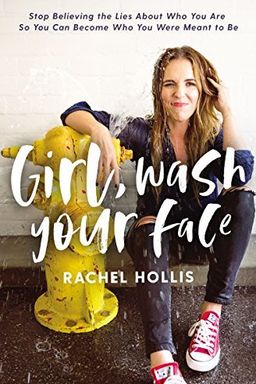
Girl, Wash Your Face cover

Girl, Wash Your Face

by Rachel Hollis

Girl, Wash Your Face is a motivational guide to taking charge of your own happiness. Rachel Hollis challenges readers to reject the lies holding them back and pursue a joyful, driven life. With personal anecdotes and actionable advice, this book inspires readers to embrace their true potential and live boldly.

Taking Responsibility for Your Life and Happiness

Have you ever wondered why happiness sometimes feels just out of reach—like it’s hiding behind your next job, next relationship, or next big goal? In Girl, Wash Your Face, Rachel Hollis argues that the biggest obstacle between you and genuine joy is not circumstance but self-deception. Her core claim is that you, and only you, are responsible for who you become and how happy you are. You are the captain of your own ship—not your past, not your parents, not your partner, and not luck.

The Central Truth and Its Counterpart

At the heart of the book lies one truth surrounded by twenty lies. Each chapter addresses a different false belief—things like “I’m not good enough,” “I’ll start tomorrow,” or “I need a hero”—and dismantles them through candid stories drawn from Hollis’s own messy, funny, and heartfelt life. These lies, she contends, become internal scripts repeated so often that they masquerade as truth. They limit potential, drain confidence, and create perpetual dissatisfaction. To live fully, to love honestly, to dream audaciously, Hollis says you must recognize those lies and wash them away—hence the book’s title.

A Conversational Call to Action

Her message isn’t delivered like a lecture from a mountaintop; it’s more like a late-night talk with a friend who refuses to let you wallow. Hollis’s tone alternates between hilarity and urgency. She tosses out embarrassing anecdotes—like peeing her pants on a trampoline—and then turns them into lessons about embracing imperfection. She mixes self-help wisdom with southern humor, Christian undertones, and heartfelt tough love. This combination makes her challenge approachable: stop giving up on yourself, stop blaming others, and start living with intention.

Why These Ideas Matter

The book emerged during a cultural moment saturated with comparisons and digital perfection. Social media often amplifies the sense that everyone else’s life is dazzling while yours is dull. Hollis exposes this illusion by pairing glamorous images of her own life with honest confessions of chaos. She speaks to women overwhelmed by trying to have it all—those who juggle motherhood, marriage, career, friendship, and faith—and tells them that perfection isn’t the goal. Authenticity is. In her world, progress matters more than polish.

Structure and Scope

Across twenty chapters, Hollis covers terrain ranging from body image to career ambition, from grief to faith. Each chapter begins with a lie (“The Lie: I Should Be Further Along by Now”) and ends with three to five tangible practices she used to counteract it. Through stories of pain—like her brother’s suicide, a failed adoption, and a year trapped by guilt—she normalizes struggle and demonstrates resilience. Hollis’s underlying method isn’t theoretical psychology (as you might find in Brené Brown’s Daring Greatly); it’s experiential coaching built from trial and error. She offers not abstract philosophies but specific behavioral shifts such as refusing to break promises to yourself, scheduling daily rest, and physically writing down your dreams.

The Broader Context

Compared to similar works in motivational literature, Hollis occupies a hybrid space between spiritual encouragement and raw practicality. Like Sheryl Sandberg’s Lean In, she champions women’s agency, yet she grounds empowerment in everyday habits instead of corporate ambition. Like Elizabeth Gilbert in Big Magic, she preaches creativity and self-trust, but her audience is mothers and entrepreneurs navigating chaos, not artists chasing muses. The faith-based foundation—citing scripture such as Philippians 1:6 or Ecclesiastes 3:1—gives her encouragement moral depth: you’re not only capable of growth; you’re divinely designed for it.

A Life of Forward Momentum

Ultimately, Hollis insists life is meant to be lived forward, not replayed backward. Every chapter reinforces the message that change is a lifelong process of trial, grace, and persistence. You’ll fail, trip, scream, and still try again. The act of washing your face becomes metaphorical cleansing—an invitation to start over each morning. In reading her stories, you begin to see that the messy parts, the unglamorous moments, are the crucibles where real joy and strength are forged.

Underneath all the humor and personal confession lies an urgent philosophy: stop waiting for happiness, permission, or rescue. You already hold the power to choose progress. Hollis’s challenge—both spiritual and practical—is a call to stop crying over yesterday and take control of tomorrow. It’s not about perfection; it’s about forward momentum, inch by inch, day by day.


Destroying the Lies That Shape Our Lives

Rachel Hollis begins each chapter with a lie she once believed—ideas like “I’m not a good mom,” “I’ll start tomorrow,” or “I need to make myself smaller.” Her central mission is to help you identify how similar lies shape your perception of yourself. She insists that before self-improvement can begin, you must honestly confront the false stories defining your identity.

Recognizing the White Noise of Self-Doubt

Hollis points out that toxic self-talk becomes like background music: it’s constant, familiar, and unnoticed. Lies such as “I’m not good enough” or “Something else will make me happy” run silently through your mind until they become truth. She compares them to cultural programming—reinforced by advertisements, family expectations, and social norms. The first step to dismantling them, she says, is awareness. Write down the voices in your head. Name the phrases you repeat. Naming a lie weakens its hold.

Stories that Illustrate Transformation

In Chapter 1, “Something Else Will Make Me Happy,” she recounts moving to Los Angeles at seventeen after surviving a traumatic childhood and her brother’s suicide. Hollis imagined geography could change her life, but eventually learned, “Moving doesn’t change who you are—it only changes the view outside your window.” The turning point came when she realized that happiness is a choice, not a reward. She began choosing gratitude, surrounding herself with positive influences, and ceasing comparisons. The lie that external things create joy fell apart once she experienced peace through self-ownership.

Practical Tools for Replacing Lies with Truths

Each chapter’s close lists “Things That Helped Me,” small actions that frame change as doable. For example, stop breaking promises to yourself. Keep commitments to yourself just as you would to a friend. Another is surrounding yourself with positivity—what Hollis calls editing your media diet. Consume inspiration; remove toxic input. She insists that change happens through repetitive habit, not sudden revelation.

Why This Approach Works

Psychologically, Hollis’s formula mirrors cognitive behavioral therapy, though she never calls it that. Recognize distorted thinking, replace it with realistic thought, and reinforce it through action. The distinction lies in her accessible voice; she’s talking more like your friend than your therapist. (Note: similar techniques appear in Mel Robbins’s The 5 Second Rule and James Clear’s Atomic Habits, which also link habit formation to identity reprogramming.) Hollis simplifies the method through storytelling—mistakes with peeing on trampolines or failing diets become universal metaphors for imperfection.

Her core takeaway: You cannot rewrite your life until you rewrite the thoughts that narrate it. The lies aren’t permanent—they’re simply chapters waiting to be edited. Once you learn to see them, you gain authorship of your own story.


Building Integrity Through Self-Promise

In “The Lie: I’ll Start Tomorrow,” Hollis unveils one of her most practical frameworks: the covenant of self-promise. She argues that most people would never flake on friends but repeatedly cancel on themselves. Every time you say you'll start a diet or project and then quit, you erode your own trust. The key to long-term growth, she says, is deciding that you will never break a promise to yourself again.

Forming New Standards of Reliability

The concept originates in a simple habit: giving up Diet Coke. Hollis used a thirty-day challenge as a test of integrity. After years of quitting and restarting, she finally refused to cheat. For the first time, she didn’t cave. That small victory reshaped her internal belief system—proof that she could trust herself. By practicing success on something minor, she cultivated momentum for bigger goals like writing books and running marathons.

Training by Small Wins

She connects discipline to training: humans default to their highest level of preparation. If you’ve trained inconsistency, you’ll surrender easily. If you’ve trained commitment, you’ll persist. Keeping small promises recalibrates your subconscious from self-doubt to reliability. Success, therefore, is less about motivation and more about integrity.

Slowing Down Your “Yes”

One surprising strategy is reducing commitments. Hollis didn’t advocate perfectionist productivity; she urged honest prioritization. Stop saying yes to everything just because it's good or noble. Only agree to things you value deeply—otherwise, you’ll train yourself in failure. A promise should be sacred, reserved for what truly matters.

This lesson resembles Stephen Covey’s principle in The 7 Habits of Highly Effective People: integrity fuels trust. But Hollis makes it personal and emotional. By keeping promises to yourself, you demonstrate belief in your worthiness. You become someone whose word is golden—not only to others but to your own reflection.


Turning Failure and Rejection into Fuel

In “The Lie: No Is the Final Answer,” Hollis explores resilience as the foundation of achievement. She calls herself an expert in rejection—someone told “no” countless times when pitching her business ideas and books. Instead of viewing rejection as defeat, she reframes it as redirection. A “no” becomes a detour, not a dead end.

The Story of ‘Party Girl’

Her biggest breakthrough came after twenty publishers rejected her first novel because it was “too sweet.” They claimed no reader wanted to read about a virginal woman in Los Angeles. Undeterred, Hollis self-published the book in 2014. It sold slowly but steadily until it reached over 100,000 copies—proving her intuition right. What changed wasn’t the market; it was her persistence. “If I had listened to the experts, that book would still be sitting on my computer today.”

Changing Perception of Hardship

She flips the common narrative that life happens to you. Instead, life happens for you. Every difficult moment—failed attempt, lost job, broken heart—is training. She compares it to building an emotional immune system; each hard season strengthens resilience. This idea reflects Viktor Frankl’s insight in Man’s Search for Meaning that suffering gains meaning when we see it as preparation, not punishment.

Audacity and Alternate Paths

Audacity is Hollis’s word for unshakable perseverance. It means ignoring others’ judgments, taking unconventional routes, and believing your dream is valid even when experts dismiss it. Her advice: when told no at the front door, try the window—or build your own house. Success belongs to those who keep going after obstacles, not those who wait for open doors.

In essence, she transforms rejection from emotional injury into proof of direction. Every refusal means you’re advancing toward your purpose. The key is not to shrink from no but to use it to clarify what you truly want.


Gracefully Fighting Comparison and Mom Guilt

Few lies sting as deeply as “I’m not a good mom.” Hollis writes candidly about struggling through postpartum depression, sleepless nights, and the pressure to emulate perfect mothers. She admits she once measured motherhood against Pinterest boards and school volunteer rosters—and found herself lacking. Eventually, she learned that comparison erodes joy and that authenticity with imperfection is the only sustainable parenthood.

Liberating Yourself From Idealized Standards

After giving birth to her first son, Jackson, Hollis spiraled into anxiety. Later, as a working mother surrounded by stay-at-home moms, she felt judged for showing up in heels instead of yoga pants. Her turning point came when Jackson candidly told her, “So you can finally be like all the other moms.” That moment revealed how deeply she’d absorbed others’ expectations. She decided to stop chasing “the other moms’” standards and define success her own way—raising kind, confident children while honoring her career ambitions.

Choosing Quality Over Quantity

Her antidote to guilt was quality time. Instead of obsessing over being present every moment, she focused on being truly engaged when she was. She made lunches herself when a child requested it, read books together, and celebrated small victories. The point wasn’t perfection; it was connection. “Being a perfect mom is a myth—but being a pretty great mom most of the time is possible.”

Reclaiming Self-Care as Parenting

Hollis emphasizes that taking care of yourself is part of taking care of your family. Exhausted mothers can’t nurture effectively. She reframed solo weekends and workouts as service to her children because they restored her energy. This redefinition connects to the broader book theme: you can’t pour from an empty cup.

Her final wisdom: stop comparing your motherhood to someone else’s highlight reel. Your children need your version of love, not a replica of anyone else’s. Grace, not guilt, is your most effective parenting strategy.


Embracing Chaos and Finding Peace

In “The Lie: Other People’s Kids Are So Much Cleaner/Better Organized/More Polite,” Hollis presents perhaps her most universal lesson: embracing chaos may be the real path to peace. Instead of pretending you can control life’s mess, she argues for accepting it and finding beauty within it.

The Three Common Responses to Chaos

Hollis identifies three typical reactions: ignoring, battling, or drowning. Ignoring chaos leads to suppressed stress. Battling it with over-organization fails because life resists perfection. Drowning results in paralysis—when overwhelm turns you inert. Each approach assumes you can manage everything alone. Her remedy is surrender, not in defeat but recognition that life is messy and God’s strength functions within that mess.

Jesus as the Model of Embracing Chaos

She invokes biblical examples: Jesus welcomed messiness—the lepers, prostitutes, orphans. Chaos wasn’t the enemy; it was the canvas for redemption. Similarly, Hollis urges women to “bring it on” instead of resisting inevitable disorder. This spiritual reframing turns chaos into a crucible for growth, akin to the butterfly undergoing painful metamorphosis to fly.

Practical Steps: Humor, Tribe, and Grace

Practically, she suggests humor as emotional defense. Laugh at your chaotic situations—like misinterpreted social-worker interviews or pajama day failures. Second, build a tribe of people in similar seasons; shared honesty makes mess bearable. Finally, give yourself grace. “Tomorrow is another day and a chance to try again.”

The paradox behind Hollis’s idea mirrors Buddhist and Stoic thought: acceptance breeds serenity. When you stop craving control, you invite genuine peace. The chaos doesn’t disappear, but your perspective transforms—and that, she says, is divine.


Claiming Your Space and Stopping Self-Shrinkage

In “The Lie: I Need to Make Myself Smaller,” Hollis confronts the tendency—especially among women—to downplay ambition or success to make others comfortable. She recalls realizing at a self-improvement conference that as a child she was taught to be “little”—to stay quiet to earn love. That conditioning followed her into adulthood, making her mute parts of her identity she feared would upset others.

Understanding How Self-Minimization Starts

Her father, though hardworking, valued silence and achievement more than emotional expression. He would say “little girl” not as affection but as dismissal. From that seed grew the habit of minimizing her intelligence, career, and leadership to appear likable. She noticed other women doing the same—calling thriving businesses “just hobbies” or apologizing for ambition.

Embracing the Full Self

Hollis’s wake-up moment: “I cannot continue to live as half of myself simply because it’s hard for others to handle all of me.” She redefined success as divine expression—God didn’t create you to mute your gifts; He created you to multiply them. Every facet—mother, leader, dreamer—is part of that purpose. She began rebranding herself as a “media mogul” unapologetically instead of “a girl with a blog.”

Tools for Reclaiming Your Voice

Hollis gives three tools: first, a willingness to offend. Not through cruelty but through authenticity. Second, making bold declarations—she even celebrated identity through a wrist tattoo symbolizing choice and individuality. Third, seeking mentors and wisdom (books, podcasts, conferences) that encourage audacity. The idea echoes Marianne Williamson’s quote: “Your playing small does not serve the world.”

By making herself whole instead of harmless, Hollis models empowered faith: God designed you vast, not small. Your light doesn’t blind others—it illuminates them.


Healing Trauma and Choosing Resilience

The most emotionally intense chapter, “The Lie: I Will Never Get Past This,” recounts Hollis’s experience discovering her teenage brother’s suicide. That trauma haunted her for years, manifesting as fear, nightmares, and obsessive coping rituals. Yet, instead of letting horror define her, she transformed pain into strength. This chapter becomes an homage to survival.

Facing the Darkness Directly

She contrasts two paths: suppression or confrontation. Early on, she tried to bury her grief. Only therapy allowed her to process it without being consumed. Her therapist taught her timed exposure—thinking about the tragedy five minutes a day intentionally. This paradoxical method eventually gave her control over intrusive memories.

Transforming Pain Into Power

Later, Hollis reframed trauma as her forge. If suffering destroyed the old self, it also created steel beneath the scars. When giving birth or building her business, she reminded herself, “You were forged in a fire worse than this.” It echoes Tony Robbins’s idea from I’m Not Your Guru: “If you’re going to blame your pain for the bad, you must also blame it for the good.”

Faith as the Anchor

Her healing culminates with spiritual acceptance: you can find purpose even without explanation. She rejects the cliché that “everything happens for a reason” yet insists meaning can emerge from meaningless pain. Surviving isn’t passive—it’s an act of creation. You rebuild yourself despite the wreckage.

Hollis’s trauma narrative stands as a universal metaphor for resilience: you can’t erase pain, but you can redirect its energy toward living. Healing doesn’t end trauma—it reclaims authorship over the story.


Becoming Your Own Hero

In the closing chapter, “The Lie: I Need a Hero,” Hollis culminates her book with an anthem of empowerment. After running her first marathon, she realizes mid-race that she doesn’t need rescuing—she is her own hero. The scene crystallizes the entire book’s theme: ownership of your life through courage, discipline, and faith.

Self-Reliance Over Savior Complex

The cultural fantasy of “someone will save me” pervades romantic comedies and self-help illusions. Hollis dismantles it. Your husband, friend, mentor, or God can support you, but none will do the work for you. Only you can show up for your marathon, your book, your life. She coins this recurring mantra: “Girl, get ahold of your life.”

Faith and Action Combined

She balances divine dependence with practical agency. Writing Philippians 4:13 (“I can do all things through Christ”) on her hand reminded her that strength is partnership—God supplies power; you supply motion. This integration of spirituality and grit distinguishes her approach from secular motivational speech. You are divinely equipped, but heaven still expects you to run.

The Call to Movement

By the end, “wash your face” takes metaphorical dimension: rise up, clean off yesterday’s pain, and show up again. Her closing command is to stop waiting for permission—start writing, running, healing, laughing now. It’s similar to Glennon Doyle’s call in Untamed for self-rescue but infused with Hollis’s humor and optimism.

This final message wraps every preceding chapter: You are capable. You are strong. You are the hero you’ve been waiting for. It’s both ending and beginning—a challenge to transform belief into daily action and wipe away every lie standing between you and the mirror of truth.

Dig Deeper

Get personalized prompts to apply these lessons to your life and deepen your understanding.

Go Deeper

Get the Full Experience

Download Insight Books for AI-powered reflections, quizzes, and more.