
Idea 1
War, Spies, and the Birth of NCIS
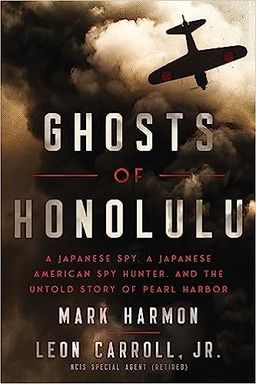
How can you trace a modern investigative service back to a waterfront tea house, a sixth-floor hotel office, and a handful of bilingual reservists? In this narrative, the book argues that the US Navy’s counterintelligence capacity—eventually institutionalized as NCIS—emerges from the pressure-cooker of prewar and wartime Honolulu. The core claim is straightforward: necessity, improvisation, and interagency friction during 1939–1945 shaped a lasting operational culture that prized patient network-mapping, cultural fluency, and evidence-based restraint. But to see that clearly, you have to follow three intertwined threads: the rise of naval counterintelligence from ONI’s revival; the Japanese consulate’s covert network and its role in Pearl Harbor; and the human stakes for Nisei like Douglas Toshio Wada who bridged two worlds at considerable personal cost.
You move from Washington directives to island streets. President Franklin Roosevelt’s 1939 order widened ONI’s remit to domestic counterespionage, reviving a capability that would soon concentrate in the 14th Naval District Intelligence Office (DIO) in Honolulu. There, officers like Captain Irving Mayfield, Lt. Cmdr. Kenneth D. Ringle, Denzel Carr, and cryptologists at Station Hypo built a layered approach—human sources, translations, wiretaps, and signals intelligence—that anticipates modern joint investigations. The Black Room’s translation work, the District’s contact with Shore Patrol, and Station Hypo’s codebreaking (Joseph Rochefort’s team) become the template for integrated collection. (Note: you can hear faint echoes of Bletchley Park’s fusion of linguists and mathematicians, and OSS’s field improvisation.)
A consulate that became a spy hub
Against this buildout sits a formidable adversary: the Japanese consulate in Honolulu. Led by Consul General Nagao Kita, with Vice-Consul Otojiro Okuda, Third Secretary Kokichi Seki, and the clandestine operative Takeo Yoshikawa (using the name Tadashi Morimura), the mission turned diplomatic privilege into a shield for intelligence operations. Tea houses like Shunchoro doubled as observation posts; taxi drivers like Richard Masayuki Kotoshirodo and John Mikami ferried Yoshikawa to vantage points; and coded consular cables funneled ship counts, grid references, and assessments of torpedo nets back to Tokyo. On September 24, 1941, Tokyo’s instruction to divide Pearl Harbor into subareas formalized the collection plan—an operational detail that would feed directly into the strike package for December 7.
Fragmented defenses at the edge of empire
You watch interagency seams widen as the crisis nears. The FBI’s Special Agent in Charge Robert Shivers held arrest lists and community liaisons; Army G-2 focused on base defense; ONI ran translations and clandestine monitoring. They often clashed over taps, timing, and jurisdiction. A repairman’s discovery of an FBI phone jumper at the consulate ended parallel Navy taps—creating a blind spot during the most fateful weeks. CNO Harold Stark’s War Warning (Nov 27) didn’t name Hawaii as a target; local commanders accustomed to false alarms underreacted. Meanwhile, diplomatic traffic and last-minute document destruction at the consulate did not translate into an island-wide alert. The result was an operational mismatch: precise Japanese human intelligence ran ahead of US defensive posture.
The human hinge: Douglas Wada
To grasp the book’s moral heart, you follow Douglas Toshio Wada, a McKinley High baseball standout and Kyoto-educated linguist recruited by Ringle and Captain Walter Kilpatrick. Wada’s cover as an insurance agent masked his Black Room translations and surveillance of a community that included his own father, a master shrine carpenter at Kotohira Jinsha. On December 7, he goes from a morning fishing line at Diamond Head to interrogations and POW processing by afternoon. His life exemplifies the book’s claim: bicultural competence is both a priceless national asset and a source of isolation. (Compare to translators at Bletchley Park who also lived double lives, though with fewer community suspicions.)
Policy by intelligence—Hawaii’s exception
The narrative then shows how local intelligence judgments tried to shape federal policy. Ringle’s January 1942 report argued that the “Japanese problem” was exaggerated; he recommended individualized handling and estimated only about 3 percent posed risk. Shivers, ONI officers like Cecil Coggins, and military leaders such as Lt. Gen. Delos Emmons echoed that view. Hawaii, where Japanese Americans formed a third of the population, resisted mass removal even after Executive Order 9066—detaining about 1 percent, mainly community leaders, under martial law. This stood in stark contrast to the West Coast, where blanket evacuation prevailed. The divergence underscores a central lesson: proximity, evidence, and economic reality can moderate fear-driven policy.
Aftermath, accountability, and institutional legacy
Post-attack, patient investigative work exposed the consular ring: Kimie Doue’s eyewitness notes, Kotoshirodo’s bank records, and Otto Kuehn’s confession knit together the mosaic. After the war, Wada and ONI veterans scaled up a vast translation engine for the Tokyo Trial, transforming diaries and orders into cases against 28 Class A defendants even as figures like planner Minoru Genda escaped prosecution. The hunt for “Morimura” stalled, revealing the limits of postwar justice. Yet out of these experiences came institutional lessons—on independence, expertise, and civil authority—that fed the 1966 creation of the Naval Investigative Service, the precursor to NCIS. By the end, you see how a wartime improvisation hardened into an enduring investigative ethos built on cultural fluency, careful evidence, and restraint.