
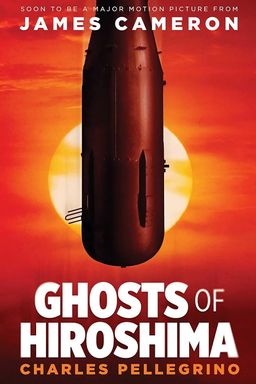
Ghosts Of Hiroshima cover

Ghosts Of Hiroshima

by Charles Pellegrino

Firsthand accounts from people affected by the dropping of the atomic bomb on Hiroshima.

Bomb, Chance, and Memory

How do you hold physics, luck, policy, and grief in one frame? In this book, Charles Pellegrino argues that you only understand Hiroshima and Nagasaki when you track them across nested time scales—split-second physics, days and weeks of medical crisis, and decades of cultural memory. He insists the bombs were not only devices but social-technical systems: ideas and ores, labs and flight crews, civilians and commanders, all converging at a few instants that rearranged cities and biographies. To make sense of this, you need to see how Moment Zero (the flash and shock) couples to slow violence (radiation and stigma) and then to the afterlife of remembrance (paper cranes, monuments, and community pedagogy).

What happens in the first second

At detonation, a nuclear core no larger than a wedding band unleashes particles and heat at scale. Pellegrino begins there: a trillion neutrinos stream through bodies like Setsuko Hirata’s, the flash burns photographic shadows, and a shock bubble slams outward. You see the Matsuda boy’s silhouette etched on a garden wall, glass marbles melted into green blisters, roof tiles’ skins liquefied—physical signatures of light arriving ahead of blast. Telephone poles at the hypocenter stand oddly upright while those farther out lean with pressure gradients, a counterintuitive pattern that teaches you to distrust simple “damage radius” maps.

How survival becomes geometry and chance

Survival depends not just on distance but on where you stand, which way you face, what shields you, and what trivial decisions kept you indoors or out. Pellegrino calls this an improbability curve. Shigeyoshi Morimoto lives because wooden beams and a supply cellar create a shock-cocoon; Dean Tsunoo survives a building implosion yet receives a lethal marrow dose; train passengers who duck as the light blooms fare differently than those who look toward it. Micro-choices—being scolded for tardiness (Kimiko Kuwabara), leaving home angry (Tomiko Morimoto), or a delayed relief crew—become fulcrums of fate.

Machines, fuses, and cockpit judgment

The air missions are not mechanistic inevitabilities; they are human improvisations threaded through engineering. Norman Ramsey’s team perfects a radar proximity fuse; Paul Tibbets invents a slant-distance escape maneuver; Jacob Beser argues against shipboard triggers to reduce complexity. On the second strike, Bockscar departs with a stuck fuel bladder, misses the rendezvous, loiters over clouded Kokura, and, low on fuel, diverts to Nagasaki. Each step shows you how hardware and judgment co-produce history (a theme echoed in later technological crises).

Radiation’s quiet, social work

Pellegrino hammers a central point: the bomb kills three times—flash, blast, and radiation. Prompt gamma and neutron doses fell Dean Tsunoo, while black rain delivers isotopes that enter food chains and bones. Children like Sadako Sasaki develop leukemias years later; strontium-90 mimics calcium and takes up residence in growing skeletons. Rescuers become second-order victims by inhaling dust or returning repeatedly into hot zones (Mizuha’s father is emblematic). Biology melds with sociology as survivors face stigma, marriage bans, and economic exclusion—proof that radiation’s harm extends beyond cells into institutions.

Origins, decisions, and responsibility

The weapons’ genealogy begins in fiction (H. G. Wells) and thought experiments (Leo Szilard), then runs through ore caches (Edgar Sengier’s barrels in New York), wartime industry, and laboratory invention. Policy debates flare: Szilard urges a demonstration; others press for speed and shock. Truman’s private letters show reluctance; Tokyo’s palace coup reveals a leadership class veering toward nihilism even as the emperor invokes a “new and most cruel bomb” in surrender. The narrative refuses both easy absolution and simplistic blame; it asks you to examine character under pressure and to see how systems amplify human flaws.

Memory as moral technology

Finally, the book turns to how people transform trauma into public ethic. Sadako’s cranes encode omoiyari—putting others first—and travel from Hiroshima to Ground Zero (9/11) and Fukushima, teaching empathy across disasters. Pellegrino proposes the Shadow People Project: chalk silhouettes with captions and cranes placed in local streets, a non-vandalistic way to make nuclear effects tangible for new generations. Memory here is action, not nostalgia—an attempt to keep the ethical imagination awake.

Key Idea

Pellegrino’s core claim: when technology makes annihilation possible, outcomes are decided by cascades of minuscule choices, structural conditions, and cultural memory. To prevent repetition, you must learn the physics, honor the human names, scrutinize leaders, and practice remembrance as a civic habit.


Making The Bomb

Pellegrino traces how ideas harden into hardware, and how hardware becomes policy. You start with H. G. Wells’s fiction imagining a world set free by atomic power, then follow Leo Szilard’s leap from story to physical theory. Szilard’s patents and prodding intersect with Enrico Fermi’s experiments, transforming thought experiments into chain reactions. This intellectual lineage matters because it reveals how culture seeds science—how an idea can prefigure a civilization-scale technology (compare to Mary Shelley’s influence on bioethics debates).

Ore, industry, and geopolitical luck

The bomb is also a supply story. Edgar Sengier, fearing Nazi interest, quietly ships tons of high-grade uranium ore from the Belgian Congo to New York and sits it in Hell’s Kitchen warehouses. Those barrels become the lifeblood of Little Boy’s uranium and the plutonium reactors feeding Fat Man. This is not a trivial footnote: a mine director’s prudence bends the war’s arc. Had German calculations (Heisenberg’s heavy-water detour) or supply chains unfolded differently, timelines might have shifted disastrously (a sobering counterfactual the book raises without sensationalism).

From lab benches to target lists

The Manhattan Project knits together reactor physics, metallurgy, and precision machining into deliverable cores. Norman Ramsey’s team solves the fusing problem with radar proximity triggers; William Parsons and crew ensure an in-flight armed system works autonomously. Meanwhile, target committees weigh criteria—unbombed urban centers that dramatize shock. Scientists like Szilard circulate petitions for a nonlethal demonstration; military planners fear a dud would embolden Tokyo and prolong war. You witness the gravitational pull of “use it because we have it,” a momentum that often haunts first-of-kind weapons (see also early chemical warfare debates).

Decision windows and moral fog

Truman’s correspondence suggests ambivalence. He regrets “wiping out whole populations” yet believes rapid shock could end invasion plans and save lives on balance (he also knows, crucially, there are only two additional cores imminently available, a strategic constraint hidden from public rhetoric). In Tokyo, War Minister Anami and Admiral Ugaki lean toward death spirals—ghost squadrons and palace coups—while the emperor invokes the bomb’s cruelty to authorize surrender. The book resists tidy causality: neither side acts as a monolith, and individual temperaments shape the climactic days.

Why this origin story matters

By following ore barrels and signatures on memos, you see that atomic warfare emerges from a braided system: fiction inspiring physics; logistics enabling labs; engineers translating equations into flight-ready devices; and policymakers framing use amid fear and fog. That braid teaches a hard lesson: preventing tomorrow’s catastrophes requires intervening at many strands—cultural imagination (what futures we normalize), supply chains (what materials we stockpile), engineering design (fail-safes and demonstrations), and institutional ethics (how dissent is heard).

Key Idea

Technologies of annihilation are social systems, not isolated gadgets. If you want different outcomes, you must change the system conditions that shepherd ideas from imagination to inevitable use.


Missions In The Air

The airborne delivery of Little Boy and Fat Man reads as a braid of engineering, piloting, and improvisation. You meet Paul Tibbets, William Parsons, Charles Sweeney, Jacob Beser, and the crews of the Enola Gay, The Great Artiste, Necessary Evil, and Bockscar. Pellegrino treats them not as automatons but as people solving lethal math problems in real time: how to arm safely, how to survive the shock front, what to do when weather and hardware betray the plan.

Fuses, arming, and the Tibbets escape

Norman Ramsey’s proximity fuses, tuned to trigger around 1,850 feet, are a triumph of wartime innovation—autonomous, redundant, and fast. Tibbets overlays a pilot’s solution: a diving quarter-turn that puts the B-29 on a slant path away from the fireball, buying survival distance in seconds. Beser pushes back against shipboard beacons to minimize points of failure. Every ounce matters: even sirens meant to warn civilians are rejected for weight. The result is a ruthlessly optimized package in which safety, ethics, and physics jostle uneasily.

Kokura’s clouds and Nagasaki’s fate

The second mission unraveling becomes a tutorial in how contingencies choose victims. Bockscar lifts with a stuck fuel bladder (a pump failure traps thousands of gallons), rendezvous delays cascade, and heavy cloud over Kokura (the primary target) forces repeated, risky passes under flak. Low on fuel and with a missing photographic plane, Sweeney proceeds by radar to Nagasaki—where a break in the clouds decides a valley, a cathedral, and a neighborhood’s survival. Returning at the edge of flameout, the crew throttles back to nurse damaged engines home. These are not abstractions; they are the pivots that determine who lives.

Witness at a distance

Even inside the aircraft, bodies remember. Beser later describes the blast as tasting like “out-flowing lead,” dental work tingling with the energy passing through the fuselage. The observation underscores Pellegrino’s broader point: soldiers and civilians alike carry somatic imprints of these minutes, whether from cockpit vibrations or marrow failure in hospitals miles away.

Operational ethics in the cockpit

The narrative refuses to flatten pilots into symbols. You watch real-time tradeoffs—loitering for clear aim versus fuel safety, pressing ahead without a photo plane, choosing radar release when visual rules fail. Good airmanship saves crews; those same choices widen the circle of death on the ground. Pellegrino uses these moments to show how morals live inside procedures: small, technical calls can have world-historic consequences.

Key Idea

War marries human judgment to engineered inevitabilities. In the cockpit, ethics become aerodynamic: you bank, dive, or circle—and thousands of fates tilt with your yoke.


Nested Seconds Of Destruction

To understand what physically happened, you have to think in fractions of a second. Moment Zero begins with a burst of particles—neutrinos passing almost unhindered, gamma and neutrons delivering instant doses—and a glare that burns negatives onto stone. Pellegrino separates the flash from the blast: light and heat arrive first, vaporizing or carbonizing; then, a pressure wave crumples buildings and ricochets around corners.

Flash-burns, shadows, and thermal forensics

The flash acts like a cosmic camera. Toshihiko Matsuda bends for marbles; his outline sears a wall seven blocks from ground zero. Nearby marbles slump into green blobs, roof tiles’ glazed skins liquefy, and a wristwatch halts at 8:15, welded to flesh. These traces let you reconstruct thermal peaks and angles of exposure (a forensic method akin to reading Herculaneum’s pyroclastic imprints, which Pellegrino notes as a geological parallel).

Shock bubbles and shock-cocoons

The blast that follows is stranger than a simple outward push. Air first slams, then sucks back; reflections off hills and walls create overlapping fronts. Some structures, by accident, become shock-cocoons—stacks of beams, books, and low cellars reshaping pressure into survivable patterns. Shigeyoshi Morimoto survives under wood and print, culture literally absorbing force. In Nagasaki, Tamie Ekashira notes telephone poles near the hypocenter standing straight while those farther out lean progressively—evidence of complex pressure gradients.

The cloud and the black rain

As the fireball rises, it vacuums debris into the mushroom’s stem, lofting irradiated dust that later returns as oily, black rain. Survivors like Mizuha, saved by rubble, are drenched hours later and receive secondary doses. What returns from the sky completes the injury cycle: isotopes enter lungs, water jars, and rice paddies, extending the bomb’s temporal reach from seconds to seasons and years.

Why distance misleads

You might imagine safety as a neat radius. These accounts refuse that simplification. Orientation, shielding, and microterrain matter. A doorway can blind you to the flash; turning your head can halve burns; a bookshelf can shave lethal rads. Train passengers who duck fare better; those who watch the light become the “walking doomed.” The city becomes a physics lab where yards decide between immediate nonexistence and slow torture.

Reading the city as evidence

Pellegrino teaches you to read artifacts as if they were testimonies. Door prints burned into stone, skeletal remains with glazed tin dumplings in their mouths, tiny glass beads formed from vaporized droplets collapsing on bone—each detail records nested seconds and chemical thresholds. This way of seeing is crucial because it preserves truth against denial: when someone doubts that people became shadows on walls, the city’s surfaces answer back.

Key Idea

An atomic city is a ledger of split seconds. Learn to read it, and you see how invisible physics wrote itself onto brick, bone, and breath.


Chance And Survival Geometry

If physics sets the stage, chance directs the play. Pellegrino returns again and again to how trivial-seeming choices and odd geometries nudge people across the boundary between life and death. Survival is probabilistic, not merited; it is shaped by reprimands, delays, shielding quirks, and the ways buildings fail.

Micro-decisions with macro outcomes

A parent’s premonition brings a child home early; a teacher’s scolding keeps Kimiko Kuwabara indoors; Tomiko Morimoto storms off to work angry and finds herself behind a factory wall. Takashi Tanemori’s classroom hide-and-seek game puts him under cover while classmates outside absorb the flash. None of these acts is heroic by intent. They are ordinary motions that become existential pivots at 8:15.

Double survivors and braided fates

Improbability peaks with “double survivors.” Tsutomu Yamaguchi experiences Hiroshima’s detonation, returns home to Nagasaki to report the unthinkable, and survives again—later becoming a global witness. Shigeyoshi Morimoto threads two hypocenters in different cities and lives. Kenshi Hirata carries his wife’s ashes from Hiroshima and endures Nagasaki’s blast. On the American side, Jacob Beser serves on both strike crews and later marries into a survivor’s family network, tying perpetrators and victims through kinship rather than abstraction.

Shelter as crude armor

Material geometry matters as much as luck. Stacked books attenuate gamma rays; beams redistribute pressure; basements soften the shock. Dean Tsunoo, “safe” inside a hospital examining a patient, is saved by collapse patterns yet receives a marrow-killing dose. The paradox stands: what saves you from blast can leave you exposed to radiation. Pellegrino coins this human-scale physics as shock-cocooning—structures briefly becoming wombs against an air born to kill.

Chance and responsibility

Recognizing contingency does not absolve responsibility. Pellegrino uses chance to sharpen moral attention, not blunt it. The same randomness that spares Sadako’s family one year claims her the next through leukemia; the same drift of clouds over Kokura redirects death onto Nagasaki. Understanding this should make you vigilant about systems that convert small frictions (a stuck fuel pump, a cloud bank) into mass consequence.

Social ripples and identity fractures

Chance also governs postwar lives. Tak Furumoto is interned in the U.S., deported to Hiroshima’s ruins as a child, later fights in Vietnam (where Agent Orange adds another toxic layer), and returns to a country that still spits on him despite his service. Atomic orphans drift into black markets and gangs; hibakusha hide identities to marry or work. These are not separate from physics; they are the social aftershocks of a random blast field.

Key Idea

In catastrophe, unpredictability is the only constant. Your obligation is to design systems, policies, and memories that lessen the cruelty of chance when it comes.


Radiation’s Long Tail

Beyond the flash and blast lies radiation’s slow, methodical work—a villain operating on molecular time. Pellegrino divides the harm: prompt radiation during detonation; fallout and black rain in the hours and days after; and long-term incorporation of isotopes into bones and organs. Each phase has its own victims and its own cruel ironies.

Prompt doses and vanishing marrow

Close to the hypocenter, neutrons and gamma rays deliver doses far above survivable limits. Dean Tsunoo appears outwardly intact yet dies as his bone marrow collapses. Others stagger as “walking shadows,” skin intact but blood-making machinery ruined. Pellegrino pairs these clinical ends with names and rooms, banishing abstraction in favor of bedside witness.

Black rain and internalized poison

Hours later, the boiling column condenses into black rain, dropping soot, radionuclides, and panic. Survivors like Mizuha, saved by rubble, are soaked; her father’s repeated rescue runs compound dose until he sickens and dies. This phase weaponizes compassion—those who help become patients in turn. It also blurs city lines; contaminants enter wells and fields, making geography porous and harm portable.

Children, fetuses, and the biology of risk

Rapidly dividing cells attract radiation’s worst. Strontium-90 masquerades as calcium, lodging in growing bones and teeth; beta and gamma emissions simmer for years. Sadako Sasaki develops leukemia a decade later and folds more than a thousand paper cranes before dying at twelve—a child’s prayer turned into a world’s emblem. Doctors warn women like Mizuha to abort based on grim statistics; she refuses and later delivers a healthy child, a reminder that risk is probabilistic and biology contains repair mechanisms (without denying the elevated dangers).

Medicine amid uncertainty

Clinicians improvise therapies while learning what radiation does to blood lines, hair follicles, and mucosa. In a strange twist, Dr. Paul Nagai, already afflicted by marrow cancer, experiences a temporary remission after a lower-dose exposure—an echo of modern radiotherapy’s paradox: the same force that harms can, at careful doses, heal (a nuance Pellegrino handles carefully).

Stigma as a secondary disaster

Radiobiology bleeds into sociology. Employers shun hibakusha; marriage markets exclude them; “atomic orphans” drift into precarious economies. Survivors adopt silence or false addresses to pass. Pellegrino argues that if you ignore stigma, you mismeasure the bomb’s toll: prejudice multiplies exposure into poverty and grief into policy.

Key Idea

“The atomic bomb killed people three times over”—by heat, by blast, and by radiation—and then a fourth, social time: by stigma that outlives isotopes.


Command, Conscience, Memory

Who decides the use of civilization’s deadliest tools—and how do those decisions endure in culture? Pellegrino stages an ethical triangulation: leadership under pressure, dissent inside institutions, and public memory as a counterweight. He avoids caricature, showing presidents, ministers, scientists, and streetcar drivers making consequential choices under fog.

Leadership under moral strain

Harry Truman’s private letters reveal regret and restraint; he vows to avoid further atomic use unless necessary, all while juggling real constraints (only two more cores ready). In Tokyo, War Minister Anami and Admiral Ugaki press for suicidal gestures and coups, while the emperor invokes the “new and most cruel bomb” to justify surrender. The contrasts teach you that character and context entwine—paranoia and bravado kill; humility and clarity sometimes save.

Silenced proposals and institutional inertia

Szilard and colleagues argue for a demonstration on an unpopulated site; the proposal dies amid fears of a failed spectacle and bureaucratic momentum. Inside the flight program, Jacob Beser blocks risky, complex fusing schemes; weight constraints kill even humanitarian add-ons like sirens. These episodes show how dissent can shape details but fail to redirect the river—unless institutions make room for principled delay and public reasoning (a lesson with obvious relevance to AI, biotech, and cyber weapons).

Transformation and witness

After the fact, people change. Mitsuo Fuchida, the Pearl Harbor strike leader, turns to religious witness; Peggy Covell converts revenge into care for POWs. Double survivors like Tsutomu Yamaguchi become ambassadors of “never again,” testifying across borders. These arcs do not erase harms; they enlarge the repertoire of possible responses to guilt and grief.

Omoiyari and civic pedagogy

Cultural practices carry ethics forward. Sadako’s cranes teach omoiyari—to think of others first. After 9/11, cranes appear at Ground Zero; later, a crane forged from WTC steel travels to Fukushima. Pellegrino proposes the Shadow People Project: non-vandalistic chalk silhouettes with captions (“6 miles from Ground Zero — Empire State Building”), paired with a paper crane and links to curricula. You, your street, your school can rehearse remembrance as action.

Why character and memory matter now

Weapons amplify human flaws; systems routinize them. Scrutinizing leaders is necessary but insufficient; you must also build memory institutions that keep technical literacy and empathy in public circulation. Pellegrino’s wager is that a society trained to read shadows on stone and names on paper will hesitate longer before authorizing annihilation.

Key Idea

Ethical immunity decays unless renewed. Practice remembrance—fold cranes, teach shadows, interrogate leaders—so the next crisis meets a citizenry with trained moral reflexes.

Dig Deeper

Get personalized prompts to apply these lessons to your life and deepen your understanding.

Go Deeper

Get the Full Experience

Download Insight Books for AI-powered reflections, quizzes, and more.