
Idea 1
The Human Hacker and the Anatomy of Deception
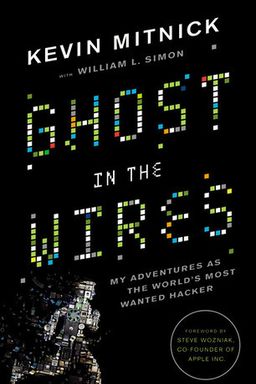
What makes a system fail? Kevin Mitnick’s memoir suggests it’s not code or hardware—but people. The story traces his journey from curious Los Angeles teenager to the world’s most wanted hacker, and eventually, respected cybersecurity expert. His exploits across phone networks, corporate servers, and government systems reveal that trust, procedure, and habit are the gateways most easily manipulated. Through each phase—phreaking, social engineering, identity forging, and high-stakes evasion—Mitnick exposes the duality of human intelligence: creative and reckless, brilliant and self-defeating.
From Curiosity to Compulsion
Mitnick’s earliest fascination lies in magician’s tricks and ham-radio chatter, teaching deception and communication—skills later mirrored in his phone exploits. The bus-transfer prank, where he learns to punch his own tickets, foreshadows a life built on discovering system loopholes. What drives him is not greed but mastery: understanding, bypassing, and controlling hidden mechanics. (Note: Like other technologists of his era, such as Steve Wozniak or John Draper, Mitnick began as a curious tinkerer before crossing into forbidden territory.)
Social Engineering: The Core Skill
Mitnick’s “hacks” often depend less on software than stories. He perfects pretexting—creating believable identities such as a Non-Pub Bureau technician or a law-enforcement officer. With a confident tone and internal jargon, he gets employees to reveal sensitive data like “Requester Codes” or system credentials. These tricks aren’t about intelligence alone; they exploit empathy, routine, and authority. Each phone call becomes a miniature theater of control, and the audience unwittingly plays along.
The insight is simple but profound: a secure system collapses if one person believes the wrong voice. As Mitnick shows, you can harden servers and encrypt networks—but you can’t patch politeness or fear of breaking procedure.
Technical Mastery Meets Human Weakness
Mitnick learned the phone network as others learn a new language. Phreaking becomes an extension of curiosity: loop-around circuits, diverters, ANI callback systems, and SAS wiretap boxes. The telecom infrastructure—meant for maintenance—becomes his playground. Later, his intrusion into companies like Digital Equipment Corporation (DEC), Sun Microsystems, and Motorola combines these technical exploits with relentless social manipulation. Phreaking leads to phone-company control; phone control leads to network access; network access yields source code and corporate secrets.
In his most notorious breach—DEC’s VMS source code theft—Mitnick fuses reconnaissance, impersonation, and privilege escalation. He pretends to be an internal engineer, secures a throwaway password, then installs a stealth backdoor that hides logins and transfers megabytes of source code through ARPANET nodes. It’s a complete kill chain executed by intuition and persistence. The crime teaches defenders that developer environments are treasure troves, not fortresses.
Paranoia, Surveillance, and Flight
As attention from the FBI and telecom security intensifies, Mitnick’s brilliance mutates into anxiety. He probes surveillance technology itself—detecting wiretaps via SAS signatures, exploiting default PINs in monitoring boxes, even eavesdropping on investigators. His counter-surveillance becomes a hacker’s reflection: the same systems designed to monitor him are re-scripted to protect him. But operational mistakes—a misrouted fax at Kinko’s, a trace from a cloned cell phone—reveal him. He flees, creates false identities (“Eric Weiss,” after Houdini), fabricates documents, and lives as a ghost in plain sight.
The Fall and Reinvention
Eventually, a perfect storm—his attack on Tsutomu Shimomura’s system, media sensationalism, and advanced tracing—leads to arrest. The government paints him as a digital terrorist, “able to whistle missiles from prison,” a caricature born of public ignorance and fear. Yet post-incarceration, Mitnick channels his skill into defense: penetration testing, consulting, and education. He turns from the hunted into the hired, teaching organizations that true security is cultural as much as technical.
Core Message
Mitnick’s story isn’t just about hacking—it’s about human systems of trust. Every credential, every network, every lock exists within a social fabric that can be misled, persuaded, or betrayed. By learning how he broke them, you learn how to defend them. The art of deception, when inverted, becomes the art of resilience.