
Idea 1
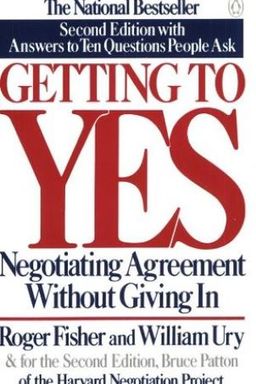
Getting to Yes: The Power of Principled Negotiation
How do you get what you want without damaging relationships? That’s the central question behind Getting to Yes by Roger Fisher, William Ury, and Bruce Patton—one of the most influential books ever written on negotiation. Whether you're debating a salary raise, resolving a family dispute, or navigating an international peace treaty, the authors argue that negotiation shouldn't be about winning or losing but about finding mutual gains through reason and fairness.
They propose a method called principled negotiation, also known as negotiation on the merits. This approach transforms the traditional back-and-forth of positional bargaining into a collaborative process based on shared problem-solving. Instead of arguing over who’s right or who gets more, principled negotiation encourages you to focus on the underlying interests of each party and to seek objective, fair standards for agreement.
The Harvard Negotiation Project developed this framework in the late 1970s to address high-stakes conflicts—from personal disagreements to global disputes. Over the decades, the book has inspired diplomats, CEOs, mediators, and parents alike to rethink their approach to conflict and redefine what it means to truly win a negotiation.
From Adversaries to Problem-Solvers
At the heart of Fisher, Ury, and Patton’s philosophy is a simple truth: people are not the problem—the problem is the problem. Most of us instinctively adopt one of two negotiation styles: hard (demanding and competitive) or soft (accommodating and relationship-oriented). The hard bargainer sees negotiation as war; the soft bargainer just wants peace, often at the cost of fairness. The authors argue that both approaches fail because they tie ego and emotion too closely to positions. In contrast, principled negotiation allows you to be both soft on people and hard on the problem.
Instead of defending rigid positions, this approach asks what both sides actually need. It urges negotiators to separate personal feelings from objective facts and to frame the process as a joint search for solutions. By disentangling relationship issues from substantive problems, you can protect goodwill and still fight for legitimate interests.
The Four Pillars of Principled Negotiation
The book is built around four simple but revolutionary principles:
- Separate the people from the problem: Humans bring emotions, biases, and egos into every negotiation. Address relationship and communication issues directly rather than letting them distort the substantive discussion.
- Focus on interests, not positions: Positions are what people say they want; interests are why they want it. Understanding motives opens possibilities for mutual gain.
- Invent options for mutual gain: True negotiation is creative. By brainstorming freely before deciding, you expand the pie instead of fighting over how to divide it.
- Insist on using objective criteria: Disagreements should be resolved based on fair, independent standards—like legal precedent, market value, or expert opinion—not pressure or coercion.
These four steps help you transform the mindset of the negotiation itself—from a zero-sum duel to a joint exploration. In doing so, you produce outcomes that are wiser, more efficient, and more sustainable.
Dealing with Tough Situations
But what if the other side refuses to play fair? Later chapters delve into three particularly difficult negotiation scenarios: what if they’re more powerful, won’t cooperate, or use dirty tricks. To counter power imbalances, the authors introduce the concept of a BATNA—your Best Alternative to a Negotiated Agreement. Knowing your BATNA protects you from accepting bad deals and strengthens your confidence at the table.
If the other side won’t engage cooperatively, Fisher and Ury recommend what they call negotiation jujitsu: rather than resisting attacks directly, deflect them back toward the problem. When someone attacks you, you don’t retaliate—you reframe their aggression into a collaborative exploration of interests.
Finally, when trickery or manipulation enters the scene, the authors advise negotiating about the rules themselves. Raise the tactic explicitly, question its fairness, and bring the discussion back to shared principles. By doing so, you avoid being a victim and reassert control of the process.
A Revolution in Everyday Decision-Making
Since its first publication in 1981, Getting to Yes has helped ignite what the authors call the “negotiation revolution.” Organizations, families, and even governments increasingly rely on collaborative dialogue rather than hierarchy or coercion to make decisions. In a world where conflict is unavoidable—yet mutual dependence runs deeper than ever—these principles remain as relevant today as they were decades ago.
As Fisher, Ury, and Patton remind us, conflict isn’t the enemy; destructive conflict is. When you master principled negotiation, you don’t just get better at closing deals—you become better at building understanding. And in an increasingly interconnected world, that’s how we all get to yes.