
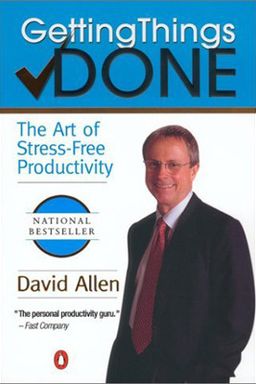
Getting Things Done cover

Getting Things Done

by David Allen

In ''Getting Things Done'', David Allen unveils a groundbreaking system for conquering an overwhelming workload with ease. By mastering the art of stress-free productivity, readers can learn to organize their tasks, unlock creative potential, and achieve a state of relaxed control over their work and life.

Getting Things Done: Mastering the Art of Stress-Free Productivity

How can you get everything done without constantly feeling like you’re falling behind? In Getting Things Done: The Art of Stress-Free Productivity, David Allen argues that true productivity isn’t about working harder—it’s about working with a clear mind. Allen’s central claim is that you can achieve more creative, meaningful output when your mind is free from the clutter of unfinished tasks and unresolved commitments. He calls this state a “mind like water,” where mental calm and clarity allow you to respond to life’s challenges proportionally—neither overreacting nor underreacting.

In an age of information overload and “always-on” demands, Allen’s system offers a framework for regaining control. The promise is simple yet profound: capture everything that has your attention, clarify what it means, organize it effectively, and review it regularly so that you can take confident action in any moment. This isn’t just time management—it’s life management.

The Problem: An Overloaded Mind

Allen begins with the reality many of us face: feeling busy but simultaneously disorganized. Modern life bombards you with emails, meetings, notifications, and ideas, all competing for your attention. Traditional time management, built for an industrial era of linear tasks, no longer works in today’s “knowledge work” environment. The result? Stress, overwhelm, and a pervasive sense of falling behind.

Allen argues that the human brain isn’t designed to hold onto commitments—it’s a processor, not a filing cabinet. Every uncollected thought or unresolved task occupies “psychic RAM,” consuming energy and attention. He explains that most stress doesn’t come from having too much to do, but from breaking internal agreements with yourself. When you say you’ll “handle the budget” but keep postponing it, your mind nags you because it knows something remains unfinished. The real enemy of productivity isn’t workload—it’s mental clutter.

The Solution: Externalizing and Clarifying

The antidote, Allen insists, is to move everything out of your head and into a trusted external system. Capture every task, idea, or worry into collection tools you review regularly—an in-basket, a notebook, or an app. Once captured, clarify what each item means: Is it actionable? Does it require a decision, or can it be deleted, delegated, deferred, or filed as reference? You can only relax when your mind knows that everything has been seen, decided, and stored in a reliable system.

Allen describes this workflow management process through five stages: collect, process, organize, review, and do. These stages form the backbone of the GTD system. Each stage builds on the other—capturing everything gives you clarity, organizing gives structure, reviewing gives control, and doing gives momentum. When you can see everything you’ve committed to across work and life, you can trust yourself to focus on the right thing at the right time.

The Mind Like Water Principle

Allen uses a metaphor from martial arts: a calm pond reacts appropriately to whatever is thrown into it—a pebble causes a ripple, a boulder a splash, and then stillness returns. Productivity, in this sense, is about cultivating equanimity and readiness. When your mind is clear and your environment organized, new challenges no longer feel like crises—they’re simply inputs to process. (This echoes psychological research on “flow,” first named by Mihaly Csikszentmihalyi, where focused attention leads to peak performance.)

You’re most effective, Allen claims, when you trust your system enough to stop carrying your work in your head. That trust requires discipline: writing everything down, reviewing it weekly, and refining habits until they become second nature. And when your commitments are all captured and under control, you reach a state of relaxed focus—ready for anything and free to think creatively.

Why It Matters

Allen’s framework matters because it bridges the gap between theory and practicality. Many productivity systems tell you to “focus on priorities” or “set goals,” but Allen provides step-by-step mechanics to get there. From the two-minute rule (if it takes less than two minutes, do it now) to the Weekly Review, he shows how small, consistent behaviors prevent chaos from returning. He isn’t promising a magic bullet but a discipline of attention: the art of deciding “what’s the next action?” and doing it.

Ultimately, Getting Things Done is about more than efficiency—it’s about peace of mind. When you know exactly what you’re doing and what you’re not doing, you can engage fully with the moment. Whether you’re writing an email, playing with your kids, or presenting to executives, you can be fully present. Allen’s system doesn’t just change how you work—it changes how you live.


Getting Control Through the Five Stages of Workflow

Allen’s GTD workflow management process rests on five interlinked stages: collect, process, organize, review, and do. Each is simple in principle but transformative in practice. Together, they turn chaos into control and anxiety into clarity.

1. Collect Everything

Your mind must trust that nothing slips through the cracks. The first rule is to collect everything—tasks, ideas, responsibilities, appointments, and worries—into an external system. Allen recommends physical tools like an in-basket, legal pads, notebooks, or digital note apps. The goal is 100% capture: if it’s on your mind, it goes into the bucket. This gets things out of your head and gives you the space to think clearly.

2. Process: Clarify What It Means

Processing is about making decisions. Go through each item and ask: Is it actionable? If not, it becomes trash (delete it), reference (file it), or someday/maybe (to review later). If it is actionable, ask: What’s the next physical action? This core GTD question transforms vague intentions into clear moves—call this client, buy printer ink, email your assistant. If an action takes less than two minutes, do it right away. Otherwise, delegate it or defer it.

3. Organize: Build Trusted Lists

Once clarified, items belong in specific lists or folders. Allen suggests separate lists for next actions (grouped by context like “Calls,” “At Computer,” or “At Home”), a “Waiting For” list for delegated items, and a “Projects” list for outcomes that need more than one step. Use calendars only for actions that must occur on a specific day or time—don’t clutter them with “hope to do” items. A solid organization system makes it easy to find anything and eliminates messy stacks of paper.

4. Review: Keep It Current

Once a week, step back for a Weekly Review. Go through every list, scan your projects, clear your inbox, and update your system so it reflects reality. This ritual keeps your commitments fresh in mind and prevents clutter from creeping back in. Allen compares it to cleaning your mental windshield—the clearer your system, the easier it is to steer your week.

5. Do: Take Action With Confidence

Finally, act. Using three models—(1) Four Criteria (context, time, energy, priority), (2) Threefold Model for evaluating daily work, and (3) Six-Level Model for reviewing your life—Allen guides you to choose wisely at any moment. You assess where you are, how much time you have, and your energy level before deciding what matters most. This system helps you switch smoothly between writing proposals, making calls, or just clearing emails—without stress or hesitation.


Clarifying Projects and Next Actions

Allen defines a project as anything requiring more than one action. That means “plan conference,” “paint bedroom,” or “hire assistant” all count. Most people fail not because they lack motivation but because they don’t define these ambiguous goals in tangible terms. The key to progress is clarifying the next visible step.

Turning Goals Into Movement

Every project, Allen insists, needs two things: a clear desired outcome and a physical next action. Without these, it becomes what one client called “an amorphous blob of undoability.” Writing “Marketing Strategy” on a list is useless unless you specify “Email Dana to schedule initial strategy session.”

The Two-Minute Rule and Delegation

GTD’s “two-minute rule” prevents procrastination: if an action takes under two minutes, just do it. Otherwise, decide whether you’ll do it yourself, delegate it, or defer it to a proper list. This single rule can transform backlog into progress, freeing hours of mental space each week.

Tracking What Matters

Allen’s insight is profoundly simple: unfinished work haunts you until it’s captured and clarified. When every project you care about—from “file taxes” to “take a watercolor class”—lives in one trusted system, you stop worrying about what you’ve forgotten and start focusing on what you can do next. Clarity brings both control and momentum.


The Weekly Review: Resetting Your Life

Allen calls the Weekly Review “the master key to stress-free productivity.” It’s the moment when you zoom out to review every open loop, project, and action in your system. Without it, even the best system decays quickly as life’s inputs pile up. With it, you stay current and clear.

How It Works

Once a week, gather all loose papers, check your calendar, review waiting-fors and project lists, and update everything. Reassess priorities and clarify new next actions. Allen suggests Friday afternoons as an ideal time—it closes the week cleanly and frees your mind for a relaxed weekend. (He jokes that people feel best about their work the week before vacation because that’s when they instinctively do this cleanup.)

Seeing the Whole Picture

The review is also a creative act—it connects daily actions to long-term goals. When your mind trusts that nothing is slipping through the cracks, it gives you psychological permission to think big again. The Weekly Review turns maintenance into momentum—it’s the habit that keeps your “mind like water.”


Mastering Projects With the Natural Planning Model

When projects become complex or stuck, Allen introduces the Natural Planning Model—five steps that mirror how your brain naturally plans when it works best: 1) Define purpose and principles, 2) Envision the outcome, 3) Brainstorm ideas, 4) Organize them, and 5) Identify next actions. This model helps you move any idea from concept to completion with calm focus.

Purpose and Vision

Purpose gives your project meaning. You must ask, “Why am I doing this?” because purpose defines success and motivation. Vision then paints the picture of success—what will it look, sound, or feel like when complete? Allen compares it to planning dinner: you start by imagining a great meal before figuring out ingredients or time.

Brainstorming and Organizing

Next, you brainstorm freely, capturing ideas without judging. Then you organize them—grouping them by priority, sequence, or component. This step translates creative thinking into structure, whether through mind maps or outlines. As Allen notes, “You’ll never see how to do it until you see yourself doing it.”

From Theory to Next Action

Finally, identify the next physical action for each major component. Whether it’s “call the venue,” “research vendors,” or “email budget draft,” this decision closes the gap between thinking and doing. Once all next steps are defined, your project is fully under control—it’s just a series of doable actions.


Making Smart Choices About Action

Once your system is in place, the challenge becomes moment-to-moment decision-making: what should you do next? Allen provides three frameworks to help you choose wisely and act confidently.

The Four-Criteria Model

Assess each available action by four criteria: context (where you are and tools available), time available, energy level, and priority. If you’re in transit with only ten minutes free and low energy, make quick calls; save deep thinking for when you’re fresh. This keeps activity aligned with reality.

The Threefold Model of Work

You’re always doing one of three things: (1) predefined work (your next actions), (2) work as it shows up, or (3) defining your work (processing inputs). Balance all three intentionally. If you constantly react to incoming tasks, you’ll never get ahead; if you ignore new input, you’ll miss opportunities. The goal is conscious engagement rather than reactive busyness.

The Six Horizons of Focus

Finally, align your daily actions with higher levels of meaning: 1) current actions, 2) projects, 3) areas of responsibility, 4) one- to two-year goals, 5) three- to five-year vision, and 6) life purpose. These horizons connect the tactical to the strategic—helping you see how “buy milk” and “launch new product” both fit into a coherent life.


The Power of the Collection Habit

Collecting everything isn’t just a technique—it’s a psychological shift. Allen explains that uncollected ideas create stress because they represent broken agreements with yourself. Every undone task or unmade decision nags subconsciously, eroding trust in your own reliability. Capturing everything restores that trust.

Three Ways to Restore Trust

  • Don’t make the agreement (say no to tasks you can’t commit to).
  • Complete the agreement (actually do the task).
  • Renegotiate the agreement (track it properly in your system).

By capturing every commitment into a system you trust, you’re effectively renegotiating with yourself. Once something is written down, you’re freeing your mental bandwidth from constant reminding. This applies to teams as well—organizations thrive when everyone follows clear collection habits, as “interruptitis” decreases and accountability rises.

When you see your entire workload objectively—without guilt or vagueness—you make more conscious choices and feel legitimate peace about what you’re not doing. Collection isn’t about doing everything; it’s about knowing what not to worry about.


The Next-Action Mindset: A Culture of Doing

Allen calls the next-action question—“What’s the next action?”—one of the most powerful productivity tools in existence. He envisions a world where no meeting ends, and no project starts, without that question being answered. It creates immediate clarity, accountability, and momentum.

He recounts how his mentor Dean Acheson used this in executive coaching: picking up each item on a client’s desk and asking what the next action was. The exercise almost magically transformed confusion into movement. The moment you define a visible next step, resistance dissolves. A burdensome “fix marketing” becomes an easy “email Rob for Q4 report.”

Why Smart People Procrastinate

Ironically, the more intelligent you are, the better you are at imagining complexity—and potential failure. That mental simulation triggers overwhelm. Allen says the cure is intelligent dumbing down: decide on the smallest physical step and do it. Creativity flourishes once you simplify to motion. As Mark Twain put it, “The secret of getting ahead is getting started.”

Creating a Culture of Clarity

In organizations, consistently asking “What’s the next action?” fosters transparency and momentum. Meetings end with concrete ownership; projects advance visibly. Accountability replaces vagueness, empowerment replaces micromanagement. It’s a deceptively small habit that transforms entire teams from talking to doing.


Outcome Thinking and the Bigger Picture

The final pillar of GTD is outcome focusing—thinking about what “done” looks like. Allen reminds us that human creativity works backward: we create mental pictures of successful outcomes and then generate steps to reach them. Whether planning a product launch or a family vacation, defining “done” unleashes motivation and direction.

The Two Problems—and Two Solutions—of Life

Allen quotes Steven Snyder: “There are only two problems in life—(1) you know what you want but don’t know how to get it, or (2) you don’t know what you want.” The two solutions? Make it up. Make it happen. In other words, define your vision (make it up) and execute next actions (make it happen). The interplay between imagination and implementation fuels everything.

From Personal to Organizational Transformation

Outcome thinking scales from individuals to entire teams. When meetings begin with “What’s our purpose?” and end with “Who’s doing which next action?” the culture itself shifts from stress to flow. The micro-behaviors of GTD—clarifying, capturing, and aligning—don’t just make you more efficient; they make you more conscious and creative. As Allen writes, a well-structured mind doesn’t just get things done—it gets the right things done.

Dig Deeper

Get personalized prompts to apply these lessons to your life and deepen your understanding.

Go Deeper

Get the Full Experience

Download Insight Books for AI-powered reflections, quizzes, and more.