
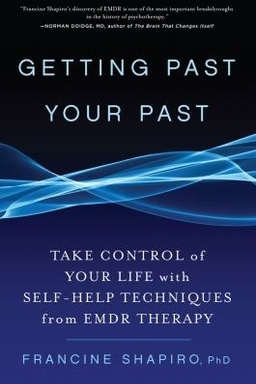
Getting Past Your Past cover

Getting Past Your Past

by Francine Shapiro

Getting Past Your Past reveals the transformative EMDR techniques that empower you to process painful memories, overcome emotional barriers, and reclaim control of your life. Discover how to improve relationships and foster real change through self-monitoring and self-control exercises.

How Unprocessed Memories Shape Your Life

Why do you sometimes react far more strongly than the situation warrants? Francine Shapiro—creator of EMDR—argues that many present emotional reactions are actually echoes of old experiences your brain never fully digested. In this book, she outlines a powerful framework for understanding how unprocessed memories drive behavior and emotions, and shows how reprocessing those memories can transform anxiety, pain, and relationship patterns.

At the heart of her model is the Adaptive Information Processing system—your brain’s natural ability to integrate experiences into useful learning. When this system is overwhelmed by trauma, stress, or neglect, experiences remain frozen as sensory-emotional networks rather than integrated memories. These frozen memories include images, emotions, physical sensations, and beliefs. Later, when a cue in the present links back to those networks—a smell, tone, touch, or sentence—you feel the old reaction as if the original event is happening again.

The Architecture of Memory

Shapiro describes memories as neural networks linked by meaning. Adaptive memories guide learning and flexibility. Unprocessed ones remain vivid, disjointed, and emotionally charged. When triggered, they override your adult perspective, and suddenly a breakup, performance review, or argument feels catastrophic. The brain literally reactivates the emotional and sensory components of the original experience. You may sweat, tremble, or feel shame that seems to come from nowhere.

For example, Justine collapsed on the floor when her boyfriend threatened to leave. The scene mirrored her thunderstorm memory from age six, when she cried alone and felt abandoned. Ben, who was humiliated in childhood over a stutter, still sweated before presentations decades later. In both cases, the adult distress wasn’t just about the present—it was the past reliving itself.

How EMDR Completes the Process

To repair these distortions, Shapiro developed EMDR—Eye Movement Desensitization and Reprocessing—a structured method that helps the brain finish processing interrupted experiences. Through bilateral stimulation (side-to-side eye movements, tapping, or tones) while holding the disturbing memory in mind, EMDR activates mechanisms similar to REM sleep, allowing reconsolidation of memory. The event becomes a normal narrative rather than a hot flashback.

In practice, you identify a Touchstone Memory—the earliest event carrying your recurring emotion and belief—and process it while maintaining grounding in the present. Distress ratings drop, physical sensations neutralize, and new beliefs emerge (“I have choices now,” “I’m safe,” “It’s over”). EMDR is not mere exposure; you don’t have to recount every detail. It helps the brain link isolated material to adaptive networks, restoring calm and perspective.

Examples of Transformation

Lynne processed her earthquake PTSD by targeting the image of her hiding with her son. Her memory chain linked to childhood chaos, betrayal, and body pain. Once integrated, she laughed about “that was just an earthquake.” Jeanne’s fear of public speaking traced to taunting at age seven; after EMDR, her confidence returned. Lucille, unable to bond with her newborn, processed a traumatic birth memory and felt love flood in.

Others resolved physical pain—Jim’s phantom limb agony reduced after processing the accident; Alger’s pain vanished after working through hospital trauma and guilt. Even phobias shifted: Cheri’s driving fear tied to an LSD-induced panic from years earlier; Tony’s plane panic resolved after combat memories were processed. Each case reflects the same principle: when you heal the memory network, present symptoms dissolve.

Broad Impact: From Trauma to Growth

Beyond individual therapy, Shapiro applies this approach to addiction, offender rehabilitation, and community recovery. Addiction, she argues, is often self-medication for unprocessed pain. Programs combining EMDR with coping-skill training achieve striking recovery rates. Similarly, perpetrators of violence or abuse often carry untreated childhood trauma that fuels distorted behavior; trauma reprocessing fosters accountability and empathy.

In groups and disaster settings, simplified EMDR protocols like the Butterfly Hug help survivors re-regulate collectively. Processing grief and attachment wounds restores emotional openness and spiritual connection, allowing communities—and individuals—to heal deeply.

Key insight

Unprocessed memories are not just psychological artifacts; they actively shape perception and decision-making. EMDR gives your brain the chance to finish what it couldn’t before—so the past stops writing your present story.

Across cases—from war trauma to childhood rejection—the book’s message is consistent: you are not broken, just carrying unfinished memories. When those memories are integrated, physiological, emotional, and relational well-being improve. This integration—combined with grounding skills and adaptive cognition—marks the path from trauma to thriving, from survival to freedom.


Finding and Working with Touchstone Memories

To change entrenched patterns, you must first locate their source. Shapiro calls the earliest, emotionally charged event linked to your current problem a Touchstone Memory. It often carries a negative core belief—such as “I’m powerless” or “I’m defective”—and physical sensations that echo across later life events.

How to Identify Them

Start by noticing what triggers intense or repeated emotional reactions. Use Shapiro’s Affect Scan: bring a recent upsetting event to mind, focus on the emotion and where you feel it physically, and rate it from 0–10 (the SUD scale). Then apply the Floatback technique—let your mind drift to the first time you felt that same distress. The result is often a striking early image or body sensation that uncovers the original wound.

Derek’s TICES Log—a daily record of Trigger, Image, Cognition, Emotion, and Sensation—helped him connect his distress over his son’s crying to a wartime hostage memory of helplessness. When that memory was processed, his present reactions changed dramatically. Nancy’s phobia of flying traced to a trip linked with her parents’ separation. Jon’s rage derived from early beatings by his father. These discoveries demystify chronic patterns.

Using Logs and Observation

Over days or weeks, noting triggers and emotions exposes repeating clusters—pointing to one memory network. The TICES format keeps this clear: each time you note a reaction, add its associated cognition (“I’m unsafe,” “I’ll fail”), image, emotion, and body sensation. You start to see how old programming drives current behavior, not the other way around.

(Parenthetical note: This approach resembles trauma mapping in somatic therapies—your body cues guide the memory retrieval process even when your intellect can’t access the origin.)

Using the Insight

Once you’ve found a Touchstone Memory, don’t rush to re-live it alone. Instead, prepare grounding tools—Safe Place imagery and breathing—to maintain balance. The book continually emphasizes that self-help steps may be powerful but professional guidance is recommended for intense trauma.

The goal is ultimately integration, not revelation. Recognizing that your panic, shame or anger stems from something long past lets you stop blaming your personality and start targeting the specific neural network to heal. Recovery means replacing “I am powerless” with “I have choices now.” Once the emotional charge is removed, the memory becomes ordinary autobiography. Freedom follows.

Key insight

Patterns that seem mysterious or immutable are usually organized around one foundational memory. Find that memory, and you find the key to unlocking decades of reactions.

Shapiro’s tools—Affect Scan, Floatback, and TICES—transform vague emotion into data you can map and change. Identifying memory roots not only reveals the source of distress but empowers you with a clear target for healing and future growth.


Mastering Self-Calm and Safety Skills

Before you tackle deep trauma work, you need emotional safety. Shapiro teaches that stabilization precedes reprocessing, and equips you with simple yet powerful methods to keep one foot anchored in the present. These Safe/Calm Place and self-control tools are the backbone of resilience.

Safe Place Imagery and Breathing

You start by choosing a soothing image—your favorite forest path, a ocean scene, or memory of comfort—and label it with one cue word (“peace,” “meadow”). Combine it with belly breathing: hand on stomach, slow inhale and exhale. Rehearse it daily so it becomes automatic when distress arises.

The exercise creates a physiological counterpoint to fight-or-flight arousal. When triggered, calling up “forest” instantly engages the parasympathetic system, calming body and mind. It’s preventive, not remedial—it strengthens emotional muscles before heavy lifting.

Short Bilateral Techniques

To manage mild anxiety, Shapiro suggests bilateral tapping such as the Butterfly Hug—cross arms, tap shoulders alternately for a few seconds. This light mimicking of EMDR stimulation shifts attention between hemispheres and diffuses acute intensity. If distress rises too high or vivid memories appear, return to the Safe Place quickly.

Creative Quick Tools

  • Cartoon Voice technique: say harsh inner thoughts in a silly voice to deflate shame.
  • Paint Can imagery: visualize cleaning away intrusive scenes.
  • Spiral Technique: imagine reversing unpleasant bodily energy flows for relief.

Each serves as an anchor—preventing overwhelm and letting processing resume safely when ready. (In dialectical-behavior therapy terms, these are “distress tolerance” skills; the mechanism overlaps neuroscience and mindfulness training.)

Key insight

Trauma recovery demands active safety skills—grounding, breathing, and bilateral stimulation that prove you can stay present even when memories ignite. Stability enables processing; without it, healing stalls.

Practice these tools routinely, not just in crisis. Over time, your nervous system learns that danger memories now coexist with safety resources, allowing EMDR or other trauma work to unfold securely and successfully.


Attachment, Relationships, and Emotional Blueprints

Your early bonds become invisible scripts for adult relationships. Shapiro explains that attachment memories—formed through childhood interactions—shape how you seek love, handle conflict, and interpret closeness. When these memories are unprocessed, they replay as automatic patterns that feel unchangeable.

Attachment Styles in Motion

Securely attached children learn emotional regulation; insecure ones adapt through avoidance, clinging, or numbness. Joan’s mother avoided affection, teaching emotional self-containment. Lucille’s birth trauma disconnected bonding with her newborn. Jenna and Clara’s father’s whip created hypercontrol and depression—opposite sides of the same fear.

These learned responses often appear decades later: choosing unavailable partners, caretaking compulsively, fearing abandonment, or erupting in anger. Yet these aren’t fixed personalities—they are protective circuits from unprocessed attachment networks.

Rewiring Relationships Through Memory Work

Alexandra, ignored emotionally by her parents, found herself repeatedly dating neglectful men. The Floatback led to a playground memory at age eight—her bee sting ignored—and once processed, she stopped tolerating cruelty. George, raised amid parental criticism, learned to express anger to feel noticed; EMDR on his memory of witnessing a fight changed his core belief from “I’m powerless” to “I have choices now.”

Linda’s childhood of rejection and abuse drove adult jealousy that nearly ended her marriage; processing those childhood traumas restored empathy and stability. Across these examples, the replacement of outdated emotional blueprints reshaped intimacy and trust.

Key insight

You don’t merely choose familiar pain—you are drawn to what your early memory network defines as “love.” Reprocess that definition, and your choices transform.

Healing attachment wounds through EMDR and related techniques demonstrates emotional neuroplasticity: when the brain updates its template of connection, your capacity for compassion and mutual regulation expands. You begin to relate consciously rather than reenact unconsciously.


Body and Mind Integration in Trauma Healing

Shapiro bridges psychological and physical worlds by showing that unprocessed memories often manifest as pain or somatic symptoms. The body remembers. When traumatic experiences remain unresolved, the nervous system encodes the distress as physical sensation—sometimes for decades.

When Pain Is Memory-Based

Phantom limb pain, headaches, asthma, sexual dysfunction—all may stem from memory networks rather than tissue damage. Jim’s phantom pain dropped after processing his accident; Alger’s eight years of agony vanished after nine sessions targeting guilt and hospital trauma. The result is neurophysiological recalibration: the relevant brain circuits finally complete the processing sequence.

Mind-Body Techniques for Relief

Shapiro introduces Lightstream imagery—a meditative visualization of healing light entering painful regions with color and temperature awareness. This practice engages physiological relaxation via imagination, reducing sensory intensity. Other cases (Carl’s dizziness, Gianna’s asthma) improved after emotional roots were processed.

The book advocates both medical evaluation and trauma inquiry: when pain fluctuates with emotion or lacks clear medical cause, consider memory contribution. Processing traumatic medical experiences—birth, surgery, accidents—often initiates remission of chronic symptoms.

Key insight

Physical symptoms are sometimes emotional messages from trapped memory networks. When the brain reprocesses the memory, the body often follows.

This mind-body connection reframes chronic conditions from moral or medical failure into integrated phenomena. It encourages a whole-person healing model where somatic awareness and psychological reprocessing work hand in hand to restore wellbeing.


Trauma, Addiction, and Recovery Pathways

Addiction, in Shapiro’s framework, is not simply poor discipline—it’s a survival strategy to avoid overwhelming emotions from unprocessed trauma. Drugs, alcohol, or other compulsions temporarily numb the pain of distressing memory networks. The book’s cases reveal that when trauma is healed, the need to self-medicate diminishes dramatically.

The Trauma Loop

Tom grew up in alcoholism, suffered his brother’s violent death, and carried unresolved guilt and grief. Substance use muted those unbearable feelings until EMDR allowed him to process the loss. Integrated trauma treatment—combining EMDR with Seeking Safety skills—produced astonishing outcomes: over 90% Drug Court graduation, restored relationships, and sustainable sobriety. Karen’s panic-driven addiction resolved only after confronting her abandonment memory from age four.

What Works

The integrated method provides both emotional resolution and behavioral tools. EMDR targets the roots—unprocessed memories—while Seeking Safety supplies present-moment coping (grounding, boundary setting, and relapse prevention). Together, they replace avoidance with mastery. (Note: this mirrors trauma-informed addiction programs now spreading worldwide.)

The Hope Message

Recovery is possible even after chronic relapse. Shapiro’s narrative carries compassion but accountability—addiction is an understandable survival method, yet freedom lies in facing rather than fleeing pain. When trauma heals, craving ceases being emotional necessity.

Key insight

Treating addiction without addressing trauma often fails. Heal the memory behind the urge, and recovery becomes not just abstinence but genuine peace.

Understanding addiction through the lens of trauma reframes healing as emotional integration. Programs that target memory, behavior, and skills simultaneously help people reclaim dignity and belonging along with sobriety.


Grief, Spirituality, and Community Renewal

The book concludes with the larger horizon: once personal trauma is processed, emotional energy flows outward as compassion, purpose, and communal healing. Unprocessed memories freeze grief and faith; processed ones reopen both.

Clearing Blocks to Mourning

Jane could not cry after her husband’s death until EMDR surfaced a directive from her dying mother—“be strong”—which she had misinterpreted as “don’t grieve.” Once reprocessed, she felt legitimate sorrow and relief. Donna, facing terminal illness, processed her father’s disapproval memory and died peacefully.

Spiritual and Collective Reconnection

Trauma often fractures spiritual experience. Craig’s inability to meditate traced to a childhood accident with a cow that made “the world unsafe.” EMDR freed that fear, restoring his sense of divine calm. In community trauma after hurricanes, the Butterfly Hug protocol allows survivors to stabilize collectively through shared bilateral stimulation.

Key insight

Healing personal memories creates ripple effects—reconnecting you to meaning, spirituality, and others. Processed pain becomes empathy rather than isolation.

Shapiro ends with a vision of posttraumatic growth: once the brain completes its healing cycles, people naturally seek connection and contribution. Trauma resolution is not just individual relief—it’s the seed of communal compassion.

Dig Deeper

Get personalized prompts to apply these lessons to your life and deepen your understanding.

Go Deeper

Get the Full Experience

Download Insight Books for AI-powered reflections, quizzes, and more.