
Idea 1
Getting More Through People and Process
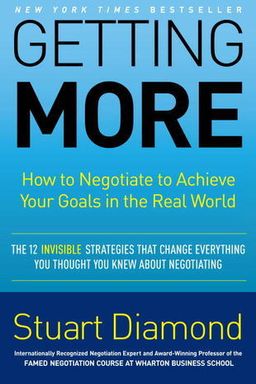
How do you get more when people don’t seem to listen, or when logic fails to persuade? In Getting More, Stuart Diamond argues that negotiation is not about power, logic, or winning—it’s about people. Every outcome depends on understanding others’ perceptions, managing emotion, setting precise goals, and trading value creatively. Diamond’s central claim: you get more not by fighting harder but by thinking humanly—by using empathy, standards, preparation, and incremental problem-solving to make agreements feel safe and rational for everyone involved.
Negotiation is part of everyday life: buying a car, persuading your boss, calming your child, or navigating public conflicts. Diamond shows that the same habits—clarifying what you want, listening to how others see the world, paying emotional attention, and structuring small steps—work across contexts from corporate deals to family disagreements. The book teaches a systematic, people-first framework that replaces aggression with curiosity, improvisation with structure, and uncertainty with incremental progress.
Goals and Structure: The Core Compass
Negotiators often lose sight of what they truly want. Diamond begins with a deceptively simple discipline: ask, “What do I want at the end of this conversation that I don’t have now?” Angela Arnold used that question to help her father recover from a stroke—his goal was not abstract health, but the concrete desire to walk his dog, Ringo. When she anchored every conversation on that objective, he regained motivation and completed therapy. Goals organize attention; without them, emotions, pride, and distraction take over. Precision—like asking for a “10% increase by July 1 with a review after six months”—eliminates ambiguity and helps both sides know when success occurs.
Diamond then translates goal discipline into preparation. Preparation is not rote research; it’s empathy in advance. Dena’s cultural marriage plan succeeded because she rehearsed tone, role reversal, and sequence weeks before approaching her mother. She planned how to meet emotional needs first, then addressed facts. Preparation converts negotiation from guessing to performing.
Perceptions and Empathy: Seeing Their Picture
Logic often fails because others live in different pictures of reality. Diamond calls these “the pictures in their heads.” When John Bowman helped end the Writers Guild strike, he began by asking studio executives questions and commiserating about losses rather than listing demands. By meeting their picture first—people under pressure, losing money—he reopened talks. When you summarize others’ views in your own words and test for accuracy, you validate them and earn the right to persuade. Conversations shift from defensive to constructive.
This principle extends to culture. Cross-cultural success comes from understanding identity and perception, not race or dress. In Bolivia’s banana project, Diamond co-founded a replacement for coca farming by studying what mattered to growers—stable prices, dignity, and trust—and adjusting structure accordingly. When negotiations failed elsewhere, cultural blindness was always the cause.
Emotions, Incrementalism, and Trust
People can’t think when upset. Diamond introduces “emotional payments”—small gestures like apology, validation, or listening—that calm emotions and reopen logic. Lisa Stephens helped her terrified daughter go to the hospital by asking affirming questions—“Would Mommy ever do anything to hurt you?”—turning panic into trust. Diamond distinguishes empathy from emotion: empathy helps others feel heard; emotion clouds judgment. Negotiation becomes possible only after emotional temperature cools.
Once calm arrives, Diamond favors incremental steps over large compromises. Camilla Cho requested partial involvement in finance and strategy rather than full-job transfer, earning trust and growth. Incrementalism shrinks risk and turns abstract intention into observable progress. Trust emerges from consistency, not grand gestures.
Trading Unequal Values and Using Standards
Negotiations progress when you trade what costs little for what others value highly. Larry Stillman’s multimillion-dollar paper contract hinged on four basketball tickets—worth little to him, worth much to his client. Whether in homes or corporations, trading low-cost intangibles (status, introductions, schedules) transforms rigid contests into creative collaboration. Money is only one currency; reputation, time, and validation often matter more.
When logic or trade fails, standards offer legitimacy. You can ask, “Is it your policy to…?” instead of accusing. Kenneth Reyes cited Verizon’s service standards when his bills kept failing, and the company waived late fees. Standards depersonalize reform; they appeal to consistency and fairness rather than confrontation. Governments and corporations alike respond when you invoke their own written promises.
The Problem-Solving Model and Broader Application
Diamond’s Four-Quadrant Model turns these principles into a practical checklist: define problems and goals, analyze perceptions, brainstorm incremental options, and plan concrete action. It’s negotiation as deliberate process rather than improvisation. When Latvian ministers tested it over coffee, role-reversal simulation generated solutions faster than debate had for months. Structure gives control; empathy gives insight.
From workplaces to public disputes, the same formula scales. In families, giving children choices and small trades teaches fairness. In corporations, allies and coalitions protect jobs. In global conflicts, communication and pilot programs replace ideology. Diamond’s humane pragmatism—focus on people, start small, use empathy and standards—builds results across levels of complexity.
“You don’t get more by power. You get more by understanding people and managing process.”
Diamond’s message reframes negotiation from argument to empathy, from competition to creative problem-solving.
When you apply these tools—clarity of goals, insight into perceptions, emotional intelligence, standards, and structured preparation—you shift from reaction to design. Negotiation becomes not a test of strength but a craft of human connection. Diamond’s enduring insight is simple: look through the other person’s lens, define your goal precisely, and move together in small steps. From there, you can get more—in business, family, and life.