
Idea 1
Getting Along with Anyone at Work
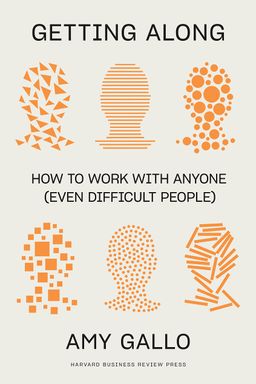
Why is it that one difficult coworker can ruin your entire workday, even if most of your colleagues are fine? In Getting Along: How to Work with Anyone (Even Difficult People), Amy Gallo argues that professional success and well-being depend less on job tasks and more on the quality of our relationships at work. The central claim of her book is simple but profound: if you can learn to understand, navigate, and manage difficult people, you can thrive—personally and professionally—even in toxic or tense environments.
Gallo contends that workplace relationships—whether supportive or exasperating—shape engagement, creativity, stress, and even physical health. Ignoring relationship problems doesn’t make them disappear; it just magnifies the stress and corrodes team morale. Instead of reacting reflexively or hoping others will change, she urges readers to develop interpersonal resilience: the emotional skill to stay grounded, empathetic, and strategic even when others behave badly.
Why Relationships Matter More Than We Think
Early in her career, Gallo discovered firsthand how a challenging boss could dominate her thoughts and drain her energy well beyond working hours. Studies she cites show that 94% of employees have worked with toxic colleagues and 87% say team culture suffered as a result. These statistics highlight an uncomfortable truth—you’re almost guaranteed to encounter frustrating personalities at work. Relationships aren’t peripheral to your job; they are the foundation for happiness, productivity, and creativity.
Drawing on decades of research from psychology, neuroscience, and organizational behavior, Gallo proves that positive relationships can boost engagement, reduce stress, and increase performance. Conversely, negative interactions hinder creativity, make people less productive, and even trigger physical ailments like high blood pressure or heart disease. So, rather than dismissing relational conflict as inevitable, she argues we must become skilled at handling it. This shift marks a crucial mindset change: seeing relationship management not as "office politics" but as an essential professional competency.
The Brain in Conflict
One distinctive insight in Gallo’s framework is how our brains sabotage us during conflict. When we feel attacked—say, in an email exchange or a tense meeting—our amygdala triggers the fight-or-flight response, hijacking rational thinking. This is what Daniel Goleman (author of Emotional Intelligence) calls an "amygdala hijack." Stress hormones flood the body, narrowing our perspective and intensifying negativity bias—the tendency to fixate on negative events. A snide comment suddenly overshadows all the positive feedback we received that week.
Gallo invites you to pause and create a mental space between stimulus and response. She echoes psychiatrist Viktor Frankl’s famous idea: in that space lies our freedom to choose a wiser reaction. Observing your own reactions, reappraising situations, and even allowing time for emotions to cool can restore clarity. This self-awareness, she notes, is the foundation for working intelligently with difficult people.
The Eight Archetypes of Difficult Colleagues
To make her advice concrete, Gallo identifies eight recurring archetypes found in nearly every organization. They include the insecure boss, the pessimist, the victim, the passive-aggressive peer, the know-it-all, the tormentor (a mentor turned bully), the biased coworker, and the political operator. You will likely recognize at least one of these in your own office—and perhaps in yourself. Each archetype has distinct motivations and patterns of behavior, and understanding them allows you to choose targeted strategies instead of one-size-fits-all fixes.
Her archetype approach functions like a map of workplace personalities, helping you analyze what drives their behavior. For instance, insecurity breeds micromanagement; pessimism often stems from anxiety; and passive-aggressive behavior reflects fear of conflict. By diagnosing these root causes, you can respond with empathy rather than frustration.
Principles for Getting Along with Anyone
Beyond individual personalities, Gallo distills nine core principles for navigating any relationship: focus on what you can control, accept that your perspective isn’t the only one, recognize your biases, avoid the “me versus them” mentality, rely on empathy, define clear goals, resist gossip, experiment with tactics, and stay curious. These principles transform relationship management into a repeatable skill—one grounded in awareness, experimentation, and compassion.
For example, empathy and curiosity can help you see that your tormentor isn't evil but perhaps under extreme pressure. Experimenting with responses allows small shifts—a phrase, a boundary, or a pause—that gradually reshape dynamics. Gallo encourages you to view every interpersonal challenge as an experiment in resilience, not a personal failure.
The Larger Promise of Interpersonal Resilience
Ultimately, Gallo’s message is hopeful. You cannot control others—but you can control your mindset, actions, and boundaries. Building interpersonal resilience doesn’t merely help you survive conflict; it enhances emotional intelligence and leadership. These are transferable skills that will serve you everywhere—from performance reviews to family discussions.
Key Takeaway
Workplace relationships matter as much as competence. Understanding how your brain reacts to conflict, recognizing patterns in difficult people, and aligning your responses with empathy and clear goals can turn even fraught dynamics into sources of growth. As Gallo reminds us, “We can all have stronger and healthier relationships at work.”