
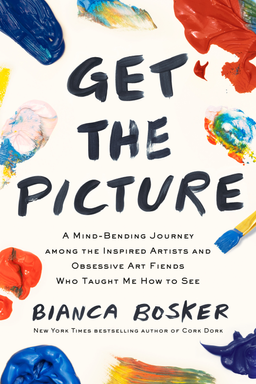
Get the Picture cover

Get the Picture

by Bianca Bosker

Get the Picture takes readers on a mind-bending journey through the contemporary art world, revealing its hidden codes and societal power structures. With insider stories and personal insights, Bianca Bosker offers a transformative guide to appreciating art beyond elitism, encouraging readers to engage authentically with creativity.

Cracking the Code of the Art World's Hidden Hierarchies

Have you ever walked into an art gallery and instantly felt out of place, as if everyone else knew some secret you didn’t? In Navigating the Exclusive and Hostile Terrain of the Art World, Bianca Bosker takes readers directly into that unsettling space — the elite and elusive contemporary art world — and asks why appreciating art has become less about feeling and more about fitting in. Over five years working inside New York’s galleries, Bosker uncovers an environment where beauty, power, status, and secrecy intersect. Her journey exposes how the art world mirrors broader systems of privilege — and what it takes to see art clearly, without the filters of elitism.

The Art World as Social Fortress

At the book’s core lies a simple but provocative question: Who gets to decide what art matters, and why? Bosker argues that the art world operates more like an exclusive club than a creative community. From coded fashion choices to insider jargon, nearly every interaction is steeped in unspoken social rules meant to separate the “initiated” from the ordinary viewer. You’re not just viewing art—you’re navigating a complex social game.

Her undercover approach recalls her earlier work investigating wine snobbery: she took jobs in prominent galleries to observe how value and legitimacy are constructed. What she found was staggering. Behind the gallery’s polished white walls lies a mix of performance, secrecy, and sometimes outright corruption — from the commodification of creativity to whispered networks deciding who gets visibility. These experiences reveal an ecosystem as much about power as it is about paint.

Appearance, Language, and Power

In Bosker’s telling, every aspect of art-world life is performative. The wardrobe choices of gallerists — the “deliberate messiness” of Brooklyn artists versus the shimmer of uptown collectors — function as tribal identifiers. Language, too, becomes a gatekeeper. Words like “beautiful” are taboo, replaced with cryptic “artspeak” designed to confer intelligence and weed out outsiders. This linguistic elitism, descended from 1970s academic theory, locks ordinary viewers into a spectator’s paralysis — unsure what to think, afraid to seem unsophisticated.

“Art becomes less a direct emotional experience,” Bosker observes, “and more a signal of belonging.”

This “strategic snobbery,” as she calls it, reflects a society where exclusivity itself holds value. Just as luxury brands thrive by limiting access, so too does the art world elevate mystery into meaning. The rarer your knowledge — or your social proximity to insiders — the more legitimate your appreciation becomes.

The Economics of Prestige

Bosker’s investigation pulls back the curtain on how prestige operates as a currency. Manhattan galleries, for instance, intentionally hide themselves—no signs, frosted doors, by-appointment-only policies. Even wealthy would-be buyers are often turned away because money alone doesn’t qualify them. Instead, they must hold the right social capital: being on a museum board, owning other influential pieces, or having the right friends. Here, art’s value depends not only on aesthetic or emotional power but on its provenance — who owns it, who shows it, and who talks about it.

Meanwhile, artists themselves often earn little from the secondary market that trades their works for millions. Bosker highlights Julie Curtiss’s tragicomic story: her paintings skyrocketed in auction value from hundreds to hundreds of thousands, while Curtiss herself saw almost none of that profit. It’s a stark reminder that in this system, creativity often serves the wallets of intermediaries more than its creators.

Reclaiming Art Appreciation

Bosker doesn’t end in cynicism. Her journey ultimately calls for reclaiming art from elitism. True art appreciation, she insists, doesn’t require fluency in “artspeak” or a trust fund—it demands presence, curiosity, and attention. Standing before a painting long enough to notice five details, or visiting an artist’s studio instead of a museum, can reconnect you to the artist’s original struggle for meaning. This practice echoes ideas from John Berger’s Ways of Seeing, which argued that every viewer has the right and power to interpret art personally, without intermediaries.

In the end, Navigating the Exclusive and Hostile Terrain of the Art World isn’t just an exposé — it’s an invitation to see art with new eyes. Bosker’s central insight is that the barriers to appreciating contemporary art aren’t about intelligence or taste but about access, confidence, and the courage to trust your own perception. By breaking through the spectacle, you rediscover what art was always meant to be: a shared expression of humanity, not a badge of privilege.


Inside the Gallery: Where Style Becomes Strategy

Your first day in the art world isn’t about what you know—it’s about what you wear, how you speak, and whether you “get it.” Working under gallerist Jack Barrett at the 315 Gallery, Bosker learned quickly that the gallery wasn’t just a business but a stage. Every detail, from Barrett’s curated nonchalance to his assistant’s outfits, projected a specific aesthetic philosophy. The hip Brooklyn look—tattoos, vintage tees, and graceful disarray—was as much a uniform as the black tie of uptown dealers.

The Rules of Representation

In this world, fashion isn’t vanity—it’s semiotics. Dressing with studied carelessness signals authenticity, creativity, and insider knowledge. Like a painter choosing colors, gallerists craft personas that align with their clientele’s identity. Bosker’s early wardrobe missteps—dressing too neatly or using words like “beautiful”—were subtle social errors exposing her as an outsider.

Language as a Lock

The same exclusivity extends to speech. Gallery talk, or “artspeak,” values vagueness and complexity over clarity. Phrases such as “the work interrogates liminality” replace plain appreciation. This lexicon creates distance between insiders and everyone else, echoing Pierre Bourdieu’s concept of cultural capital: the knowledge that confirms your standing. Bosker identifies this as “strategic snobbery”—a conscious effort to filter access and command reverence.

How Museums Fuel the Game

Even museums reinforce this system through wall texts that focus more on theory than the art itself. Instead of inviting reflection, their jargon often alienates everyday viewers. Bosker notes that these texts tell you what’s prestigious to know, not what’s meaningful to feel. As a result, viewers begin to doubt their own reactions, deferring instead to authority.

When language stops clarifying and starts excluding, we stop seeing art as an invitation—and start treating it as an exam we might fail.

Bosker’s experiences demonstrate that the art world’s coded behaviors don’t just reflect elitism—they actively construct it. Yet by recognizing these codes, you can begin to move within them consciously rather than be silenced by them. Awareness becomes the first brushstroke of empowerment.


The Price of Prestige: How Value is Manufactured

You might assume that if you can afford art, you can buy it. But in Manhattan’s small contemporary galleries, money alone isn’t enough. Entry requires social proof—connections, reputation, and the right kind of visibility. Bosker learned that many prestigious galleries hide in plain sight, their entrances unmarked as if ordinary passersby couldn’t be trusted with their secrets. These spaces use inaccessibility to create desirability, transforming secrecy into a brand.

Obscurity as a Marketing Tool

This deliberate obscurity ensures that only “serious” collectors gain access. The “Joe Schmoe” public is unwelcome—not because of ignorance, but because galleries see them as distractions. For gallerists, an uninvited visitor is as out of place as someone walking into a private club mid-meeting. Bosker’s conversations reveal a truth: galleries cultivate scarcity not just of objects but of access itself. The fewer people allowed in, the greater the sense of prestige.

Influencers, Not Buyers

Within this system, the most valuable buyers aren’t those with deep pockets, but those with deep connections. Museum trustees, high-profile collectors, or influential curators add exponential value simply by association. Owning a piece isn’t a purchase; it’s an endorsement. A collector’s reputation can launch an artist’s career—or doom it. Bosker describes how artworks are “placed” carefully into the “right” hands rather than sold openly, ensuring that ownership itself becomes part of the artwork’s myth.

Waiting Lists and Cultural Filters

Many prospective buyers are kept on endless waiting lists that quietly judge who deserves to own a piece. Bosker recounts that even galleries with works in storage may refuse sales to outsiders; better to hold out for someone prestigious enough to elevate the brand. Ironically, this dynamic sustains art’s speculative market—everyone wants what they can’t have, and exclusivity itself becomes the product.

The art market, Bosker concludes, is less capitalism than theater. It mimics the scarcity of a luxury good but cloaks profit motives in cultural elevation. For the outsider, understanding this pattern isn’t just revelatory—it’s liberating. It turns intimidating exclusivity back into what it always was: a performance of power masquerading as taste.


The Artist’s Paradox: Fame Without Fortune

While galleries and collectors trade works for eye-popping sums, the artists who create them often earn little more than validation. Bianca Bosker explores this systemic imbalance through the story of Julie Curtiss, a highly regarded artist whose auctions exploded in value—without any benefit reaching her own pocket. The same painting she sold for $600 resold for $106,000 two years later, enriching everyone but her.

Who Profits from Creativity

Galleries occasionally attempt to protect artists with anti-flipping agreements that prevent quick resales, but these safeguards are rare and limited. Once an artwork reenters the secondary market, the artist is usually cut out of any profit chain. Bosker’s portrayal of Curtiss emphasizes the human toll: the anxiety of success itself. Too much popularity can trigger suspicion among critics who conflate commercial demand with aesthetic compromise—a double bind that traps artists between survival and integrity.

The Double Standard of Success

Bosker uncovers a culture that glamorizes the “starving artist” while punishing visible prosperity. This hypocrisy keeps creators economically precarious even as their intellectual property appreciates. It’s a toxic feedback loop: exclusivity thrives on both scarcity of access and scarcity of artist compensation. The result is an industry that needs struggling artists to maintain its authenticity narrative.

“In the art world, an artist’s suffering is part of the spectacle,” Bosker notes, “and sometimes, the product itself.”

Understanding this paradox helps you see that art’s economy isn’t broken accidentally—it’s designed to benefit gatekeepers. Recognizing that structure allows both artists and viewers to demand fairer systems—and to value artistic labor as much as artistic mystique.


Learning to See: Reconnecting with Authentic Art Experience

Amid all the elitism, Bosker discovers a simple truth: genuine connection to art happens when you slow down and engage directly with the work. The most transformative moments came not in pristine galleries but in intimate artist studios, where paint-streaked gloves and trial-and-error defined creativity. Watching artists puzzle over exact shades or adjust brush textures revealed the human process behind the myth.

Escape the Museum Mindset

Bosker advises against trying to “consume” art in bulk like a buffet. This leads to museum fatigue, where everything blurs together. Instead, she suggests focusing on one piece at a time — spending at least half an hour observing, noticing details, textures, and emotional responses. This practice activates personal intuition over social signaling. It’s the antidote to art-world posturing.

Five Details to Change How You See

Her “five details” method—selecting specific observations about color, composition, or mood—helps you move from passive viewing to active seeing. By describing what you notice, you begin reclaiming your right to interpretation, echoing modern aesthetic psychology studies showing that active observation deepens emotional connection.

Art Beyond Institutions

Bosker concludes that seeking art in unconventional places—art schools, local galleries, public murals—can provide richer experiences than conventionally prestigious ones. Institutions filter creativity through layers of curation; raw art shows the struggle, not just the success. Participation in community art also dissolves the border between artist and audience, returning art to its origin as shared human expression.

Ultimately, Bosker’s journey reclaims art for everyone. You don’t need a vocabulary or pedigree to belong in front of a painting. You just need to look closely, stay honest about what you feel, and resist the impulse to be impressive instead of curious. In doing so, you’ll see not just the art—but yourself—more clearly.

Dig Deeper

Get personalized prompts to apply these lessons to your life and deepen your understanding.

Go Deeper

Get the Full Experience

Download Insight Books for AI-powered reflections, quizzes, and more.