
Idea 1
Getting Out of Your Own Way: The Journey from Stuck to Fulfilled
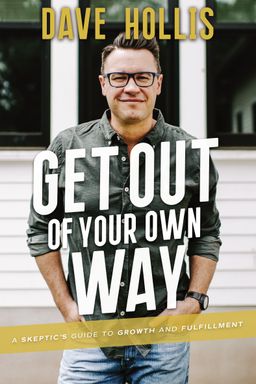
Have you ever sensed that the biggest obstacle holding you back wasn’t your circumstances, but yourself? In Get Out of Your Own Way: A Skeptic’s Guide to Growth and Fulfillment, Dave Hollis—former Disney executive turned self-development advocate—asks precisely that question. Through humor, raw honesty, and personal stories that read more like confessions than corporate memoir, Hollis argues that the greatest catalyst for change comes when we confront our own self-defeating lies. He insists that transformation isn’t about finding yourself—it’s about getting out of your own way long enough to become the person you’re meant to be.
The central claim of this book is both simple and radical: fulfillment depends on growth, and growth demands discomfort. Hollis contends that we all harbor internal scripts—limiting beliefs we accepted from parents, peers, workplaces, or culture—that subtly dictate what’s possible for us. These lies might sound harmless (“My job defines me,” “Failure means I’m weak,” “Real men don’t show emotion”), yet collectively they keep us trapped, performing versions of ourselves that look impressive from the outside but feel hollow inside. By identifying and replacing these lies with honest truths, he says, “you can stop treading water and start living fully.”
The Personal Crisis That Sparked Transformation
Hollis opens with brutal transparency. Once the successful head of sales at Disney, he was at the top of his professional game—and the bottom of his emotional life. Despite external success, he was numbing himself with alcohol, detached from his wife Rachel (a successful author and motivational speaker), and spiraling into what he calls a disguised midlife crisis. His wake-up call came after a disastrous Hawaiian vacation where Rachel, fed up, told him that if he didn’t change, their marriage might not survive. This confrontation forced Hollis to face something terrifying: he was stagnating beneath a mask of productivity.
From that moment, the book becomes his candid chronicle of breaking old habits, entering therapy, and—surprisingly—embracing personal development with the same intensity he once reserved for corporate metrics. Hollis admits he was once skeptical of self-help, seeing it as “woo-woo nonsense for broken people.” But in doing the hard emotional labor of self-examination, he found that “self-help isn’t for broken people; it’s for growing people.”
From Corporate Identity to Genuine Self
The narrative structure revolves around lies that Hollis once believed and the truths that counter them. Each chapter tackles one lie—such as “My work is who I am,” “I can phone it in and be fine,” or “If she doesn’t love me, I’m unlovable.” In reframing these stories, he reframes himself. For instance, when he realized that his prestigious Disney job was giving him validation but not joy, he quit, joining his wife’s company and rebuilding his purpose around service, creativity, and impact. The result was terrifying but liberating: “I’d been worshipping my title instead of valuing my growth.”
This central theme echoes what psychologists like Carol Dweck—author of Mindset—call the growth mindset: the belief that talent and intelligence can be developed through effort and learning. Hollis merges this philosophy with experiential storytelling, showing that your job, your relationship, or your gender doesn’t determine your worth—your willingness to grow does.
Breaking the Myths of Masculinity and Success
One of the book’s most significant contributions is its challenge to the conventional model of masculinity. Hollis confesses that his inability to show vulnerability—his commitment to being the strong, unemotional man society celebrates—kept him detached from his wife, his children, and his spiritual life. Eventually, he concludes that real strength is emotional honesty: “Real men cry. Real men seek help. Real men feel deeply.”
This redefinition resonates with the work of Brené Brown on vulnerability as courage. Hollis takes her academic insights and translates them into masculine plain-speak: you’re not weak for admitting you’re struggling—you’re brave for naming it. His stories of fatherhood, therapy, and imperfection bridge the gap between the self-help aisle and the average man who might dismiss it.
The Architecture of Change
By the end of the book, Hollis distills the process of self-change into a set of disciplines: define your operating principles (a personal code of truth), commit to habits that fuel growth, focus your energy intentionally, leverage both hope and fear to propel you forward, and surround yourself with relationships that serve your higher goals. Change, he insists, isn’t spontaneous—it’s structured, daily, and relentless. “Hope isn’t a strategy,” he writes. “Habits are.”
Why This Book Matters
Hollis’s conversational tone and humility make Get Out of Your Own Way an entry point into personal development for skeptics—especially men who might never pick up a “self-help” title. It’s not a how-to manual as much as a mirror: one that reflects back your excuses and dares you to dismantle them. The stories—about quitting a dream job, facing addiction, adopting children, and unlearning perfectionism—illustrate that growth begins at the intersection of humility and responsibility. In short, this isn’t just a book about becoming better at work or love; it’s a guide to reclaiming your agency when you’ve unconsciously given it away.
Ultimately, Hollis’s message is both practical and spiritual. You’re capable of living a purposeful, impactful life—but that requires honesty, discomfort, and discipline. The lies that define your identity aren’t permanent. They’re stories you can rewrite. And once you stop sabotaging yourself, fulfillment stops being a mystery—it becomes inevitable.