
Idea 1
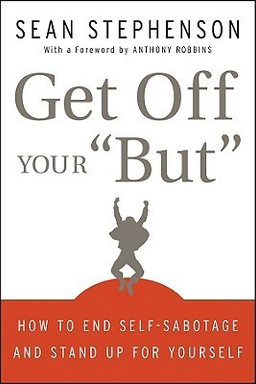
Get Off Your 'BUT': Transforming Excuses into Empowerment
Have you ever caught yourself saying, “I’d chase my dream, BUT…”? In Get Off Your 'But', psychologist and motivational speaker Sean Stephenson argues that these qualifying 'BUTs'—your fears, excuses, and insecurities—are the only things truly holding you back from success. Born with brittle bone disease and given only days to live, Stephenson transformed extraordinary physical challenges into a platform for helping others overcome mental barriers. His message is simple but profound: what limits you isn’t your body, your past, or your circumstances—it’s the size of your 'BUT.'
Stephenson’s book blends his life story with six transformative lessons designed to help readers stop self-sabotaging and start living with confidence and purpose. Each lesson tackles one dimension of human development—emotional, cognitive, physical, social, or moral—and offers personal stories, case studies, and practical exercises. Through wit, raw honesty, and insight, Stephenson turns his own pain into a manual for personal freedom.
Why the 'BUT' Matters
Stephenson uses the word 'BUT' as both metaphor and mirror—it symbolizes the cushy excuses people sit on to justify fear and inaction. As he quips, “The only thing holding you back from having what you want in life is the size of your BUT.” He identifies three main categories of 'BUTs': fears (“BUT what if I fail?”), insecurities (“BUT I’m not good enough”), and excuses (“BUT I don’t have time”). These mental habits hand control of our lives to others or to imaginary barriers. Stephenson insists that recognizing and challenging these 'BUTs' is the first step to freedom.
His own life embodies that message. Diagnosed with osteogenesis imperfecta—his bones so fragile that a sneeze could break them—Stephenson grew up breaking hundreds of bones but strengthening his mind. His mother once asked him, after a painful break, “Is this going to be a gift or a burden?” That question changed his life. Pain, he decided, was inevitable; suffering was optional. The book unfolds as an expansion of that insight into a blueprint for emotional resilience and personal purpose.
The Six Lessons of Getting Off Your 'BUT'
Stephenson distills his journey into six core practices:
- Connection: cultivating deep, genuine relationships with others and yourself.
- Self-Talk: transforming your inner voice from critic to coach.
- Physical Confidence: mastering your body’s posture, energy, and signals to change your mind.
- Focus: managing attention to what you have rather than what you lack.
- Friendship: surrounding yourself with people who lift you higher.
- Responsibility: owning every result in your life and letting go of blame or self-pity.
Each lesson begins with a story—sometimes funny, sometimes heartbreaking—that shows transformation in action. For example, in Lesson One, his childhood conversation with a suicidal bus driver demonstrates how simple human connection can save a life. In Lesson Two, a phone call with a young girl ashamed of her webbed hands shows the power of changing one word: from “weird” to “memorable.” His clinical stories as a therapist and intimate conversations with mentors like Tony Robbins and Bill Clinton reinforce the power of mindset and behavior change.
The Psychology Behind the Method
Stephenson draws on ideas from neuro-linguistic programming, behavioral therapy, and positive psychology. Much like Carol Dweck’s concept of “growth mindset,” he explains that beliefs are self-fulfilling. A belief, he says, is just a thought you’ve convinced yourself is true—and your brain will gather evidence to confirm it. By interrupting negative language patterns and intentionally replacing them with empowering ones, you can reshape perception and reality. (Comparable to Natalie Rogers’ work in humanistic therapy, he stresses congruence: aligning self-image, expression, and connection.)
Living with Purpose and Responsibility
The arc of the book—from childhood pain to adult empowerment—leads to its ultimate theme: responsibility as freedom. In the final chapters, Stephenson introduces the “Freedom Formula”: C > E (Cause is greater than Effect). Living “at Cause,” he argues, means taking responsibility for how you respond to circumstances, even those beyond your control. Living “at Effect” means making excuses and surrendering power. Responsibility, paradoxically, is what frees you most, because it grants you agency over every moment.
Why This Message Matters
In a society overloaded with self-help clichés, Stephenson’s authenticity and humor make his message credible. Where other authors might theorize about empowerment, he exemplifies it: a man who cannot stand physically teaching millions to stand up emotionally. His philosophy aligns with the likes of Viktor Frankl’s Man’s Search for Meaning—that meaning arises not from avoiding pain but from choosing our response to it. Stephenson’s 'BUT' metaphor captures the everyday way we postpone living fully—and gives readers tools to quit hiding behind it.
By the end, Get Off Your 'But' offers more than motivation; it’s an action plan. Through connection, conscious self-talk, physical presence, focus, friendship, and responsibility, Stephenson shows how to stop sitting on your limitations and start standing up for your life—no excuses, no 'BUTS.'