
Idea 1
Building a Life of Financial Wholeness
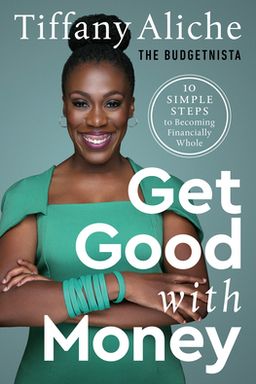
How can you build a life where money feels empowering, not exhausting? In Get Good with Money, Tiffany Aliche—known as The Budgetnista—argues that true financial freedom comes not from wealth alone but from financial wholeness: a state where every part of your financial life works together for your greatest good. Aliche defines it as harmony across ten interconnected areas—budgeting, saving, debt, credit, income, investing, insurance, net worth, professional guidance, and legacy planning.
Drawing on her own story of losing nearly everything during the Great Recession—after once boasting an 802 credit score and $40,000 in savings—Aliche rebuilt her life through deliberate structure and mindset shifts. Her framework blends the empathy of a teacher with the rigor of a financial planner, guiding you through practical steps while addressing emotional roots of financial behavior.
The Philosophy of Financial Wholeness
Financial wholeness rejects the myth that money management is for the rich. Instead, it positions personal finance as a skills-based, learnable system that anyone—at any income—can adopt. It’s not about trading each latte for a house down payment, but about building the scaffolding for long-term stability: a budget that works on autopilot, savings that protect you, debt plans that relieve pressure, and investments that multiply over time.
Aliche divides her system into ten “steps of wholeness,” reminiscent of building blocks: you establish control (budget, saving, debt, credit, earning), then advance to growth and protection (investing, insurance, measuring net worth, building a team, and creating a legacy). Each stage builds on the one before, reflecting both behavior science and financial progression.
Mindset Before Mechanics
Aliche begins with the mind because without the right mindset, the math won’t stick. She asks you to identify learned money scripts—stories passed from family, culture, or trauma—and to flip your relationship with money from reactive to proactive. One of her earliest lessons, being a “paper towel person,” encapsulates this principle: when you spill or err financially, clean it up quickly instead of spiraling in guilt. The way you talk to yourself about mistakes determines how fast you recover.
You’re also encouraged to define your money identity—to become “the boss” instead of letting money boss you. Visualizing future-you (Aliche calls her “Wanda”) creates emotional accountability. Gratitude and selective joy replace deprivation: she famously swapped weekly brunches for travel savings and eventually took a hot-air-balloon trip—all by reprioritizing “loves” over “likes.” This sets the emotional foundation for tangible change.
The Structure of Change
Every chapter follows Aliche’s signature “Plan, Do, Review” model—reflecting her background as a teacher. You first learn the big picture (Plan), then get exact steps and assignments (Do), and finally review progress and troubleshoot (Review). This approach turns each financial principle into an actionable habit. For instance, you don’t just read about building a budget—you calculate your “Money In” and “Money Out,” tag expenses by controllability (Bills, Utilities, Cash), and automate savings transfers to turn willpower into systems.
This hands-on pedagogy distinguishes her approach from many abstract finance texts. It’s less about theory and more about training your brain through repetition, automation, and community accountability. You’re guided to use her online Tool Kit and connect with her Dream Catchers community—thousands who have collectively paid down hundreds of millions in debt.
The Ten Steps in Context
While the book elaborates on each domain in depth, the system forms a holistic loop. You start with Budget Building—a “Say Yes Plan” where every dollar has a role—then Save Like a Squirrel to stockpile short-term safety and long-term goals. With savings underway, you Dig Out of Debt using hybrid snowball and avalanche methods, pair it with Credit Repair to raise your FICO score above 740, and then Learn to Earn by growing income through job optimization and side hustles.
Once these core systems support your financial engine, you shift gears toward building wealth: Investing for Retirement using the 4% and 72 Rules, and Investing for Wealth beyond retirement through disciplined, automated compounding. From there, you strengthen protection with smart Insurance, track long-term progress through Net Worth, and round out your future with Money Team and Estate Planning. Together, these steps create what Aliche calls “a stitched-together life,” where financial stress is replaced with structure and confidence.
The Deep Message
Ultimately, Get Good with Money is about emotional resilience as much as capital growth. Aliche shows that even after foreclosure, collection calls, and near-homelessness, you can rebuild systematically. Financial wholeness is a process, not a destination: a cycle of assessing, adjusting, and automating. The power lies not in perfection but in persistence—learning to clean up spills, reframe setbacks, and keep moving.
Core lesson
“Financial wholeness is when all aspects of your financial life are working together for your greatest good.”
Through relatable stories, concrete exercises, and candid psychology, Aliche reframes money as self-care—a craft you practice for the rest of your life. Her framework fuses compassion with clarity, teaching that every budget, deposit, and boundary draws you closer to freedom not through wealth accumulation alone, but through intentional, empowered alignment.