
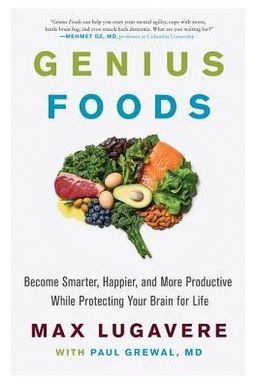
Genius Foods cover

Genius Foods

by Max Lugavere

Genius Foods reveals the critical link between diet and brain health, offering a research-driven plan to protect against cognitive decline. With actionable advice, it empowers readers to boost mental agility, balance, and happiness while safeguarding against dementia.

Your Brain Can Change and You Can Shape It

What if your brain were not fixed but continually moldable, capable of improvement at any stage of life? Max Lugavere’s core argument throughout Genius Foods is precisely that: your brain is not your genetic fate. Through nutrition, metabolic training, sleep, movement, and environmental cues, you can actively remodel the networks that define thinking, mood, and long-term cognitive health.

The author mixes deeply personal motivation—his mother’s struggle with dementia—with broad scientific evidence that overturns outdated beliefs about irreversible decline. He distills twelve pillars of brain resilience, showing that modern cognitive scourges like depression, memory loss, and dementia are not inevitable. They are, to a significant degree, environmental diseases driven by diet, inflammation, and lifestyle mismatches.

Neuroplasticity and Neurogenesis: Your Lifetime Advantage

In the 1990s, neuroscientists discovered adult neurogenesis—the ability of the brain to grow new neurons—and broader neuroplasticity, confirming lifelong adaptability. Lugavere presents these findings as a philosophical revolution: instead of neurological fatalism, you can take active control. The book’s reference to Miia Kivipelto’s FINGER trial shows how diet, exercise, and social activity improved cognition even among older adults by double-digit percentages. Brain transformation is not theoretical—it’s measurable within months.

Metabolism, Inflammation, and the Brain–Body Connection

The book links brain function to metabolic harmony. It shows how excessive carbohydrates, oxidized fats, and poor sleep drive chronic inflammation and insulin resistance, which the author calls the silent saboteurs of mental clarity. In contrast, stabilizing blood sugar, reducing inflammatory oils, and promoting fat adaptation elevate BDNF—the growth factor that acts like Miracle-Gro for neurons. You learn that brain health and metabolic health are inseparable.

Lifestyle as Medicine

Lugavere uses studies and practical examples to demonstrate “lifestyle medicine” at work: structured nutrition plans (the Genius Plan), proper fat selection, intelligent fasting cycles, and exercise modalities that strengthen cognitive and vascular performance simultaneously. From the glymphatic clearance during deep sleep to the butyrate generated by gut microbes, each chapter builds toward the conclusion that everyday choices either degrade or upgrade your mental software.

The Moral of the Book

Ultimately, Genius Foods is not just about food—it’s about reclaiming agency over your biology. Lugavere dismantles industry-driven myths that led to the low-fat, high-sugar diet era and presents a blueprint grounded in evolutionary coherence: eat real fats, fast wisely, move often, rest deeply, and cultivate microbiome diversity. The Genius Plan combines all of these elements into a sustainable lifestyle designed to prevent decline while enhancing daily cognition, creativity, and emotional balance.

Core realization

You can shape your brain as reliably as you build muscle. Your neurons respond to your diet, your sleep, your metabolic challenges, and even what you think about. Once you understand that brain health is dynamic, the path forward becomes one of active design, not passive deterioration.

In essence, Lugavere offers both scientific evidence and lived proof that the modern brain can be healed and strengthened through nutrition and daily lifestyle. The book’s main theme is empowerment: you hold the levers of neuroplasticity, metabolism, and mood, and they respond to your actions starting today.


Food Quality and Fat Intelligence

Your brain is built largely from fat—nearly sixty percent of its dry weight—and the types you eat determine the flexibility and performance of your neurons. Lugavere dismantles decades of fat phobia and reveals that not all fats are equal: some nourish cognitive function, others accelerate decline. You learn how to strategically use fats for structural integrity, anti-inflammatory support, and signaling balance.

Healthy Fats: The Brain’s Building Blocks

Omega-3 fatty acids—EPA and DHA—form the raw materials of brain membranes and synaptic receptors. DHA especially keeps neurons supple for efficient communication. Wild salmon, sardines, and pastured eggs are Lugavere’s champion sources. Monounsaturated fats like olive oil and avocado stabilize blood vessels and cell membranes. EVOO shines for its oleocanthal content, providing anti-inflammatory effects comparable to ibuprofen. At least one liter per week of extra-virgin olive oil consumption correlates with reduced Alzheimer’s risk in clinical trials.

Avoiding the Wrong Fats

Modern seed oils—soybean, canola, safflower, and corn oil—dominate processed foods but oxidize easily, forming aldehydes and promoting systemic inflammation (Gerhard Spiteller’s research details this damage cascade). Trans fats, whether partially hydrogenated or generated through heat processing, stiffen neuronal membranes and impede signaling. Lugavere’s rule of thumb: if an oil comes from an industrial vat rather than a plant or animal pressed whole, avoid it.

Fats and Cognitive Chemistry

Fat selection influences BDNF levels, mitochondrial energy output, and inflammation—all core drivers of cognition. Whole-food saturated fats like grass-fed butter or coconut oil withstand cooking heat and, when paired with unrefined carbohydrates, do not provoke insulin surges. Conversely, combining saturated fats with refined carbs—like fried pastries—is metabolically disastrous. By adjusting your fat sources, you shift your brain toward energy stability instead of reactive crashes.

Practical takeaway

Make extra-virgin olive oil your primary oil, eat fatty fish several times weekly, cook with stable fats, and eliminate industrial oils and trans fats. Every choice alters the chemistry of thought—your neurons literally absorb what you eat.

Lugavere argues that proper fat consumption is one of the most direct levers for mental clarity and long-term resilience. Fats are not enemies—they are selective tools. When you eat for fluid membranes and anti-inflammatory stability, you design a brain that can adapt with age rather than deteriorate.


Metabolic Health and Cognitive Protection

Your brain depends on a steady, balanced supply of fuel. Lugavere emphasizes that chronic blood sugar elevation quietly erodes cognition well before diabetes develops. Metabolic dysfunction translates into neural dysfunction, making insulin regulation a direct safeguard for memory and mood.

Sugar and the Brain’s Slow Poison

Excess sugar causes glycation, where glucose binds proteins, forming AGEs—sticky molecules that inflame tissue and accelerate aging. The hippocampus, critical for memory, shrinks under sugar toxicity even at “normal” levels. Dr. Agnes Flöel’s study showed that every small A1C rise correlated with measurable memory loss in non-diabetic adults, reinforcing that vigilance must start before disease markers appear.

Insulin Resistance and Cognitive Decline

When cells stop responding properly to insulin, you experience “type 3 diabetes”—a nickname for Alzheimer’s. HOMA-IR values above 2.75 signal early resistance. Lugavere guides readers to track fasting glucose and insulin, aiming for metabolic flexibility rather than carbohydrate dependency. Fructose overconsumption compounds harm, triggering fatty liver and raising triglycerides, both risk factors for dementia.

Ketones and Flexibility

Fasting or low-carb approaches train your body to switch between glucose and fat efficiently. When ketones circulate, they burn cleaner, produce fewer reactive oxygen species, and boost BDNF—protecting neurons from oxidative stress. The goal isn’t permanent ketosis but metabolic flexibility—the ability to fuel your brain with ketones during fasting and glucose during activity. Lugavere recommends 16:8 fasting rhythms and MCT oil for transition support (Mary Newport’s Alzheimer’s case illustrates ketone therapy potential).

Metabolic mastery

Think of your metabolism as an adaptable engine. Excess sugar clogs it; fasting and nutrient timing tune it. When flexible, your brain runs on clean fuel, maintaining stable focus and emotional balance.

By reframing metabolism as the foundation of brain health, Lugavere transforms ordinary nutrition into cognitive strategy. Control blood sugar, use fasting and real fats wisely, and you protect your neurons one meal at a time.


The Gut–Brain Axis and Microbial Allies

Your gut microbiome contains trillions of organisms that talk directly to your brain through immune, endocrine, and vagal pathways. Lugavere’s discussion of this “forgotten organ” reveals how microbes build neurotransmitters, create protective molecules, and influence emotion itself.

Fiber and Fermentation

Prebiotic fibers from vegetables—leeks, garlic, greens, sunchokes—feed microbes that generate butyrate, a short-chain fatty acid that fuels colon cells, raises BDNF, and suppresses inflammation. In contrast, insoluble grain fiber acts more like filler and provides little microbial support. Fiber diversity cultivates microbial diversity, the hallmark of robust immune training and emotional resilience.

Microbial Diversity and Mental Balance

People in traditional or rural settings have far richer microbial ecosystems than urban dwellers. Lugavere points to fascinating research: mice lacking Lactobacillus rhamnosus lost anti-anxiety effects when their vagus nerve was cut—proof of direct gut-to-brain signaling. Another study showed maternal junk food diets reducing offspring social ability due to loss of Lactobacillus reuteri, later restored through probiotics and oxytocin recovery.

Protect Your Microbiome

Processed emulsifiers like polysorbate 80 and carboxymethylcellulose, common in nut milks and salad dressings, destabilize this ecosystem. Antibiotic overuse destroys beneficial strains while enabling pathogens. You safeguard microbial balance with fiber-rich plant diversity, fermented foods like kimchi or kefir, outdoor exposure, and moderated hygiene (owning pets surprisingly helps too).

Gut wisdom

Feed your microbes, and they’ll feed your brain. Every bite that generates butyrate and polyphenols restores your cognitive shield from the inside out.

Your microbiome shapes mood, focus, and neuroinflammation as profoundly as your genetics. Lugavere’s synthesis turns gut health from a digestive issue into an essential neurological strategy—one that operates meal by meal and environment by environment.


Sleep, Exercise, and Hormetic Renewal

Sleep and exercise are the body’s maintenance cycles—Lugavere calls them the daily and weekly opportunities to clear, repair, and upgrade brain tissue. Together they activate hormetic stress responses that build resilience rather than wear you down.

Sleep: The Brain’s Cleaning Crew

Deep slow-wave sleep activates the glymphatic system discovered by Jeffrey Iliff, flushing out metabolic debris like amyloid beta. Poor sleep raises amyloid and hinders the hormonal balance of insulin, leptin, and ghrelin. The book’s checklist—cool bedroom, early light exposure, no late caffeine or alcohol—anchors healthy circadian rhythm. Sleep loss increases insulin resistance even after one night, sabotaging cognition and appetite control.

Exercise: Stress That Builds

Aerobic movement expands hippocampal volume and boosts BDNF; anaerobic bursts trigger AMPK activation, which creates new mitochondria. The Finnish sauna data—65% lower dementia in frequent users—illustrates how temperature stress transforms cellular resilience. Cold exposure additionally spikes norepinephrine and improves insulin sensitivity. Lugavere explains that small, acute challenges are the antidote to chronic stress: they train your body to adapt.

Hormetic Foods and Fasting

Plant polyphenols like curcumin and resveratrol act as mild stressors, flipping on your body’s internal antioxidant genes (Nrf2 activation). Intermittent fasting similarly triggers autophagy—cellular cleanup—and growth hormone spikes that repair tissue. He cautions that megadoses of isolated antioxidants can blunt these signals, whereas food-based polyphenols enhance them naturally.

Resilience principle

Challenge yourself moderately and regularly—through movement, fasting, and temperature shifts—and you create biological upgrades that protect your brain against aging.

By merging sleep recovery with hormetic exercise and fasting, Lugavere describes how you rebuild the brain through strategic stress, not avoidance. Controlled challenge is cognitive medicine; fatigue and passivity are degeneration in slow motion.


The Genius Plan and Everyday Implementation

After explaining mechanisms and science, Lugavere translates them into daily steps with the Genius Plan—a realistic blueprint to eat, move, and live for optimal brain performance. It merges nutritional precision with flexibility, making cognitive vitality practical rather than theoretical.

Step One: Eliminate Cognitive Toxins

Clear your kitchen of processed carbohydrates, seed oils, hydrogenated fats, emulsifiers, and artificial sweeteners. These ingredients erode gut integrity and spike insulin. Replace them with whole-food fats—olive oil, avocado oil, grass-fed butter—alongside leafy greens, crucifers, and fermented vegetables. Lugavere proposes a two-week low-carb reset (20–40 g/day) to induce fat adaptation, using MCTs for energy and added electrolyte support.

Step Two: Reintroduce and Balance

Once adapted, strategically use carbohydrates for recovery and hormonal stability: ~100–150 g post-workout refeeds to raise leptin and replenish muscle glycogen. Most people thrive on 2–4 meals per day, emphasizing large fatty salads with EVOO and diverse plants for microbiome variety. Cyclic carb tiers (ultra-low, moderate, or training days) create metabolic control without strict rigidity.

Step Three: Targeted Nutrient Support

Lugavere highlights “Genius Foods”: wild salmon, eggs, dark leafy greens, broccoli sprouts, almonds, dark chocolate, and berries—each selected for documented effects on cognition and inflammation. Supplements fill gaps: omega-3s (~1500 mg EPA+DHA), vitamin D3 (2000–5000 IU), methylated B vitamins, curcumin, K2, astaxanthin, and probiotics. He stresses moderation and medical oversight rather than pill collecting.

Implementation wisdom

Consistency beats perfection. When you normalize these foods and routines, cognitive clarity, stable mood, and long-term brain protection become the everyday default, not the exception.

The Genius Plan represents Lugavere’s synthesis: evidence-based nutrition turned into a flexible lifestyle. It’s less about dieting and more about reprogramming biological software for resilience. Once applied, it transforms how you feel, think, and age.

Dig Deeper

Get personalized prompts to apply these lessons to your life and deepen your understanding.

Go Deeper

Get the Full Experience

Download Insight Books for AI-powered reflections, quizzes, and more.