
Idea 1
The Habit of Discovery
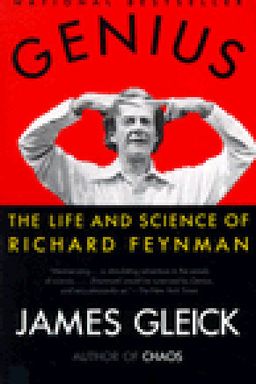
What makes a scientific mind truly creative? In this sweeping biographical study of Richard Feynman, you explore how habits of curiosity, playful experimentation, and moral clarity weave together to form a distinctive approach to knowledge. The book argues that Feynman’s genius cannot be understood as raw intellect alone—it emerged from a lifelong apprenticeship in tinkering, questioning authority, and visualizing physical processes with vivid imagination.
From the radios and sandboxes of Far Rockaway to the quantum diagrams of Caltech, Feynman’s story shows science as a lived practice—a craft of building, testing, and revising your models of the world. His life illustrates how scientific creativity grows from doing: changing circuits to see what happens, pushing mathematics until an elegant insight appears, and using simplified pictures to illuminate abstract laws.
From Tinkering to Theory
Feynman’s early years form the book’s opening act. In Far Rockaway he disassembled radios, built crude transmitters, and learned to reason from symptoms—transforming practical puzzles into models of causal thinking. His father, Melville, nurtured this by insisting that names mean little without understanding: knowing the term 'parallelogram' is pointless unless you can explain how shapes behave. This mixture of play, observation, and hands-on reasoning became Feynman’s template for all later inquiry.
The young Feynman’s hobby of fixing radios “by thinking” foreshadowed a lifelong pattern: he trusted method and evidence over authority. The same pattern guided his mathematical adolescence, where timed contests and recreational puzzles trained his habit of finding clever transformations instead of brute-force computation. (Note: this distinction—insight over procedure—is key to his later revolutions in physics.)
Emergence of a Scientific Temperament
At MIT, moving from mathematics to physics, Feynman discovered the principle of least action—a compact law that replaced step-by-step force calculations with variational economy. The turn trained him to reformulate problems globally, a habit that re-emerged in his path-integral treatment of quantum mechanics, where particles explore every possible path at once. You see a pattern here: whenever direct calculation became ugly, Feynman changed the frame of reference and looked for symmetry, conserving quantity, or a physical analogy to simplify the situation.
Science and Life Entangled
Feynman’s technical milestones—from absorber theory through quantum electrodynamics (QED) and beyond—never stood apart from personal trials. His marriage to Arline Greenbaum, her illness, and his moral reckoning during and after the Manhattan Project reveal science as an ethical craft. Los Alamos forced a pragmatic mindset: approximate computation became an art, and the bomb’s consequences made him question where scientific responsibility begins and ends. Arline’s death intertwined with the birth of modern physics in him—a paradox that shaped his later humility.
The Visual Imagination
Feynman’s physics always began in sight and motion. His diagrams for QED turned impossible algebra into intuitive geometry—lines and nodes that let his colleagues compute scattering amplitudes easily. This habit of turning abstraction into picture carried into his teaching, culminating in The Feynman Lectures on Physics, where he began with atoms rather than ancient mechanics, teaching students to see physical laws as patterns among invisible constituents. (His first line—“all things are made of atoms”—summarized a lifetime’s method: build complex behavior from simple elements.)
Public Inquiry and Moral Clarity
Later, as he investigated the Challenger disaster, Feynman returned to his original impulse: test, measure, and demonstrate. His ice-water experiment on the O-ring was a miniature reenactment of childhood tinkering—a simple act that cut through bureaucracy and rescued science from abstraction. Throughout, his central lesson holds steady: truth resists politeness. Science demands honesty about uncertainty, whether in quantum amplitudes or in NASA’s risk estimates.
Core Message
Discovery belongs to the curious who tinker, doubt, and visualize. Feynman’s life fuses practical play and high theory into a single ethic of inquiry: experiment first, explain later, and let nature—not prestige—be the final authority.