
Idea 1
The Universe as a Living Genesis
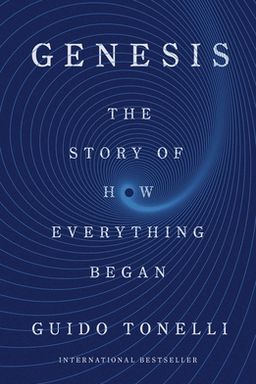
Have you ever stared up at the night sky and wondered how all of this began—how stars, galaxies, and even you came to exist? In Genesis, physicist Guido Tonelli invites you on an extraordinary seven-day journey through the birth of the cosmos. Like the biblical Genesis, his narrative unfolds in seven stages, but here creation is driven not by divine will but by quantum fluctuations, cosmic inflation, and the subtle dance of elementary particles.
Tonelli argues that the story of the universe—its chaotic origins, ordered evolution, and eventual creation of life—is the greatest narrative of all. He contends that science, far from stripping away mystery, deepens our sense of wonder by revealing a cosmos that is fundamentally alive with transformation. Through poetic prose and precise science, he reimagines cosmology as both an epic and a meditation on human meaning.
A Grand Narrative of Origins
Tonelli begins by connecting ancient myths to modern science. Just as Hesiod’s Theogony or the biblical Genesis sought explanations for creation, physics today offers its own origin story—a universe born 13.8 billion years ago from a fluctuation in the quantum vacuum. He reminds you that our need to create stories stems from deeper roots than religion or myth; it’s a survival mechanism, a way for the human species to impose order on chaos. From the first Neanderthal caves to the theoretical equations of Einstein, storytelling and science share one goal: to make sense of existence.
The Physics Behind the Poetry
Each ‘day’ in Tonelli’s cosmic week corresponds to a scientific epoch—from the initial quantum fluctuation and inflation (“Day One”) to the emergence of the Higgs field and matter (“Day Two”), the formation of protons and neutrons (“Day Three”), the birth of light and stars (“Day Four and Five”), and finally, the rise of galaxies, planets, and living beings (“Day Six and Seven”). Like Galileo, Tonelli sees beauty and rigor coexisting; the symmetry of physics mirrors the symmetry artists like Giorgione sought in painting. His prose often moves between physics and myth—gravity becomes Zeus, and the inflationary explosion mirrors the dance of Shiva. The result is not just science but a story about how humanity fits inside this cosmic drama.
Why This Story Matters
Tonelli insists that understanding our origins changes the way you see the present. Realizing that every atom in your body was once forged in violent stellar furnaces reframes human existence as part of an eternal recycling—a ‘heroic age’ in which chaos continually disguises itself as order. By blending scientific precision with philosophical awe, he shows that the universe’s creative power mirrors our own symbolic imagination. Science doesn’t kill mystery; it gives birth to new kinds of wonder.
In short, Tonelli’s Genesis is both a cosmological textbook and a modern creation myth. It reminds you that to understand the universe is to understand yourself: both forged from chaos, both striving toward meaning—and both endlessly transforming. As the author tells his audience of scientists, rabbis, and theologians at the end of the book, the story of the cosmos is not just about the past; it’s about finding hope in the pattern of creation itself.