
Idea 1
Generosity as Humanity’s Hidden Superpower
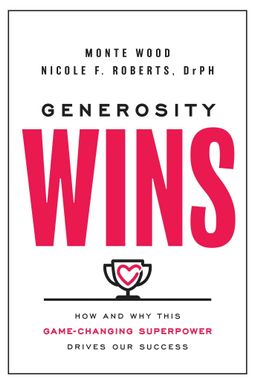
When was the last time you gave something—your time, attention, or encouragement—without expecting anything back? That simple act, according to Generosity Wins by Monte Wood and Nicole F. Roberts, might have unleashed your greatest untapped power. The authors argue that generosity isn’t just kindness or charity—it’s a unique, biologically grounded human superpower that fuels success, fulfillment, and the health of entire societies. At its core, generosity is the act of giving with no expectation of return, and through it, you enrich not only the recipient’s life but your own.
The Heart of the Story: Emily’s Transformation
The authors deliver their lessons through a captivating parable about Emily Gardner, a young hotel executive who’s ambitious but narrow in her definition of success. When her mentor, Don Jenkins, informs her that her emphasis on profitability over people has cost her a leadership role, he offers an unconventional path forward—a six-month journey interviewing highly successful leaders to uncover why generosity drives long-term success. Each interview reveals a different dimension of generosity: mentorship, empathy, self-care, trust, and faith. Through Emily’s rediscovery of her own humanity, the reader joins a broader exploration of how generosity operates as a universal law of flourishing.
Emily’s journey becomes a modern-day hero’s quest: she retrains her focus from spreadsheets to service, from control to connection. Along the way, she encounters real-world figures—entrepreneurs, doctors, athletes, and activists—each showing that generosity has tangible results, from better teams to happier lives. As she integrates these insights, Emily learns that generosity is not charity; it’s strategy, science, and spirituality combined.
Redefining Success and the “ROI” of Generosity
Wood and Roberts redefine modern success as a blend of passion, joy, and accomplishment—what they call “comprehensive success.” This mirrors philosopher Aristotle’s concept of eudaimonia: the happiness that arises when purpose and personal excellence converge. Generosity, they argue, fuels this state by aligning self-interest with altruism. They introduce the bold idea of a Generosity ROI—a return on investment that multiplies, strengthening relationships, resilience, and emotional well-being. The message is radical yet practical: when you give selflessly, you create a ripple effect that sustains your own growth and happiness.
This “ROI” isn’t anecdotal; it’s biological. Drawing on neuroscience and psychology, the authors show how giving activates oxytocin (trust), dopamine (joy), and serotonin (contentment). These neurochemical rewards make generosity self-reinforcing. Compared with similar frameworks in positive psychology (like Adam Grant’s Give and Take or Shawn Achor’s The Happiness Advantage), Generosity Wins focuses not just on workplace productivity but on human evolution itself: the fact that humans, uniquely among species, routinely help strangers. This, the authors suggest, is why our civilizations exist at all.
Why Generosity Matters Now More Than Ever
Wood and Roberts frame the book as both a leadership manifesto and a cultural remedy. In an age of technological acceleration, burnout, and isolation, authenticity and kindness have become competitive advantages. Citing the U.S. Surgeon General’s warning of a “loneliness epidemic,” they argue that generosity—manifested as connection and care—is the antidote. Unlike quick-fix self-help trends, their model of generosity requires practice and intention. It demands cultivating self-generosity—the care and boundaries that allow you to give sustainably—before extending generosity outward to teams, families, and communities.
The Book’s Mission: Making Generosity Teachable
In its final chapters, Generosity Wins declares a groundbreaking organizational role: the Chief Generosity Officer. This imaginative position represents a culture shift for companies like Emily’s fictional Pinafore Hotels—away from transactional performance toward purpose-driven leadership. Emily embodies the transformation the authors envision for every reader: from success-seeker to generosity leader. Her journey—from firing staff to lifting others—illustrates how generosity scales: it begins with empathy, grows through mentorship, and culminates in systemic impact.
By the end of the book, readers are challenged to redefine generosity as both ancient wisdom and modern imperative. It’s not optional—it’s the key to emotional well-being, enduring relationships, and even corporate innovation. We’re reminded that while artificial intelligence may optimize processes, only human generosity can build trust. The question the authors leave us with is simple but profound: if generosity truly fuels our success and happiness, what might happen if each of us chose to live as though it were our greatest power?