
Idea 1
Design the High‑Performance Human
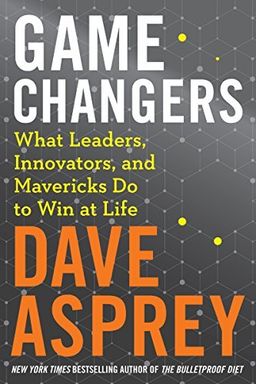
How do you engineer your mind and body for extraordinary results? In Game Changers, Dave Asprey argues that high performance isn’t about luck, genetics, or grinding harder—it’s about deliberate design. You can rewire beliefs, conserve willpower, choose identity, and use science-backed tools to amplify focus, energy, and clarity. The book distills lessons from hundreds of interviews with elite performers—scientists, coaches, entrepreneurs—and organizes them into actionable laws for upgrading how you think, feel, and act.
The science of intentional evolution
Asprey’s central claim is that humans are programmable. Through conscious design—of your biology, psychology, and environment—you can move from reactive survival to intentional creation. Neuroplasticity proves your brain adapts with practice and exposure; epigenetics, championed by Bruce Lipton, shows that your cells record experiences as biochemical signals. If you combine those sciences with behavioral design and data tracking, you can deliberately evolve rather than leaving it to chance.
The book merges neuroscience (ACC decision budgeting), psychology (identity creation), physiology (sleep and hormones), and technology (neurofeedback, tracking, AI health analytics). It’s a blueprint for self-engineering across systems.
From decision fatigue to strategic focus
Performance begins with conserving willpower. Research like the Israeli parole study shows that decisions drain glucose and attention. High achievers minimize trivial choices—Tony Stubblebine uses “decision budgets”, Steve Jobs wore the same outfit, and Asprey recommends automating breakfast and calendar routines. Protecting cognitive fuel early in the day preserves clarity for creative or strategic problems. You design your day so your best brain is available for what matters.
Identity and belief engineering
You become the person you act like. Brendon Burchard teaches writing three aspirational words for your ideal self—“bold,” “present,” “generous,” for example—and setting phone alerts as reminders. Robert Greene’s idea of “primal inclinations” helps align identity with intrinsic motivation: what fascinated you before social conditioning often marks your most authentic talents. Vishen Lakhiani’s “consciousness engineering” takes it deeper—beliefs are mental software that can be upgraded. You ask not “is this true?” but “is this useful?”, replacing inherited limitations with functional stories.
This philosophy reframes self-help: you’re not discovering who you are, but designing who you intend to be through belief auditing, language mastery, and deliberate practice.
Biology and the physical systems of power
The second half of the book turns to physiology. Your body is an ecosystem whose rhythms predict your output. Sleep expert Dr. Michael Breus and chronobiologist Satchin Panda explain timing as key—align work to your chronotype and guard recovery as fiercely as performance. Movement follows ancestral templates: Mark Sisson and Charles Poliquin emphasize low-intensity activity with occasional sprints and heavy lifting rather than chronic cardio that depletes hormones. Nutrition returns to grandma’s kitchen—whole foods, polyphenols, clean fats, and fermented fiber to feed your gut microbiome (Dr. Perlmutter and Naveen Jain both underline gut–brain reciprocity). What you eat and how you move literally signal genes toward vitality or degeneration.
Data, stress, and recovery as feedback systems
Elite performers measure everything. The Oura ring, HRV trackers, Viome microbiome tests, and temperature logs close the loop between intention and physiology. Bill Davis and Asprey call this “undoctoring”—learning from your own data. Combine measurement with hormetic stress (“productive stress”)—short bursts followed by rest—to strengthen resilience. From HIIT to breath holds, cryotherapy, or stem-cell therapies, stress and regeneration form a yin-yang that keeps you youthful and adaptive.
Mind states and social context
Meditation technologies, breathwork, and neurofeedback help you access calm and creativity faster. Tools like Holosync, HRV biofeedback, or 40 Years of Zen condense decades of meditative progress into measurable sessions. Altered states—from breath rituals to plant medicine—offer introspection when practiced safely and integrated with coaching and therapy. But rewiring doesn’t end in solitude. Asprey closes with connection: Paul Zak’s oxytocin research proves relationships and gratitude raise physiological resilience. Community multiplies performance through trust, accountability, and shared meaning.
Core takeaway
The high‑performance human is a system. You design identity, conserve willpower, rewire belief, fuel your biology, measure outcomes, and embed yourself in supportive tribes. Integration—not extremes—is the secret. Biology and behavior, stress and recovery, solitude and community—all form a closed loop of constant evolution.
When you treat yourself as the architect of a living system, peak performance ceases to be mystical. It becomes the predictable consequence of smart design, daily practice, and continuous measurement.