
Idea 1
Risk, Reinvention, and the Edge
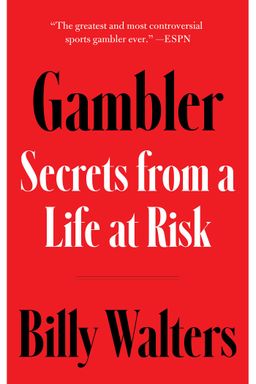
How do you build a winning life when everything you do rides on uncertain outcomes? In Gambler, Billy Walters argues that long-term success under risk comes from systematic edge-seeking paired with ruthless accountability. He contends that you win—at betting, business, and even post-prison life—by quantifying value, scaling operations, managing downside, and facing consequences without excuses. But to do so, you must understand the intertwined mechanics of numbers, people, politics, and personal character.
In this memoir-meets-manual, you’ll discover how a boy from Munfordville, Kentucky grows from pool-hall hustler to auto-empire builder to the most feared sports bettor in America. You then learn how systems—not swagger—power a global betting machine and a Strip-wide golf enterprise. Finally, you see how legal warfare, betrayal, prison, and reform force a reckoning that becomes Walters’s most enduring play: converting hard lessons into principles you can use.
The promise—and the price—of the edge
Walters lives by a simple creed: value beats passion. Whether beating the vig (52.38% break-even on 11-to-10) or spotting a biased roulette wheel, he views every decision as a trade. The upside—multi-million-dollar betting weekends, $3.5 million Super Bowl positions, and a Strip golf portfolio—is real. So is the downside—raids that seize $2.8 million in cash, offshore peril from kidnappers in Tijuana, and a five-year federal sentence after an insider-trading conviction he insists was warped by leaks and an incentivized witness.
Core refrain
“Betting sports is about one thing and one thing only: value.” Everything else—runners, accounts, PR, even charity—is execution and risk control around that idea.
From hustle to systems
You see the early sales engine (selling 56 cars in a month) and the implosions (losing houses, cars, and marriages to booze and action). The pivot arrives when he turns instinct into enterprise: power ratings, 1,600 betting accounts, global proxies, and an operational “trading desk” that can place 300 synchronized bets in a weekend. In business, he copies the same template—wholesale autos on razor-thin float, distressed-golf turnarounds, and vertical distribution control through concierges, airport golf desks, and hotel partnerships.
(Note: this mirrors quantitative finance and retail playbooks—identify mispriced assets, secure distribution, scale quietly, and protect the spread—akin to Michael Lewis’s depictions of systematic traders, but told with a hustler’s candor.)
Law, politics, and unintended enemies
Walters keeps running into an invisible opponent: institutional self-interest. The Computer Group case (raids across 23 cities) taught him the legal line between bettors and bookmakers—and how the government can blur it. Later, as he sought a Nevada license to operate “Sierra Sports” for MGM and Mandalay, civil-forfeiture politics and an overreaching AG’s office derailed the deal despite judges like Donald Mosley and Mark Gibbons throwing out weak indictments. The lesson: you can be right on the merits and still lose the market window.
Offshore, he finds new risks: corrupt police, ransoms, and deep compliance friction after the Patriot Act. His team solves tactical problems—Vonage boxes to localize area codes, trained accents, and language scripts (“I,” not “we”)—but lives with strategic fragility. Systems win until someone changes the rules.
Reckoning, reform, and practical pillars
The book begins with a stark image: a 71-year-old in polyester greens at FPC Pensacola asking, “How in the hell did I get here?” That humility—shaped by Grandmother Lucy’s discipline, cemented by Susan’s steadiness, and sharpened by Sarge’s death—anchors his turnaround. Prison becomes a pivot: mentoring fellow inmates, mapping vocational education, and funding the Billy Walters Center for Second Chances with Jon Ponder’s Hope for Prisoners.
- Quantify your edge: build power ratings, price every factor, and shop lines.
- Scale with secrecy: split action, use proxies, and disguise signaling to preserve limits.
- Manage bankroll: 1–3% units, cap exposure, and avoid parlays/teasers’ negative EV.
- Prepare defensively: conduct background checks on yourself, invest in counsel and PR, and anticipate political motives.
- Reinvent with accountability: own mistakes, lean on relationships, and channel energy into structure and service.
In short, Walters gives you a playbook for life under uncertainty. He shows you how to convert instinct into process, edge into enterprise, failure into learning, and punishment into prevention. The memoir entertains with roulette hijinks and Super Bowl bets, but its real value is a philosophy you can apply—whether you’re handicapping an NFL slate, opening a service business, or rebuilding after a loss.