
Idea 1
Bureaucracy, Morality, and the Making of J. Edgar Hoover
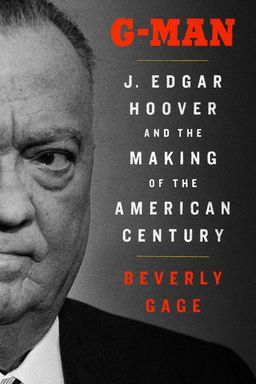
How can you understand America’s most powerful unelected official — a man who ruled a secretive institution for nearly fifty years? In this book-length exploration of J. Edgar Hoover’s life and the birth of the modern FBI, the author argues that Hoover’s power rested on a fusion of bureaucratic technique, moral ideology, and political adaptation. He was both a technocrat and a crusader — a figure who used professionalism and administrative science to pursue ideological ends.
Hoover believed that data, files, and methodical order could secure national righteousness. From his early training at the Library of Congress under Herbert Putnam, he carried forward a passion for filing systems and documentation. But the same file cards that could classify knowledge could also classify enemies. That double function — bureaucracy as moral policing — defined the Bureau he built.
The formative fusion: expertise and ideology
Hoover’s early life explains this fusion. Family trauma taught him that chaos and vulnerability were intolerable; fraternity and education supplied cultural armor. At George Washington University’s Kappa Alpha fraternity, Hoover absorbed a conservative code of masculinity, racial hierarchy, and Lost Cause nostalgia. Meanwhile, his work at the Library of Congress turned managerial technique into faith — the conviction that society could be redeemed through order, classification, and control.
Those strands met in public office. During World War I, Hoover learned how administrative systems could serve surveillance: registration, internment, and deportation of aliens. In 1919’s Red Scare, he built the Radical Division’s Editorial File System, transforming piles of reports into structured intelligence that enabled mass raids. Bureaucracy became enforcement; paperwork became ideology.
Building the Bureau State
After scandals under Harding’s administration, Hoover seized reform as a survival tactic. Harlan Fiske Stone’s merit reforms of 1924 let Hoover rebrand himself as the model of professional order. He purged corruption, recruited college-educated agents, and centralized records. But efficiency served control: by mastering recruitment, inspections, and appraisal systems, Hoover converted reform into hierarchical loyalty. His command over personnel files mirrored his command over political intelligence.
By the 1930s, the professional gentlemen of the Bureau turned into armed G‑Men. Public disasters like the Kansas City Massacre forced the Bureau to adopt weapons and direct action, transforming paper-bound clerks into national law enforcers. Hoover coupled this militarization with controlled publicity — orchestrating press coverage, museum displays, and Hollywood depictions to canonize the agent as America’s moral protector. Warner Bros. films and radio programs spread the legend; Crime Records turned propaganda into institutional policy.
Public morality and the culture of control
Hoover’s worldview extended beyond crime. He preached that religion, patriotism, and moral purity were national security tools. Collaboration with preachers and politicians blurred civic virtue with policing authority. His Bureau culture enforced conformity in dress, loyalty, and personal conduct — a moral bureaucracy where social order and obedience intertwined. That same moralization fueled sexual policing during the Lavender Scare and surveillance of civil-rights leaders like Martin Luther King Jr.
From information to intelligence — and repression
Hoover extended the Bureau’s reach from crime to politics. Roosevelt’s 1936 directive revived domestic surveillance — tracking communists, fascists, unionists, and civil-rights activists under “national security.” Wartime espionage work (Sebold’s double agent case, Venona decrypts) gave Hoover legal and technical authority to act across borders and ideology. After the war, anticommunist operations such as COINTELPRO formalized disruption of political dissent; wiretaps and informants became daily tools. Over time, the Bureau mirrored the society it policed — anxious, moralizing, fearful of chaos.
By the 1960s, Hoover faced generational and cultural resistance. Civil-rights investigations exposed racial limits; campus surveillance misread new movements; and public scrutiny of wiretaps and COINTELPRO fractured confidence. Yet Hoover adapted again, turning television, the War on Crime, and his alliance with presidents like Johnson and Nixon into channels for renewed authority.
Central insight
Hoover’s story reveals how professional administration and moral conviction can merge into political power. The same tools invented for efficiency — files, training, merit reform — can become instruments of surveillance and ideological control, depending on the hands that hold them.
Across five decades, Hoover’s hybrid — the technocratic moralist — built an empire that defined American bureaucracy. His legacy reminds you that neutrality and righteousness are not opposites in politics: under pressure, they can fuse into authoritarian certainty disguised as expertise.