
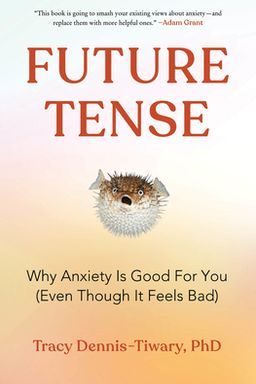
Future Tense cover

Future Tense

by Tracy Dennis-Tiwary

Future Tense challenges the common perception of anxiety as a negative force. Tracy Dennis-Tiwary unveils its role as an essential survival tool, offering insights to harness anxiety effectively. Learn to distinguish between useful and useless anxiety, fostering resilience and personal growth.

Anxiety Is Good for You (Even Though It Feels Bad)

Have you ever wished you could just stop feeling anxious—wipe away the pit in your stomach and silence the constant 'What ifs'? Tracy A. Dennis-Tiwary argues that doing so would be a disaster. In her book Future Tense: Why Anxiety Is Good for You (Even Though It Feels Bad), she flips the entire conversation about anxiety on its head. Anxiety, she insists, isn’t a malfunction to fix—it’s a feature of being human, a vital emotional system that helps us adapt, create, and connect.

The core argument is startlingly simple yet profound: anxiety evolved not to torment us but to propel us forward. It urges us to act, to plan, to imagine the future, and to prepare for uncertainty. When we suppress or overmedicate it, we rob ourselves of one of our most useful emotional signals. According to Dennis-Tiwary, anxiety is the price we pay for intelligence, imagination, and ambition—the future-focused emotions that make civilization possible.

Anxiety as Human Superpower

Throughout the book, Dennis-Tiwary shows how anxiety evolved as an adaptive tool. Drawing from Darwin’s theories of emotional evolution, neuroscience, and psychology, she argues that anxiety helps us navigate uncertain futures. It blends fear’s protective urgency with hope’s forward momentum. Anxiety feels awful because it’s designed to grab our attention—it screams, “Do something!” This painful sensation isn’t punishment; it’s motivation. Anxiety, in her words, is the emotion that fuels survival and progress.

From NASA astronaut Dr. Scott Parazynski’s spacewalks to parents teaching kids to ride bikes, Dennis-Tiwary illustrates anxiety as the engine behind courage and mastery. Fear makes us run; anxiety makes us think, plan, and persist. Anxiety operates like a smoke alarm—it alerts us to potential hazards before the fire starts, giving us a chance to act. The problem isn’t the alarm; it’s how we respond to it.

The Disease Narrative: How We Got Anxiety Wrong

Dennis-Tiwary traces the transformation of anxiety from spiritual state to medical disorder. In the Middle Ages, anxiety was seen as a divine trial; in the Enlightenment, it became a symptom of a fragile mind; and by the 20th century, psychiatry declared it a disease. The Diagnostic and Statistical Manual (DSM) categorized anxiety into types and symptoms, framing it as pathology rather than evolution. The modern 'Age of Anxiety,' she argues, is less about increasing worry and more about our decreasing tolerance for uncertainty and discomfort. We’ve become so fixated on eradicating anxiety that we’ve lost sight of its function.

Building on this critique, the book challenges our cultural obsession with emotional safety—from trigger warnings to overprotective parenting. We treat anxiety as contamination to avoid, rather than friction to grow from. This view, she warns, creates fragility. True resilience, she argues using Nassim Taleb’s concept of ‘antifragility,’ arises when we confront stressors—not when we are shielded from them.

Listening, Not Fighting, Your Anxiety

Instead of numbing anxiety, Dennis-Tiwary offers a radical alternative: listen to it. Anxiety is information about the future. It tells you what you care about and what’s uncertain. Learning to “be anxious in the right way,” as Kierkegaard once wrote, is not about removing suffering but decoding the message beneath it. A racing heart might reveal passion, a sleepless night might signify care, and unease might indicate growth. The goal is not to silence anxiety but to respond to it wisely—by taking purposeful action when possible, or letting it rest when not.

Why It Matters

In a world driven by chronic uncertainty—from pandemics to social media—Dennis-Tiwary’s reframing is revolutionary. She offers anxiety as hope disguised as discomfort: the tension between what is and what could be. When harnessed correctly, anxiety fosters creativity, perseverance, and empathy. It makes us pursue excellence (“excellencism” rather than perfectionism), advocate fiercely for our children, and strive toward meaningful goals.

Ultimately, Future Tense is a manifesto for reclaiming our emotional heritage. It tells us that the path forward isn’t through anesthesia but awareness. Anxiety is not an enemy to destroy but a teacher to befriend. You don’t overcome anxiety by silencing it—you thrive by listening to what it’s trying to say about your future.


What Anxiety Is (and Isn’t)

Dennis-Tiwary begins by distinguishing anxiety from its emotional cousin—fear. Fear reacts to clear and present danger; anxiety responds to possibility. Fear protects the present moment; anxiety prepares for the future. When your heart races before a presentation or exam, that’s anxiety—not a malfunction, but an anticipatory signal pushing you to prepare.

Emotion as Evolution

Drawing heavily from Charles Darwin’s The Expression of the Emotions in Man and Animals, Dennis-Tiwary explains that emotions evolved as functional tools for survival. They aren’t irrational clouds; they’re data-driven programs. Emotions like anger and fear trigger fight-or-flight, while anxiety blends apprehension with hope—alerting you to future threats and opportunities. Functional Emotion Theory identifies two components: appraisal (how you interpret a situation) and action readiness (your instinctive urge to act).

This dynamic makes anxiety one of evolution’s smartest inventions. Its discomfort motivates action through negative reinforcement: you act not to suffer endlessly but to end the unpleasant feeling by resolving uncertainty. It’s the biological prompt that made humans builders, scientists, and dreamers.

The Brain Behind Anxiety

Neuroscience reveals that anxiety activates a network between ancient and modern parts of the brain. The amygdala detects novelty and potential threat, while the prefrontal cortex plans complex responses. Dopamine—the motivational neurotransmitter—links these systems, meaning anxiety literally fuels the drive toward reward. Too little anxiety leads to apathy; too much becomes panic or paralysis. Balanced properly, it’s the neurochemical foundation of progress.

Social Connectivity and Anxiety

Anxiety’s design is social, not solitary. It drives us toward connection. Dennis-Tiwary references research where holding a loved one’s hand during a stressful event (like receiving mild shocks in an MRI) drastically reduced activity in the amygdala. Oxytocin—the bonding hormone—counterbalances cortisol, our stress chemical. Anxiety, therefore, evolved to orient us toward support, teamwork, and empathy.

In contrast, total isolation—like solitary confinement or chronic online disconnection—turns anxiety toxic. Humans need others to buffer distress. Anxiety is the reason we reach out, ask for help, and build communities. It's woven into our biology not to destroy us but to bring us closer.

“Anxiety is not fear. It is hope with a dash of dread.” —Tracy Dennis-Tiwary


Why Anxiety Exists

If anxiety feels useless, Dennis-Tiwary argues, it’s only because we misunderstand what it’s for. Anxiety, like our opposable thumbs or upright posture, is evolution’s way of preparing us for uncertainty. Charles Darwin observed that negative emotions—anger, fear, disgust—served survival. Dennis-Tiwary extends that insight: anxiety evolved as a signal not only of danger but of potential.

Functional Emotion

Functional Emotion Theory sees anxiety as a system of appraisal and action readiness. You perceive a possible threat (“What if my kid gets sick?”), then mobilize energy to act (“I’ll buy medicine or make a doctor’s appointment”). The emotion drives behavior that’s both protective and creative. Its tension lies between fear and hope—it’s painful enough to demand change, yet optimistic enough to motivate action.

Anxiety as Human Spark

Without anxiety, Dennis-Tiwary insists, early humans would not have planned ahead or built societies. Anxiety forced us to look beyond the moment: to anticipate winters, predators, and hunger. It compelled cooperation, innovation, and tool-making. Even in modern life, anxiety underlies ambition and learning—it’s why athletes visualize success (as Michael Phelps did), or why inventors persist through frustration.

This perspective reframes anxiety as the emotion of possibility. It makes room for risk and reward, preparing us not only to survive but to imagine. We hate it because it hurts, but that pain is the nudge that tells us what matters most.


The Problem with the Disease Story

Dennis-Tiwary unpacks how Western culture turned anxiety from a divine guide into a diagnosable illness. In medieval Europe, priests treated anxiety as spiritual distress—the soul longing for redemption. By the Enlightenment, philosophers and scientists reframed it as irrational passion. The Industrial Age and Freudian theory then pathologized it: anxiety became neurotic disorder.

Medicine's Monopoly on Emotion

The arrival of the DSM (Diagnostic and Statistical Manual of Mental Disorders) in 1952 completed this shift. What had been part of normal experience became a checklist of symptoms. Now, anxious feelings equated to dysfunction. This medicalization birthed an industry of therapy, medication, and self-help promising freedom from anxiety—but rarely delivering understanding.

Safe Spaces and Emotional Avoidance

Dennis-Tiwary critiques modern 'safe spaces' and 'trigger warnings' as symptoms of cultural fragility. Originally designed to encourage open dialogue (as in Kurt Lewin’s sensitivity training), safe spaces now often shield people from discomfort. We confuse emotional safety with growth, avoiding difficult ideas. As a result, we perpetuate the myth that anxiety harms rather than helps.

“Setting trigger warnings doesn’t protect us—it perpetuates the belief that difficult emotions do harm.” —Tracy Dennis-Tiwary


Comfortably Numb: The Chemical Calm

In one of the book’s most powerful chapters, Dennis-Tiwary exposes our collective addiction to emotional anesthesia. From Valium in the 1960s to Xanax today, pharmaceutical culture has encouraged us to treat anxiety like a virus—something to suppress or kill. Benzodiazepines promised relief, but they delivered dependence. We numbed the symptom rather than learning from its message.

How Medicine Misunderstood Pain

Through vivid history—from Marilyn Monroe’s barbiturate overdose to the opioid crisis—Dennis-Tiwary shows how society’s quest for numbness backfired. Pain relief became the number-one cause of overdose deaths. Our modern “chemical calm” treats distress as moral failure, reinforcing the idea that any discomfort is intolerable. But the paradox remains: avoiding pain magnifies it.

Teen Anxiety as Cultural Mirror

The author connects today’s teen anxiety epidemic to this numbing mindset. From Pew surveys to hip-hop’s troubled relationship with Xanax (“I felt like Superman,” says one user), she illustrates how young people inherit our emotional avoidance. In musicals like Be More Chill, teens literally pop computerized “chill pills” to fit in. Anxiety becomes an enemy rather than a compass. Dennis-Tiwary’s message to them—and to us—is simple: “Feel weird. Freak out. You’ll still be okay.”


Blame the Machines?

Can we blame our phones for our anxiety? Dennis-Tiwary says not exactly. Technology amplifies our emotional habits rather than creating them. Social media can either deepen anxiety or soothe it depending on how we use it. Active engagement—messaging friends, sharing creativity—reduces loneliness. Passive scrolling, or ‘doomscrolling,’ intensifies uncertainty and fatigue.

Digital Design and Anxiety

Smartphones function like slot machines: they offer intermittent rewards through infinite scrolls, likes, and alerts. These unpredictable hits of dopamine mimic gambling’s addiction mechanics. It’s not the phone itself that’s toxic but the illusions of control and constant stimulation. Anxiety drives us to seek certainty through information—but in the algorithmic world, information never ends.

Connection, Not Isolation

Interestingly, Dennis-Tiwary highlights studies showing that even texting between friends can calm anxious teens more effectively than awkward Zoom calls. The medium matters less than connection. Human presence—eye contact, touch, authentic communication—remains the best antidote to distress. Technology should assist our humanity, not replace it. The real culprit isn’t the machines; it’s our reluctance to stay present while using them.


Uncertainty: Possibility in Disguise

Anxiety’s twin is uncertainty. Dennis-Tiwary argues that uncertainty isn’t danger—it’s possibility. The stress you feel before results arrive, auditions begin, or pandemics end is evolution’s way of making you resourceful. Uncertainty forces creativity; it sharpens attention, boosts cognitive control, and triggers action. Without it, life would be dull and static.

The Brain Loves Ambiguity

Neuroscientists find that our brains show huge waves of neural activity when faced with unclear feedback. That’s because we learn most effectively when outcomes are uncertain. Anxiety, therefore, primes us to think, evaluate, and grow. During COVID-19 lockdowns, uncertainty sparked resilience—people created order through lists, routines, and gratitude.

Togetherness and Control

Even gratitude builds self-control. Studies show that feeling thankful makes people more patient and less impulsive, balancing stress responses. To Dennis-Tiwary, gratitude is anxiety’s complement—it channels fear of loss into appreciation of presence. The pandemic proved that humans don’t crumble under uncertainty; they adapt when they act purposefully and connect deeply.


Creativity: Anxiety’s Silent Partner

Can anxiety make you creative? Dennis-Tiwary insists it can—and must. Anxiety pushes the mind into the uncertain gap between what is and what could be. That gap is creativity itself. It’s the tension between expectation and reality that fuels invention.

The Cauliflower and the Panic Attack

Whether cooking dinner from wilted cauliflower or creating performance art about panic attacks, Dennis-Tiwary shows that anxiety spurs transformation. She introduces activating moods—feelings like anger, joy, and anxiety—that energize creation. Deactivating moods (sadness, calm) slow it down. When we reinterpret anxious energy as motivation, we persist longer and invent better solutions.

From Perfectionism to Excellencism

One of her most valuable distinctions is between perfectionism and excellencism. Perfectionism narrows possibilities; excellencism expands them. The former leads to burnout and paralysis; the latter balances ambition with growth. Anxiety, managed wisely, turns perfectionism into drive. Like Edison, who found “ten thousand ways that won’t work,” we use anxiety not to prove our worth but to learn from failure.

“Anxiety is freedom—the dizziness of possibility.” —Tracy Dennis-Tiwary, echoing Søren Kierkegaard


Kids Are Not Fragile

In one of the most heartfelt chapters, Dennis-Tiwary examines anxiety in children and teens. After realizing she dismissed her son’s fear while teaching him to ride a bike, she learned a painful truth: adults often want children’s anxiety gone not for their sake, but for ours. Yet, she argues, children are antifragile—they grow stronger through struggle and uncertainty.

Antifragility and Parenting

Borrowing from Nassim Taleb, she explains that like immune systems, emotions need exposure to challenge. Shielding kids from distress weakens resilience. The SPACE therapeutic model (Supportive Parenting for Anxious Childhood Emotions) teaches parents to stop removing obstacles and start supporting confidence. By allowing anxiety but expressing faith in a child’s ability to cope, parents strengthen emotional immunity.

The Teenage Brain’s Marvel

Adolescence, often treated as a fragile stage, is actually an evolutionary advantage. The teen brain’s emotional centers develop earlier than its control centers, making it impulsive but adaptable. Risk-taking, social sensitivity, and even anxiety serve developmental purposes—they expand learning and empathy. Teenage anxiety, properly guided, is the birth of wisdom.

From Perfection to Purpose

Girls especially suffer from 'Little Miss Perfect' syndrome—overachievement that disguises fear of failure. Dennis-Tiwary’s own daughter’s 'Perfect Circles' test showed how excellence comes from persistence, not flawlessness. By teaching kids to embrace uncertainty, risk, and imperfection, we raise creators, not conformists.


Being Anxious in the Right Way

Dennis-Tiwary closes the book with three principles for living well with anxiety: listen, let go, and act. These transform anxiety from tormentor into guide. Anxiety offers information about the future—signals about what you care most about. When you honor those signals, you replace fear with purpose.

1. Listen

Be curious, not afraid. Anxiety is safe to explore. Like pain, it tells you where to look. Notice when anxiety rises and falls—it’s data on your progress. Curiosity turns suffering into insight.

2. Let Go

If anxiety gives no clear message, pause. Engage the present through small rituals—walking, reading, conversation. The goal isn’t suppression but restoration. You return ready to act.

3. Act Purposefully

Do something with your anxiety. Channel it toward purpose. Dennis-Tiwary cites the Harvard Study of Adult Development: lasting well-being stems from strong relationships and meaningful purpose. When anxiety guides action aligned with what matters most, it becomes courage. The rescue isn’t erasing anxiety—it’s reclaiming it as life’s creative force.

Dig Deeper

Get personalized prompts to apply these lessons to your life and deepen your understanding.

Go Deeper

Get the Full Experience

Download Insight Books for AI-powered reflections, quizzes, and more.