
Idea 1
Becoming Future Fit in an Era of Relentless Change
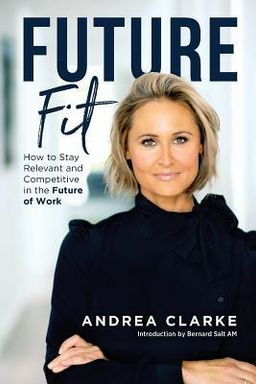
How can you remain relevant in a world where the rules of work seem to change overnight? In Future Fit: How to Stay Relevant and Competitive in the Future of Work, Andrea Clarke argues that the rapid shifts in technology, workplace culture, and global disruption demand a new kind of preparedness—one that has less to do with job titles or academic credentials and everything to do with human capability. Clarke contends that those who will thrive amid constant uncertainty are not the most technically skilled, but the most human: adaptable, communicative, creative, and connected.
Clarke’s central idea is that the future of work requires each of us to cultivate eight critical “real skills”: reputation capital, communication, adaptability, creativity, networking, leadership, problem solving, and continuous learning. These skills don’t merely help you adjust; they enable you to change with confidence and lead others through transformation. Her argument is grounded in the lived experience of sudden disruption—from her time as a war-zone journalist to her later role as a leadership educator. Through these experiences, Clarke learned that being “future fit” isn’t about prediction—it’s about preparation for the unpredictable.
A World in Flux: Why Human Skills Matter
In the wake of the COVID-19 pandemic, Clarke observes that overnight, predictions about workplace transformation became reality. Within sixty days, changes expected to unfold over five years had reached full force. Offices emptied, remote work exploded, and hybrid structures emerged. Yet what truly changed was not the where of work—it was the how. The rise of the individual, the need for greater agency, and the rediscovery of purpose became defining forces. As automation, digitisation, and global volatility reshape roles, survival now depends on our ability to learn fast and adapt continuously.
To Clarke, technology itself isn’t the problem—it’s our ability to organise ourselves around the change it brings. Drawing on voices such as Yuval Noah Harari (21 Lessons for the 21st Century) and Louis Hyman (economic historian of labor), Clarke points out that technological shifts only drive progress when we make deliberate decisions about how we’ll live and work alongside them. The virus may have reshaped human connection, but our response determines whether that change ultimately harms or helps us.
The Rise of the Individual and the Era of Agency
The “future-fit” worker, Clarke argues, is distinguished by a powerful sense of agency—the ability to believe in our own capacity to influence thought and behaviour. In an era where career paths are no longer linear and identity cannot be defined by a single job title, we must anchor our professional lives not in roles, but in values. Work should reflect purpose, not permanence. Clarke connects this to a broader social truth: happiness, wellbeing, and belonging in the workplace are driven by meaning, not security. Companies that empower employees to align personal purpose with organisational goals will attract and retain talent, while those that cling to old models will watch their best people leave for more autonomous paths.
This transformation fuels a new breed of worker—what Clarke calls the Augmented Worker (AW). This individual blends technical fluency with human depth, leveraging technology to extend cognitive capability rather than replace it. The AW learns rapidly, adapts consistently, and moves easily between disciplines. Their success depends less on degrees and more on curiosity and courage. Like the freelance professionals Clarke describes in later chapters, the AW epitomises adaptability—the true currency of modern human capital.
Human Capital and the Value of “Real Skills”
Clarke introduces a provocative concept: if companies list tangible assets on balance sheets, why not measure human capital—the economic value of experience, skill, attitude, and wellbeing? She imagines a future where each of us could assess our own “Human Capital Classification” (HCC), a multidimensional score combining education, punctuality, creativity, and loyalty. While metaphorical, this idea reframes accountability around continuous self-improvement. The measure of success in this new landscape isn’t title or tenure; it’s your capacity to add value under pressure and uncertainty.
“The future of work,” Clarke writes, “has always been human.” The pandemic, paradoxically, has offered a chance to become more human—to reconnect with empathy, integrity, and collaboration. Where industrial and information eras measured value by effort or efficiency, the augmented era measures it by creativity, outcomes, and relationships. To thrive here, workers must upgrade their humanity alongside their technology. As futurist Tom Goodwin notes (quoted by Clarke), “The currency of work won’t come from effort or time, but from the value we create through ideas.”
From Survival to Thriving: The Future-Fit Toolkit
Clarke’s book builds a toolkit for thriving—not coping—in this environment. Across its eight skills, she gives readers not only strategies but exercises for resilience. You learn how to build reputation capital grounded in trust, how to sharpen communication for impact rather than output, how to accelerate adaptability through mindset shifts, how to nurture creativity as a daily discipline, how to network intentionally in a digital age, how to redefine leadership beyond hierarchy, how to solve problems with collaborative insight, and how to embrace active learning as lifelong practice. Together, these capabilities form an integrated model for confidence in chaos.
Clarke’s core conviction: “The pandemic accelerated change—but the real transformation lies in ourselves.” Adaptability, trust, creativity, and learning are no longer optional skills; they are survival traits in the decade ahead.
More than a manual, Future Fit is a conversation about courage. Clarke invites readers to choose growth over comfort, echoing Brené Brown’s classic refrain from Daring Greatly. Every change, whether technological or personal, asks us to be both brave and afraid at once. Her message is intensely practical but deeply human: invest in your real skills, lead with generosity, and create space for meaningful contribution. Because if you can remain relevant through empathy, adaptability, and curiosity, then you’re not just surviving the future of work—you’re shaping it.