
Idea 1
Faith, Fear, and the Anatomy of an American Mystery
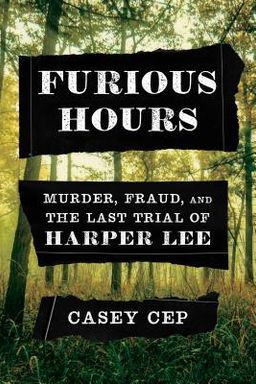
What happens when faith, greed, superstition, and law collide in a small Southern town? This question anchors the book’s intricate narrative, which braids together the real-life mystery of Reverend Willie Maxwell’s suspected murders with Harper Lee’s long, unfinished attempt to transform that tragedy into another landmark of American literature. Through this story, you learn not only about crime and punishment in mid-century Alabama but also about art, ethics, and the limits of justice itself.
An Uncanny Minister
At the center stands the Reverend Willie Maxwell—a bivocational preacher who seemed both ordinary and otherworldly. Raised in Coosa County, Alabama, he rose from sharecropping roots to pulpwood entrepreneur and ordained minister. Yet behind his impeccable suits and solemn cadence lurked a troubling pattern: family members who died under suspicious circumstances, often soon after new life-insurance policies named him beneficiary. Between 1970 and 1977, five of his relatives died, each incident deepening community fear and fascination. To neighbors, he embodied both gospel devotion and occult menace.
The local rumor mill, steeped in the South’s syncretic hoodoo traditions, supplied explanations where forensics failed. Stories of the “seventh son of a seventh son,” whispers of New Orleans rootwork, and jars of charms replaced court testimony as the community’s alternative logic of justice. In that world, Maxell was no mere suspect—he was a conjurer who bent fate itself. (Note: The book treats these beliefs sympathetically, showing them as psychological mechanisms to make sense of what law could not prove.)
The Fragile Power of Science and Law
Investigators from Auburn University’s crime lab worked tirelessly to find proof, but Alabama’s patchwork of forensic resources in the 1970s left gaps you could drive a hearse through. Toxicologists like Dr. Carl Rehling documented bruises, ligatures, even a fractured hyoid, but could not always confirm strangulation or poisoning. Local DAs, hindered by politics and alcoholism, struggled to build cases from partial data. Grand juries refused indictments; witnesses recanted. Forensics could describe the ‘what,’ rarely the ‘why,’ and this ambiguity let Maxwell continue collecting insurance payouts undisturbed.
Insurance was both Maxwell’s stage and undoing. Exploiting lax oversight in the life-insurance industry, he ordered dozens of policies by mail, naming himself beneficiary on relatives. Assisted by his flamboyant attorney, Tom Radney, he turned insurance companies’ predatory history against them. Radney, a progressive lawyer once hounded from Alabama politics, recast Maxwell as victim of corporate discrimination. Together they sued companies reluctant to pay Black clients, winning settlements that scandalized townsfolk but technically obeyed the law. (In this, the narrative evokes Double Indemnity—greed rendered bureaucratic and banal.)
Community Collapse and Vigilante Justice
The uneasy truce between suspicion and legality ended at the funeral of Maxwell’s stepdaughter, Shirley Ann Ellington, in 1977. There, before three hundred mourners, Robert Burns—a Vietnam veteran and Shirley’s uncle—shot the Reverend three times in the head. The act fulfilled what neighbors whispered but courts never managed: moral equilibrium through violence. His trial, defended by the same Tom Radney who once protected Maxwell, resulted in a verdict of not guilty by reason of insanity. The jury’s decision reflected not insanity so much as communal exhaustion. In acquitting Burns, Alexander City absolved itself of years of fear and failure.
Harper Lee’s Return and the Search for Truth
Among the journalists drawn to this spectacle was Harper Lee, author of To Kill a Mockingbird. Seventeen years removed from literary fame and scarred by its aftermath, she came quietly to Alexander City to write a nonfiction book about the case—tentatively titled The Reverend. Having cut her teeth as researcher for Truman Capote’s In Cold Blood, Lee intended to produce her own masterpiece of moral reportage. She interviewed lawyers, witnesses, and Burns himself, amassed transcripts, and reconstructed insurance ledgers that bore Maxwell’s handwriting. But where Capote had blurred fact into art, Lee insisted on documentary precision. In time, that same scruple paralyzed her: she discovered rumor where she needed proof and contradictions where she sought closure.
Her struggle mirrored Maxwell’s story—a collision between appearance and evidence, myth and morality. As her mentors and agents died, as depression and privacy deepened, she found herself trapped between her talent for storytelling and her refusal to invent. The unfinished manuscript became her own haunted object, a testament to the difficulty of writing truth in a world addicted to explanation.
Central Theme
At its heart, this book shows what happens when moral imagination, superstition, and institutional weakness intertwine. The Reverend Maxwell’s tale is not only a Southern Gothic mystery but also the allegory of a nation where truth falters between science and story, and where a writer like Harper Lee confronts the impossibility of finishing the work that could resolve them both.