
Idea 1
Mindfulness as a Scientific and Human Practice
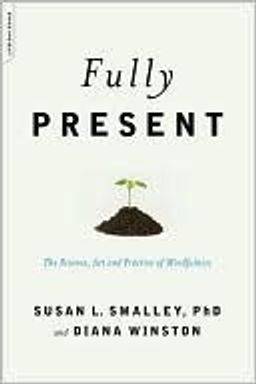
How can you learn to be fully present and live with clarity, compassion, and resilience? The authors present mindfulness not as a mystical escape but as a learnable capacity grounded in psychology, neuroscience, and contemplative wisdom. Their core argument is that mindfulness—attention to present experience with an attitude of open curiosity—can be trained as both a temporary mental state and a lasting personality trait. Scientific evidence now shows that this training changes the brain, improves emotion regulation, and strengthens well-being.
From State to Trait
Mindfulness begins as a deliberate act: noticing breath, sensations, or thoughts as they arise. With repetition, it becomes a trait—an enduring tendency to stay aware and engaged rather than reactive or distracted. Researchers like David Creswell connect higher trait mindfulness with improved emotion regulation and reduced amygdala activation. Over time, practices such as breath awareness and body scanning recalibrate attention and stress systems, transforming your basic disposition toward life.
Science and Subjective Experience
The book emphasizes that mindfulness is both objective (measurable in lab studies) and subjective (discoverable through personal experience). Brain imaging, immune markers, and even gene-expression studies suggest mindfulness is not a placebo of calm but a biological shift toward balance: immune functions strengthen, inflammation decreases, and neuroplasticity supports lasting learning. Yet, the authors remind you that science can only point; your direct practice is the actual experiment.
Cultivating Mindfulness through Practice
You learn mindfulness through deliberate repetition. Start small—five minutes of breathing or observation each day—and engineer cues that make consistency easier (a dedicated spot, a bell, or a phone timer). Motivation grows through kindness rather than pressure. The strategy mirrors behavior-change models: make it simple, contextual, supported, and repeated. Over time, attention strengthens like a muscle, turning sporadic practice into embodied presence.
Scientific Validation and Real Benefits
Clinical trials connect mindfulness with measurable outcomes: reduced chronic pain, lower stress hormones, improved immune markers, and decreased relapse in depression. Neuroimaging shows meditation alters brain areas linked to attention and empathy—the insula, prefrontal cortex, and anterior cingulate. Across studies, these changes correspond with subjective reports of greater calm, compassion, and clarity. In essence, the practice harmonizes subjective experience and objective physiology.
Core insight
Mindfulness trains your attention and reshapes your brain. But beyond science, it restores agency: you can observe thoughts before believing them, feel emotions without drowning in them, and respond rather than react. It’s both empirical and existential—a skill and a way of being.
The book’s overarching narrative weaves empirical rigor and spiritual pragmatism. Whether through breathing, gentle movement, compassion practice, or self-inquiry, each technique reveals the same law: awareness changes reality. As attention grows steady and kind, your mind, brain, and actions synchronize toward coherence—scientific and emotional harmony that translates into genuine happiness.