
Idea 1
Growing from Founder to CEO: The Leadership Transformation
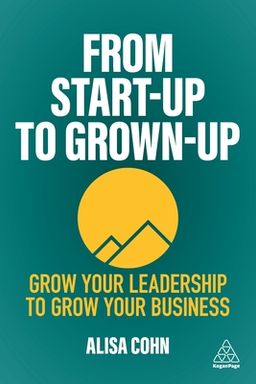
Have you ever launched an exciting new venture only to realize that the leadership skills that got you started aren’t enough to keep you growing? In From Start-Up to Grown-Up, Alisa Cohn argues that founding a company isn’t just about vision—it's about evolution. The inner transformation from entrepreneur to CEO is a journey that involves mastering yourself, your people, and your organization. Cohn contends that being a great founder requires creativity, passion, and energy, but being a great CEO demands reflection, emotional intelligence, and disciplined systems. The very traits that make you fearless at the starting line can trip you up later if you don’t learn to adapt.
Drawing from twenty years of coaching founders of companies like Venmo, Foursquare, Etsy, and DraftKings, Cohn maps out a practical leadership roadmap for scaling yourself as effectively as your business. She organizes her playbook around three dimensions of growth: managing you, managing them, and managing the company. The first is internal—dealing with your self-doubt, triggers, and stress while learning to lead with honesty and awareness. The second focuses on relationships—the messy, unpredictable world of managing employees, building culture, and handling hiring and firing with both rigor and compassion. The third addresses the systems you need—operational discipline, metrics, meetings, and governance—to turn a chaotic start-up into a stable, well-run enterprise.
The Unnatural Act of Leadership
Cohn opens with a powerful truth: “Leadership is an unnatural act.” Founders often feel contradiction between their instinct to act and the need to pause and reflect. One CEO jokes that every day he must “commit an unnatural act”—communicating differently to different people, managing his own defensiveness, or opening a company-wide meeting with a story instead of data. This paradox sets the tone for the book: leading isn’t about doing more, but doing differently. Emotional maturity and self-regulation—the ability to see yourself clearly and choose your response—are the first milestones of growth.
Why This Evolution Matters
Cohn insists the founder-to-CEO leap is one of the hardest transitions in business. Early success rewards hands-on action and control, but scaling means letting go. Your behaviors become your culture, and your blind spots become the company’s weaknesses. As serial investor Randy Komisar notes in his foreword, “Your company needs a CEO, but you don’t need to be that CEO—unless you’re ready to be coachable.” The message is clear: growth is a choice. Reflecting deeply on who you are, how you lead, and what the business needs from you right now is a lifelong discipline.
Leadership maturity determines whether you’ll stall or scale. Marshall Goldsmith (author of What Got You Here Won’t Get You There) echoes this idea—what propels a founder through the early stages often hinders them later. In Cohn’s coaching framework, emotional growth precedes strategic growth. Until you manage yourself—your anxiety, impatience, or perfectionism—you can’t manage the people or the company effectively.
The Three Growth Dimensions
Cohn structures the book in three major parts, representing the concentric circles of a founder’s development. Managing You deals with self-awareness, stress, imposter syndrome, and personal habits that sustain high performance. You learn that leadership begins with the mirror—people see you amplified, not as you imagine yourself. Managing Them turns outward: building psychologically safe environments, giving praise, setting expectations, and delegating effectively. And Managing the Company addresses the strategic architecture of scaling—hiring senior managers, establishing clear metrics, running effective meetings, and working productively with your board and cofounders.
This triple focus shifts the perception of leadership from heroic command to disciplined practice. It’s not about becoming someone else—it’s about growing into the next version of yourself. Each phase serves as a mirror: how you handle conflict reveals your triggers; how you delegate reveals your trust; how you manage the board reveals your maturity. The process is emotional as well as tactical.
A Guidebook for the Lonely CEO
Founders often confess loneliness—the sense that everyone looks to them for answers, but no one understands their doubts. Cohn’s coaching voice feels like a steady hand on your shoulder. She combines empathy with tough love, urging CEOs to ask for help, develop rituals to manage stress, and build a “village” of mentors, peers, and coaches. Problems never go away, she reminds us—they just evolve. Her mantra, repeated throughout: “The work is in you.”
Ultimately, this book isn’t just about business—it’s about personal transformation. You start as an entrepreneur chasing an idea and, through reflection and discipline, become the leader of an enduring institution. That’s the heart of Cohn’s message: if you want your company to grow up, you must grow up first. The organization can’t outgrow its founder. The question she leaves us with is deceptively simple and utterly profound: What does the business need from you right now?