
Idea 1
How Individuals Shape Globalization
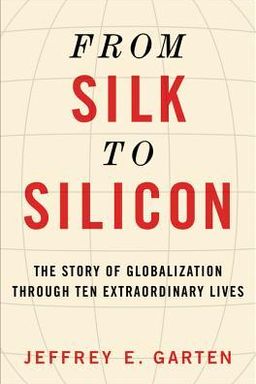
Globalization is often described as an impersonal process—markets, technologies, and ideas expanding across borders—but this book argues it depends most on individual catalysts. The central claim is that history turns when certain "doers" harness existing conditions and institutions to accelerate connectivity. The author highlights figures from Genghis Khan to Deng Xiaoping as engineers of systemic change who built the infrastructures—physical, financial, technological, or institutional—on which global integration runs.
From Conquest to Connectivity
Genghis Khan, for example, wove together Eurasia not just through conquest but through deliberate investment in roads, postal stations, and passports (paiza) that guaranteed safe trade across an immense empire. Likewise, Prince Henry of Portugal transformed scattered exploration into an organized, data-driven program that mapped the Atlantic and prepared the Age of Discovery. These early actors demonstrate how infrastructure and information management turn bold visions into durable systems.
Each protagonist emerges when context opens opportunity—political breakdowns, new technologies, or crises in legitimacy. They seize such moments to institutionalize change: Clive of India fuses corporate interests with imperial rule; Mayer Rothschild creates international trust networks to finance war and trade; and Cyrus Field connects continents through the transatlantic telegraph. Globalization, in this telling, repeatedly begins with people who see through chaos to architecture.
Technology, Capital, and Networks
Technological leaps often depended on social organization. Field, lacking scientific expertise, built coalitions that united financiers, engineers, and governments to lay cable beneath the Atlantic. The project failed repeatedly before success in 1866, showing how persistence and iteration turn impossibility into infrastructure. Rockefeller, by contrast, applied data-driven discipline and vertical integration to dominate the oil industry, then reinvested wealth into global public goods through universities and medical research—an early attempt to balance market power with moral responsibility.
Monnet continued this logic of system building through governance. After two world wars, he concluded that only small, practical steps toward shared authority could stabilize Europe. His European Coal and Steel Community would evolve into the European Union, proving that institutional architecture could achieve what armies could not: integration through rule, not conquest.
From Markets to States—and Back
Modern chapters explore how globalization has oscillated between private enterprise and public authority. Thatcher in the 1980s used state power to deregulate markets, privatize industry, and rejuvenate Britain’s competitiveness—her paradoxical mission to use central power to dismantle it. Deng Xiaoping pursued a similar pragmatism: he opened China’s markets while preserving Leninist political control, combining command with capitalism to lift hundreds of millions out of poverty.
Andy Grove of Intel then embodies the technological counterpart of this transformation. He made Moore’s law—a scientific observation about transistor scaling—a managerial routine by standardizing production metrics and globalizing semiconductor manufacturing. Under his discipline, the microprocessor revolution became predictable, repeatable, and universal. Grove’s story echoes the book’s main insight: ideas matter least until turned into operations.
The Hedgehog Pattern
Across centuries, each figure shares what Isaiah Berlin called the hedgehog’s virtue—a single, relentless focus. Genghis unifies trade routes; Henry systematizes exploration; Clive converts commerce into empire; Rothschild standardizes finance; Field wires communication; Rockefeller perfects industrial scale; Monnet builds supranational governance; Thatcher rewrites economic policy; Grove industrializes innovation; and Deng converts ideology into pragmatic control. They differ in context and morality, yet all treat complexity with simplicity—one great idea executed pragmatically over decades.
Core message
Globalization, the book argues, is not self-propelling. It requires builders who merge vision with method. You can trace world integration—from silk routes to microchips—through individuals who see opportunity in disorder, connect networks to institutions, and turn invention into integration.
By following their biographies, you learn how ambition, systems thinking, and moral trade-offs shape our connected world. The book invites you to see globalization less as destiny and more as design—constructed brick by brick, decision by decision, by people who dared to build beyond their lifetimes.