
Idea 1
Structures of Inequality and the Struggle for Justice
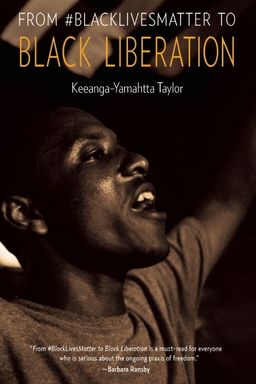
You live in a country that proclaims equality yet organizes disadvantage through its institutions. Keeanga-Yamahtta Taylor's argument centers on this contradiction: America's racial inequalities are not accidents of culture or personal failure but products of systems — economic, political, and social — that depend on the subordination of Black people to sustain order and profit. The book traces how institutions construct poverty, criminalization, and austerity, and how movements arise to challenge those structures.
The Core Conflict: Structure vs Culture
Taylor begins with a distinction between two explanations for racial inequality. One approach—rooted in institutional racism—locates the problem in its systems: housing redlining, labor exclusion, biased policing, and inequitable distribution of resources. The other explanation blames Black behavior or culture. That narrative of "personal responsibility" has been recycled since the Moynihan Report (1965) and continues in colorblind politics today. It shifts blame from policy to behavior, making austerity appear moral and cutting budgets seem fair.
Colorblindness and Post-Civil Rights Politics
After civil rights victories, a new political language emerged. Colorblind rhetoric pretends neutrality by erasing race from policy language while leaving racial hierarchies intact. Beginning with Richard Nixon's coded appeals—"law and order," "freedom of choice"—and refined through Reagan and Clinton, it became a bipartisan consensus that privatization and deregulation would solve inequality. But as Taylor shows, colorblindness operates as a shield that protects capital and white privilege by declaring structural remedies unconstitutional or politically impossible.
Economic Disposability and Neoliberalism
Throughout the book, Taylor demonstrates how the shift to neoliberal economics treated Black communities as disposable. Deindustrialization removed stable jobs; subprime lending targeted Black homeowners, culminating in 240,000 foreclosure losses after 2008; meanwhile, wealth disparities widened — white median wealth at $91,000 versus $6,400 among Black families. These numbers represent the material layer of racial domination: dispossession functioning as policy.
Policing and Mass Incarceration
Taylor connects economic and racial control through policing. You learn that modern policing evolved from slave patrols and Black Codes, institutionalizing the idea that Black presence equals suspicion. From Nixon's "War on Drugs" through Clinton's 1994 Crime Bill, policing and prisons replaced social programs as tools of governance. Ferguson's municipal practices — deriving over 20 percent of city revenue from fines and fees — expose how punishment became both fiscal strategy and racial discipline.
Representation and Its Limits
The book does not dismiss symbolic victories. Black mayors, members of Congress, and even a president changed representation, but Taylor argues that without redistribution, representation becomes symbolic, even complicit. Black officials like Carl Stokes or Wilson Goode faced structural constraints that forced them into managing austerity rather than reversing it. The paradox is clear: Black leaders govern within systems designed to produce inequality.
Movement and Awakening
The later chapters document the birth of a new resistance—from Trayvon Martin’s killing in 2012 to Ferguson and Baltimore uprisings in 2014 and beyond. Protesters, often young, queer, and female, built decentralized networks that redefined leadership. Black Lives Matter became a banner for collective action and structural critique, linking policing to economic austerity and gendered violence. Taylor situates these movements against the backdrop of philanthropy, cooptation, and electoral compromise, urging sustained organizing that defends autonomy and channels outrage into durable institutions.
A guiding insight
Understanding racism means understanding capitalism. To change outcomes, movements must couple moral protest with material demands—jobs, housing, healthcare, and justice. Symbolic victories without redistribution preserve inequality; structural struggle alone can uproot it.
Taken together, Taylor’s narrative moves from diagnosis to strategy: dismantle culture-blame myths, expose colorblindness as a political weapon, confront economic disposability, and build movements strong enough to reimagine democracy as collective care rather than punishment. The book’s power is moral and analytical—it asks you not just to see injustice but to understand its architecture and your role in challenging it.