
Idea 1
Facing the Big Terrible Thing: Fame, Addiction, and Survival
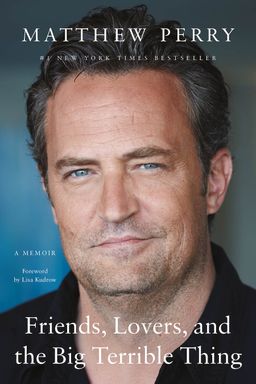
What happens when your dream life turns into a nightmare you can’t wake up from? In Friends, Lovers, and the Big Terrible Thing, Matthew Perry poses that haunting question through the story of his own life—a public triumph wrapped around private torment. He argues that you can have fame, wealth, love, and success, yet still be crushed by an inner emptiness so vast it almost kills you. Perry’s memoir contends that addiction is not a moral failing or a momentary weakness, but a lifelong disease fueled by fear, loneliness, and a desperate need for control.
Through his brutally honest account, Perry reveals how he spent decades as a prisoner of alcohol and opioids—and how even the brightest lights in Hollywood couldn’t fill the dark hole he carried inside. He guides you through his rise from awkward, abandoned childhood to global stardom on Friends, then into the harrowing spiral of addiction that nearly cost him everything, including his life. His ‘big terrible thing,’ as he calls it, is both deeply personal and universally human: the struggle to believe that you are enough.
A Search for Belonging Behind the Spotlight
Perry’s story begins long before fame—before the laughter track and before Chandler Bing. As a child shuttled between divorced parents in Montreal and Los Angeles, he carried an early wound of abandonment. Flights alone, strained family ties, and a mother engulfed by work left him wondering why no one stayed. He later admits that every drink, every pill, and every romantic pursuit was an attempt to fill that void. Fame would promise belonging, but it gave him isolation instead.
That yearning for connection defines his philosophy throughout the book. You can see it in his humor, his relationships, and his addiction: each one an effort to bridge the gap between who he was and who he wanted to be. As the memoir unfolds, Perry transforms this personal need for validation into a larger reflection on how all of us chase comfort in the wrong places. (Psychologists describe this cycle as attachment trauma—a recurring theme echoed by authors like Gabor Maté in In the Realm of Hungry Ghosts.)
Fame as a False Cure
When Friends launched him into superstardom, Perry thought he had found the cure: laughter, audiences, and a million-dollar paycheck for every episode. Yet behind the scenes, the success only intensified his dependence. Fame filled the hole temporarily, much like the pills that later consumed him. ‘You have to get famous,’ he writes, ‘to know famous isn’t the answer.’ His career serves as a mirror for anyone chasing external validation—whether through achievements, relationships, or recognition—and finding that it never satisfies the inner ache.
As Perry’s addiction escalates, the contrast between his public and private worlds grows unbearable. On set, he plays the brilliant, sarcastic friend everyone loves. Off set, he’s terrified, isolated, and trapped in a body that is slowly breaking apart. His colon literally explodes after decades of substance abuse. He survives by a miracle and wakes from a coma with a new sense of purpose: to help others escape their own big terrible thing. In this awakening, Perry moves from survival to service, discovering that gratitude and contribution can replace self-destruction.
Why This Story Matters
This memoir is not just about celebrity or addiction—it’s about learning to exist. Perry forces us to ask: what does it mean to be enough? Throughout his near-death experiences, relapses, and moments of grace, he explores the tension between control and surrender, pain and humor, chaos and calm. He transforms his suffering into spiritual inquiry, eventually accepting that the only real light comes from helping others find theirs. By the end, he reminds us that healing is not a single moment of triumph but a lifelong practice of honesty, humility, and connection.
In this summary, you’ll see how Perry’s life unfolds around key turning points: his childhood and family trauma; the exhilarating rise and crushing pressures of Friends; his romantic entanglements with stars like Julia Roberts; his years of addiction, rehab, and recovery; and ultimately, his rebirth through faith and purpose. You’ll explore how humor became both a weapon and a refuge, how fame revealed the emptiness it was supposed to cure, and how near-death brought him face-to-face with grace.
Ultimately, Perry teaches you something simple but profound: survival isn’t about escaping pain—it’s about learning to live with it. The ‘big terrible thing’ is terrifying, but acknowledging it is the first step toward healing. His gift to the reader is not just the honesty of his story, but the hope that no matter how lost you feel, you can still find a way back to life.