
Idea 1
How Hidden Networks Shape Every Connection You Have
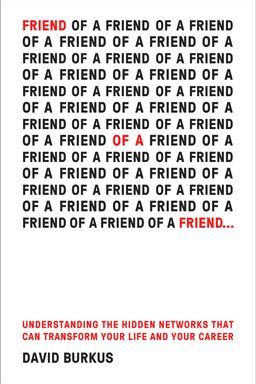
Have you ever wondered why some people seem to effortlessly tap into opportunities, while others constantly feel disconnected? In Friend of a Friend: Understanding the Hidden Networks That Can Transform Your Life and Your Career, David Burkus argues that success isn’t about the number of people you know—it’s about understanding the structure of your networks. The real advantage comes from seeing how people are connected, not just stacking up contacts on LinkedIn or collecting business cards at mixers.
Burkus contends that what really determines opportunity and influence is your position within this invisible web of relationships—a map of friends, colleagues, teammates, and acquaintances that shapes both your access to information and your potential for collaboration. Using research from sociology and network science, alongside stories from real business leaders, entrepreneurs, and creatives, he shows why connections matter less for who they are and more for how they connect to others.
The Hidden Science of Networks
Burkus introduces readers to the fundamentals of network science—a field that maps how relationships flow in all kinds of systems, from biology to business. Drawing on the work of sociologists like Ronald Burt and Mark Granovetter, he explains why the strongest career and innovation breakthroughs often come from surprising places: weak ties, structural holes, and bridges between disconnected communities. These patterns govern everything from how ideas spread to how influence operates inside companies.
Through examples like Adam Rifkin’s rise as “the world’s best networker,” Burkus demonstrates that success isn’t about charisma or constant networking hustle. Instead, it’s about deliberately positioning yourself where you can connect clusters—becoming the link between people and ideas that otherwise wouldn’t meet. The author shows that by studying your existing network (not just expanding it), you can reveal hidden opportunities, untapped relationships, and new paths to career growth.
Why This Matters Now
In a world where career changes, side hustles, and remote work are normal, you rely more than ever on informal networks to navigate opportunities. Burkus reframes networking as a kind of systems thinking: learn how networks work, and you’ll start working your own network smarter. This is especially relevant today when “networking” often feels shallow or transactional—what Burkus calls “the dirty feeling of meeting for the sake of favors.” His thesis reclaims authenticity: by understanding how networks work, you can build trust, collaboration, and opportunity naturally, without manipulation.
Ultimately, the book challenges the old mindset of career climbing and social schmoozing. Instead of chasing powerful people, Burkus invites readers to explore the structures around them—the weak ties that could rekindle opportunity, the silos that need bridging, and the multiplex ties that blend friendship and work. From Silicon Valley entrepreneurs to everyday professionals, everyone benefits from seeing their network not as a list of names but as a dynamic ecosystem where each friend of a friend can change your future.