
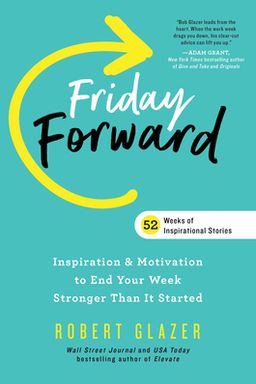
Friday Forward cover

Friday Forward

by Robert Glazer

Friday Forward by Robert Glazer is a transformative guide that combines inspiring stories with practical strategies to help you unlock your full potential. By developing your spiritual, intellectual, physical, and emotional capacities, this book empowers you to achieve greatness and live a more fulfilling life.

Elevating Your Life Through Capacity Building

Have you ever felt like you’re operating below your potential—like you have so much more to give, yet something always holds you back? In Friday Forward, Robert Glazer explores this universal feeling and offers a transformational framework for personal and professional growth. He argues that true success and fulfillment don’t come from chasing hacks or quick wins—they come from intentionally building what he calls “capacity.”

Glazer divides capacity building into four interconnected areas: spiritual, intellectual, physical, and emotional. Spiritual capacity helps you clarify who you are and what truly matters. Intellectual capacity enhances your ability to think, plan, and act with discipline. Physical capacity ensures your body supports your ambitions, while emotional capacity empowers you to build healthy relationships and manage challenges with resilience. Together, they form a holistic blueprint for living purposefully, performing at a higher level, and uplifting others in the process.

The Origin of Friday Forward

The story began when Glazer, CEO of Acceleration Partners, started sending short, insightful emails to his team every Friday. His goal was simple: to share ideas that would make people think, challenge them to grow, and inspire them to end the week stronger than they started. The emails resonated immediately. They weren’t your typical motivational fluff—they were real, grounded stories of perseverance, growth, and leadership. Employees shared the notes with their families, other CEOs began forwarding them to their teams, and soon, thousands around the world were reading what became Friday Forward.

What started as an internal message evolved into a global movement about personal elevation. The book collects and expands these stories, showing readers how small acts and shifts in perspective can compound over time. Glazer’s contention is simple but profound: growth doesn’t come from balance or comfort, but from challenge and intentional change.

The Four Capacities

These capacities form the foundation of Glazer’s philosophy. Spiritual capacity is where you discover your purpose and values—your guiding compass. Intellectual capacity builds discipline and curiosity, helping you act on what you learn rather than just think about it. Physical capacity strengthens your well-being and gives you stamina to sustain progress. Emotional capacity is about connecting to others, handling adversity, and maintaining composure under pressure.

Glazer emphasizes that these capacities are interdependent. If one falters—say, physical exhaustion or poor emotional boundaries—all others suffer. Just as athletes train multiple muscle groups, you must strengthen each capacity to elevate your life.

Why These Ideas Matter

We live in a world that glorifies busyness, immediate gratification, and short-term wins. Yet Glazer reveals how these patterns often detract from real progress. Through vivid stories—from Ed Sheeran’s years of struggle before fame to Mary-Claire King’s scientific breakthrough during her worst week—he demonstrates that sustainable success stems from discipline, clarity, and values-driven persistence.

What makes Friday Forward distinct from other self-help collections is its mix of motivation and practicality. It doesn’t just inspire—it equips you with actionable reflection questions and challenges to help translate insight into everyday growth. Each “Friday Forward” story illuminates a universal principle: that human potential is built through small, consistent improvement and a willingness to learn from both victories and pain.

From Individual Growth to Collective Impact

Glazer’s ultimate message is that self-improvement should lead to collective uplift. When you build your own capacity—when you grow spiritually, think deeply, stay healthy, and relate compassionately—you also elevate others. This vision is echoed in his call to “rise by lifting others.” As leaders, parents, or friends, our growth fuels the environment around us. Capacity building is not just about what you achieve—it’s about the legacy you create through the lives you touch.

If you’ve ever asked yourself how to make lasting changes, find purpose, and leave a meaningful impact, Friday Forward offers both the inspiration and the blueprint. Its stories are reminders that transformation begins not with radical overhaul but with intentional, steady steps each week—steps that turn ordinary Fridays into forward motion toward a life of excellence and meaning.


Spiritual Capacity: Discovering Who You Are

Glazer begins his framework with what he calls spiritual capacity—not in a religious sense, but as a deep understanding of who you are and what you want most in life. Without this clarity, he argues, we risk chasing goals that look impressive but leave us feeling empty.

Knowing Your Core Values

Building spiritual capacity means defining your nonnegotiable core values—the principles that guide your decisions. Glazer notes that alignment between values and actions produces fulfillment, while dissonance leads to frustration. In other words, discomfort often signals misalignment rather than failure. He encourages readers to ask: when am I at my best, and what environments bring me energy?

Finding Purpose Through Pain

In one moving example, Glazer recounts meeting a sketch artist whose purpose was “to allow people to be fully seen and heard.” Her clarity stemmed from childhood pain—she had struggled with a severe stutter. Through her story, Glazer illustrates that our purpose often emerges from early wounds. Pain isn’t something to avoid; it’s the raw material from which meaning is formed. Philip McKernan’s quote captures it best: “Our greatest gifts lie right next to our deepest wounds.”

Moment of Clarity

Glazer also highlights McKernan’s work on “One Last Talk,” an exercise where people deliver as if it were their final message to the world. This process forces brutal honesty—participants abandon surface narratives and reveal truths they’ve long avoided. Many discover that clarity requires courage: acknowledging what’s wrong in your life is the gateway to purpose. That revelation might mean changing your career, ending a toxic relationship, or beginning something new.

Spiritual capacity requires introspection, not perfection. It’s about peeling the layers until you can confidently say, “This is who I am, this is what I value, and this is where I’m going.” Once you know that, every other area of growth will align naturally.


Intellectual Capacity: Thinking and Acting with Purpose

Intellectual capacity focuses on mindset, planning, and daily discipline. Glazer equates it to improving your mental operating system—the way you learn, think, and execute.

The Growth Mindset

Intellectual growth begins with belief. If you assume your intelligence or talents are fixed, you’ll stagnate. But with curiosity and a “learn-it-all” mindset (echoing Carol Dweck’s Mindset), you invite progress. Glazer shows how leaders thrive through constant learning—reading, seeking feedback, and staying hungry for improvement.

Goals, Standards, and Strategy

One key distinction Glazer explores is between goals and standards. Goals are aspirations; standards are commitments. You can miss a goal and still move forward, but missing a standard must trigger accountability. He cites Eric Kapitulik, founder of The Program, who teaches that organizations need “always/never” standards—rules such as “We always respond to clients within twenty-four hours” or “We never lie to customers.” Clarity breeds excellence.

Learning from the Grind

The Grouse Grind hike becomes Glazer’s metaphor for long-term pursuits. The climb’s stages—initial enthusiasm, mid-course recalibration, exhausting thirds—mirror the experience of pursuing ambitious goals. His advice: pace yourself early, reassess halfway, keep your eyes on the summit, and never lose sight of why you started. Achievement, he reminds us, comes through effort, reflection, and resilience.

Building intellectual capacity is about stacking small wins—choosing meaningful work, applying discipline, and continuously learning. Success rarely happens overnight; it’s earned through daily habits and unwavering focus.


Physical Capacity: Sustaining the Body Behind the Mind

Glazer defines physical capacity as the foundation that allows you to execute goals and live fully. Without health, your other capacities collapse. He argues that physical capacity doesn’t just involve exercise—it’s about managing stress, sleep, and stamina.

The Body as the Vehicle

After surviving a panic attack in 2009, Glazer realized that neglecting health—even in the name of productivity—was self-sabotage. He resolved to treat his body as a partner, not a tool to exploit. This awakening echoes in stories like Sean Swarner’s, the two-time cancer survivor with one lung who climbed Mount Everest and completed the Explorer’s Grand Slam. Swarner’s story exemplifies resilience: he replaced despair with visualization and gratitude, proving that physical limits are mental thresholds in disguise.

The Value of Challenge

Physical growth thrives through challenge—what athletes call “the grind.” You learn discipline through discomfort, whether training for a triathlon, finishing a marathon, or just committing to the gym. Glazer’s triathlon story highlights lessons of pacing, coaching, and finishing what you start. He urges us to choose goals that scare us, because fear indicates growth waiting to happen.

Competition and Character

Competition, he argues, is not the enemy; it’s the catalyst for excellence. Through anecdotes like “Color War” and Ty Koehn hugging his defeated friend on the baseball field, Glazer shows that healthy rivalry pushes both skill and character development. Compete to elevate yourself and others—never merely to win.

Mastering physical capacity means treating your body with respect, embracing challenge, and understanding that resilience is built through effort, not ease. Whether running, resting, or recovering, your physical habits determine how far your ambitions can take you.


Emotional Capacity: Building Strength in Relationships

The fourth pillar, emotional capacity, deals with how we manage our feelings, engage with others, and respond to adversity. Glazer explains that emotional mastery transforms obstacles into growth and turns relationships into sources of strength, not stress.

Overcoming Limiting Beliefs

Glazer notes that many people limit themselves with excuses—“I don’t have time,” “I’m too old,” “It’s too late.” Emotional growth requires replacing comfort-driven excuses with ownership. When we accept accountability, we regain power. His story about rabbi Michael Weisser demonstrates this vividly: Weisser responded to hate with empathy, transforming a KKK member’s life through compassion. Emotional capacity is about choosing grace over reaction.

The Impact of Relationships

Relationships, Glazer insists, are the true currency of happiness. Drawing on the seventy-five-year Harvard study on adult development, he emphasizes that quality relationships—not quantity—lead to longer, healthier lives. Authenticity and vulnerability are what deepen those bonds. “Embrace relationships,” one of his company’s core values, means investing in people who help you grow and distancing from those who drain your energy—what he calls “energy vampires.”

Gratitude and Kindness

Glazer reminds us of the power of gratitude, like leaving thank-you notes for hotel staff. These small acts ripple far beyond their cost. He also shares a story about his son learning kindness from a stranger in a hotel arcade—proof that generosity, even fifty cents at a time, can teach lifelong lessons. Emotional capacity grows when we actively express appreciation and empathy.

Ultimately, emotional capacity enables stability through chaos and connection through compassion. By managing your reactions, nurturing supportive bonds, and practicing gratitude, you strengthen the emotional foundation that holds every other capacity together.


Habits, Focus, and Saying No

Glazer devotes several chapters to the power of habit formation and prioritization. Much like Charles Duhigg’s The Power of Habit, he emphasizes the importance of small, consistent actions that compound over time.

Keystone Habits

Keystone habits—like exercise, journaling, or a morning routine—create cascading improvements across your life. Glazer credits his morning writing routine for sparking Friday Forward itself. Once a habit locks in after about twenty-one days, momentum takes over. The simple act of consistency becomes the engine for transformation.

The Stop-Doing List

We often obsess over to-do lists, but Glazer suggests a more powerful alternative: the “stop-doing list.” If everything matters, nothing matters. Eliminating tasks, commitments, and even people that drain you creates space for what truly counts. He advises auditing your schedule, commitments, and relationships regularly—what’s no longer serving your values or energy needs to go.

The Art of Saying No

Saying no, he admits, is hard—but essential. Drawing on Tim Ferriss’s approach, Glazer teaches guilt-free refusal through templates that convey respect while maintaining boundaries. Every yes dilutes your focus; every no sharpens it. Time, he reminds us, is finite—you must guard it like currency and spend it on what aligns with your highest contribution.

Mastery of habits and boundaries isn’t about rigidity—it’s about intentional living. When you stop doing the wrong things, you free the capacity to do extraordinary ones.


Living with Purpose, Gratitude, and Resilience

Glazer weaves together themes of purpose, gratitude, and resilience as the ultimate expression of capacity building. His stories serve as reminders that clarity and kindness are not luxuries—they are the essence of fulfillment.

Purpose and Legacy

He urges readers to avoid living a “deferred life plan”—waiting for happiness until it’s too late. Through Amy Krouse Rosenthal’s touching farewell essay and stories like “Beautiful Day,” he shows how everyday optimism and gratitude leave legacies that outlive us. Asking “How do you want to be remembered in 100 years?” becomes a transformative exercise in aligning your present actions with your long-term impact.

Facing Adversity and Pain

From Dr. Mary-Claire King’s week of heartbreak leading to a cancer breakthrough to Ric Elias’s near-death awakening on the Hudson River, Glazer illustrates how adversity often clarifies what really matters. The question is never whether we will face a bad day—it’s how we’ll rise afterward. As Oliver Goldsmith wrote, “Our greatest glory is not in never falling but in rising every time we fall.”

Gratitude as a Way of Life

Practicing gratitude daily turns ordinary experiences into blessings. It reminds us that happiness doesn’t come from being right—but from choosing kindness, humility, and appreciation. As Glazer concludes, we all have the power to lift someone else up through small, meaningful gestures. The ripple effects of those actions define the quality of our lives and relationships.

Through gratitude and purpose, Glazer closes his book with a profound challenge: think about what you needed most during your toughest times—and offer that to someone else. That act of giving completes the circle of elevation and fulfills the mission at the heart of Friday Forward.

Dig Deeper

Get personalized prompts to apply these lessons to your life and deepen your understanding.

Go Deeper

Get the Full Experience

Download Insight Books for AI-powered reflections, quizzes, and more.