
Idea 1
The Illusion of Free Will and Why It Matters
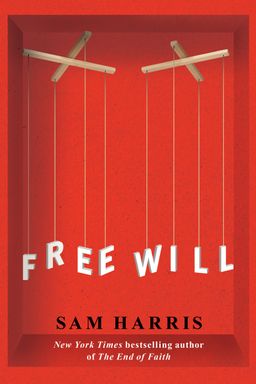
Have you ever looked back on a decision—what you ate, who you dated, why you snapped at someone—and wondered, "Was that really my choice?" In Free Will, neuroscientist and philosopher Sam Harris argues that this everyday sense of choice is an illusion. Despite how it feels, you do not author your thoughts or control your actions in the way you assume. All of your intentions, desires, and decisions—whether noble or cruel—arise from causes over which you have no conscious control. The implications of this insight, Harris argues, stretch far beyond philosophy: they transform how we think about morality, justice, politics, religion, and compassion.
Harris’s argument unfolds from neuroscience and introspection rather than abstract metaphysics. He synthesizes findings from experiments by Benjamin Libet, Itzhak Fried, and others who have shown that unconscious brain activity predicts our actions seconds before we’re aware of deciding them. At the same time, he explores the lived experience of choice, showing through personal examples—choosing coffee over tea, teaching martial arts again after decades—that what feels like control is actually the result of hidden processes bubbling up from the depths of the mind. The consequence, he claims, is unavoidable: free will is an illusion.
Why Free Will Feels Real
You feel free because you can reflect on your thoughts, weigh options, and act in line with your desires. But as Harris explains, this sense of control works like a mirage in the desert—it appears real until you look closely. When you examine the process of decision-making, every thought you have seems to appear in consciousness without your request. You didn’t choose your next idea, your next craving, or your sudden urge to text an old friend; they simply showed up.
To prove this, Harris invites readers into mental experiments: try to think of your next thought before it arises. You can’t. You can only watch as thoughts appear. In that realization, you begin to see what Harris calls the fundamental mistake of human self-perception—we confuse the experience of choice with actual authorship of our actions.
The Neuroscience of No-Choice
Harris grounds his claim in neuroscience. Decades of studies, beginning with Libet’s experiments in the 1980s, reveal something startling: measurable brain activity associated with movement occurs hundreds of milliseconds, even seconds, before people report deciding to move. Later research using fMRI scanning found that experimenters could predict which button a participant would press up to ten seconds before the participant consciously decided. In another study, merely 256 neurons’ activity could reveal the subject’s choice with 80 percent accuracy.
The message is unsettling: your brain has already made up its mind before you know it has. Conscious choice is more like a headline written after the story is printed. The thought “I just decided” is your awareness catching up with what your brain already did.
Moral Earthquakes: When Crimes and Choices Are Not Chosen
Why should this matter? Because free will underpins everything from religious sin to criminal justice. In Harris’s opening story, two men brutally murder a family in Connecticut. Every cell of outrage screams that they chose evil and deserve punishment. Yet Harris argues that if you had their genes, their upbringing, and the same life experiences, you would have done exactly what they did. The difference between you and them, he insists, is not moral heroism—it’s luck.
This idea does not excuse cruelty. Rather, it shifts the moral lens from vengeance to understanding. We can still contain or rehabilitate dangerous people, just as we quarantine viruses. But we no longer have reason to hate them. The illusion of choice has long justified cruelty—the burning of sinners, the gloating over failures. Dispelling it, Harris suggests, may usher in a more compassionate world.
Letting Go Without Losing Control
Skeptics often fear that a world without free will means fatalism—why act if everything is determined? Harris rejects this. Decisions still shape the future; they just arise from causes you didn’t choose. Recognizing this doesn’t paralyze you—it can deepen humility and empathy. If you realize your successes are products of luck and biology rather than divine merit, arrogance fades. If you see others’ failures as misfortune rather than wickedness, compassion expands. Harris insists that moral progress depends on seeing how mechanical—but reformable—the human mind truly is.
A New Kind of Freedom
Paradoxically, understanding the illusion of free will can feel liberating. You don’t choose to be anxious or fearful, but you can observe these patterns and work with them more intelligently. As Harris writes, becoming aware of the causal forces shaping your mind allows you to intervene wisely—to adjust inputs, like environment or habits, even if you didn’t choose the capacities that make intervention possible. The insight that “you are not controlling the storm; you are the storm” replaces blame with clarity.
Throughout this summary, you’ll explore how Harris dismantles classical notions of agency, redefines moral responsibility, reconciles determinism with meaning, and even shows how denying free will can enrich compassion and creativity. His argument challenges centuries of moral and religious thinking—but for Harris, it’s not a nihilistic view. It’s an invitation to a deeper honesty about what it means to be human: conscious, determined, and yet capable of change through understanding.