
Idea 1
Freedom, Markets, and the Price of Coordination
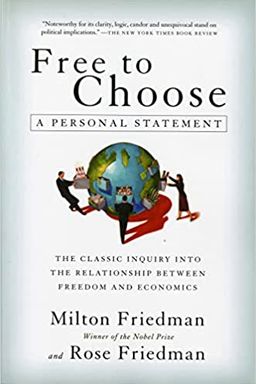
How can millions of individuals, each pursuing their own interests, create a functioning, prosperous society without central direction? Milton Friedman answers this question by showing how free markets and voluntary exchange coordinate human activity through prices, incentives, and information. In Free to Choose, Friedman and Rose Friedman argue that freedom—especially economic freedom—is the foundation of prosperity and political liberty. Markets, when left largely free, channel self-interest into cooperation, while government attempts to command or redistribute often lead to inefficiency, bureaucracy, and loss of freedom.
To understand the argument, you must see how the price system performs three miracles: it communicates information, aligns incentives, and distributes rewards. This system operates far better than any planner’s design precisely because it relies on voluntary cooperation. Prices tell you what goods are scarce, where opportunity lies, and how to allocate effort. This invisible coordination allows pencil makers, wheat farmers, oil refiners, and airplane technicians—none of whom know each other—to work together efficiently.
The price system as communication
Every price you see—gas at the pump, tickets on a flight, or lumber for housing—encodes the balance between consumers’ wants and producers’ costs. In Leonard Read’s parable I, Pencil, thousands around the globe contribute to making a simple writing tool, from Sri Lankan graphite miners to Oregon loggers. No one commands them; prices transmit the minimal information necessary to coordinate all their choices. When a material becomes scarce, its price rises, signaling producers to economize or innovate. This is self-regulating order—not chaos, not coercion.
Incentives and production
Prices also motivate action. You plant corn, not because a bureau dictates it, but because you expect a profit if others value your crop. When oil spikes, automakers shift to fuel-efficient cars; when prices fall, they refocus on other features. The same mechanism drives technological innovation: reward follows responsiveness. Contrast this to price controls, such as U.S. gasoline ceilings in the 1970s, which produced empty pumps and bureaucratic rationing. Restrict the signal, and shortages emerge wherever official prices diverge from reality.
Distribution and trade-offs
Prices also determine who earns what—wages, rents, profits. Friedman emphasizes that efforts to separate price information from income distribution are futile. You cannot freeze wages without undermining incentives, nor fix rents without reducing housing supply. The attempt to hold outcomes equal through controls or redistribution, he warns, often backfires by dulling initiative and trapping people in dependency.
Freedom and voluntary cooperation
For Friedman, economic freedom is both a practical tool and a moral value. Voluntary exchange—when both sides expect to benefit—creates mutual gain and binds society without coercion. The role of government, therefore, should be limited: to set the rules of the game, enforce contracts, and protect against force or fraud. Whenever it goes beyond that—by planning, fixing prices, or nationalizing industries—it substitutes command for consent and diminishes liberty.
The book’s structure and promise
Friedman extends this logic to every policy domain. He argues that markets outperform central planning (shown by Soviet inefficiency and Hong Kong’s dynamism); that free trade enriches whole nations; that inflation stems from government’s mismanagement of money; that welfare and schooling should empower individuals, not bureaucracies; that regulation often protects incumbents rather than consumers; and that the preservation of freedom demands constitutional checks on political power. Each chapter tests one variant of the same idea: decentralized markets tend to self-correct, while government interventions distort incentives and erode responsibility.
Core message
Prosperity and freedom arise when governments trust people to make their own choices. The real challenge is moral courage—to let markets work, accept uneven outcomes, and rely on persuasion, not compulsion, to build better lives.
The rest of the book demonstrates how this principle operates in money, trade, education, welfare, and governance. You will see that freedom is not only efficient but necessary for dignity, innovation, and the ability to learn from mistakes. Prices, incentives, and voluntary choice form the infrastructure of a free society—and safeguarding that system, Friedman insists, is the highest form of public responsibility.