
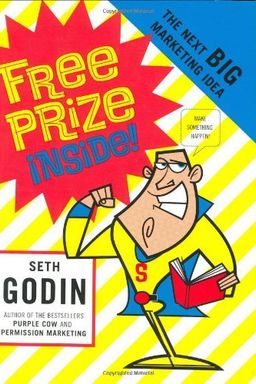
Free Prize Inside cover

Free Prize Inside

by Seth Godin

Free Prize Inside reveals how small, clever innovations can transform your product into a must-have item. Seth Godin shows how to bypass traditional advertising and create buzz through unique, desirable features that captivate your audience and boost sales.

The Power of the Free Prize

Have you ever wondered why some products instantly capture your imagination and others fade into the background? Seth Godin’s Free Prize Inside! asks that simple, frustrating question: why do certain ideas stick—and why do others drown in the sea of sameness? Godin’s answer is clear and provocative. In a world where big advertising and massive R&D bets no longer guarantee success, organizations must instead learn to create “free prizes”—small, remarkable innovations that give people something extra to love, talk about, and buy.

Godin contends that all marketing is now built into the product itself. Advertising can no longer buy attention, and giant technological breakthroughs are often too risky and expensive to yield sustainable profits. Instead, the true opportunity lies in soft innovations—those clever, inexpensive flourishes that make an ordinary offering remarkable. These innovations aren’t just gimmicks; they become the reason customers buy and talk about you. Think of Bose stereo systems in Lincoln-Mercury cars, the Apple iPod’s sensual design, or even the talking tiger on a cereal box. That little extra feature transforms a product into something worth remarking on—a Purple Cow in a field of plain brown ones.

The Changing Rules of Marketing

Godin begins with the collapse of the old rules—the “TV-industrial complex.” Once upon a time, big brands like Red Lobster or Mr. Bubble could spend millions interrupting consumers with clever ads and expect to double their investment in profit. Today, the flood of information, choice, and noise makes that obsolete. You can’t buy attention anymore. As Amazon discovered when it replaced its massive advertising budget with free shipping, it’s often better to invest in the product itself. Marketing, Godin says, now is the process of making something people choose to talk about.

Soft innovations—what Godin calls Free Prizes—may seem trivial at first, but their impact can be huge. They address desires consumers often don’t articulate: fun, status, delight, or convenience, rather than technical superiority. The cereal prize or the Bose stereo was never strictly about utility. It was about enchantment. In the modern economy, those extras are the only sustainable competitive advantage.

Why Small Ideas Beat Big Bets

Godin introduces the “Godin Curve,” a model that compares investments in advertising and technology to the returns they generate. The further you go to the right—spending hundreds of millions on R&D or mass media—the higher the risk and the smaller the reward relative to cost. Somewhere in the middle, however, is a sweet spot: cheap, creative insight that yields substantial return. That’s the free-prize zone. It’s the space where you and your team can build remarkable innovations without betting the company. You don’t need a billion-dollar satellite network (like Iridium, which went bankrupt); you need a lozenge for sore throats after surgery or a clever checklist that saves lives, like Dr. Peter Pronovost’s simple ICU innovation.

This approach democratizes innovation. Anyone—from a nurse to a barista to a middle manager—can generate value if they view their work through the lens of solving peripheral problems. The free prize doesn’t replace the product; it enhances it. Every organization can cultivate its own Rita’s Candy Shop—a small Canadian store worth talking about because of its nostalgic candy and one-of-a-kind experience.

Why We Resist Change

If creating a free prize is so easy, why doesn’t everyone do it? Godin explores the psychological and organizational barriers to soft innovation. Most people, trained under the industrial mindset of Henry Ford, are rewarded for obedience and productivity, not creativity. We learned in school to sit in rows, follow instructions, and avoid risk. That mindset persists in corporate life, where “playing it safe” feels responsible. Yet, as Godin argues, following instructions today is the surest path to failure. White-collar workers, frightened of replacement, sabotage innovation by wrecking the punch press—the very system they depend on—because change feels dangerous. Overcoming this fear means embracing your role as a champion within the organization.

The champion—the central hero of the book—is the person who makes something happen. Champions navigate bureaucracy, sell ideas, and persist through resistance. Innovation doesn’t come from departments or institutions; it comes from individuals willing to champion change. Without a champion, even the best idea dies.

From Brainstorming to Edgecraft

Finally, Godin introduces Edgecraft, a practical substitute for brainstorming. Rather than tossing random ideas, Edgecraft means identifying an existing product’s edge—its distinctive element—and going all the way there. Don’t be “slightly better” than average. Be extreme. The fastest, the slowest, the smallest, the most beautiful, or the weirdest version of your product is the one that gets noticed. Going halfway never works. That’s why the Swatch was remarkable, while generic watches stayed invisible.

Godin’s book ultimately invites you to see marketing, innovation, and creativity as personal and accessible. You don’t need genius, luck, or corporate power—you need initiative and insight. Define your soft innovation. Champion it. Go to the edge. Whether you’re in a hospital ward, supermarket, or classroom, the principle is the same: it’s all marketing now, and the organizations that win will be those that create things worth talking about.


Soft Innovation and the Free Prize

When Seth Godin talks about “soft innovation,” he’s describing a quiet revolution in how ideas are born and spread. Unlike big R&D projects, soft innovations don’t rely on cutting-edge science or massive investment. They’re human-centered, inexpensive, and often delightfully small. They’re the throat lozenge after surgery, the squeeze-tube yogurt for kids, or the checklist that saves lives. Anyone can do them. The magic lies in their ability to turn an ordinary product into something remarkable—something people talk about and choose gladly.

Soft Innovation vs. Hard Innovation

Traditional innovation depends on science, patents, and risk. Think of Dean Kamen’s Segway—an immensely creative machine that cost $80 million to develop. It was revolutionary, but it also required massive funding, new infrastructure, and global hype. This kind of big innovation is risky and rare. Soft innovation, in contrast, changes a peripheral part of the product—design, usability, or experience—to create emotional appeal. It’s cheaper, faster, and far more likely to succeed. Three Dog Bakery, which simply sold dog treats that looked like gourmet pastries for humans, turned that soft twist into a worldwide phenomenon.

The Free Prize Defined

A Free Prize is the result of soft innovation that catches on. It’s not what your customer needs—it’s what they love. A free prize satisfies desires, not necessities: novelty, fun, beauty, convenience, prestige. Dyson designed a vacuum whose clear chamber let you see dirt being sucked away. That’s not function—it’s theater. It’s the same principle that sells Swatch watches to collectors or power bars to athletes. The free prize becomes the reason people talk about you. When a company finds it, its product transforms from ordinary to extraordinary at minimal cost and maximal return.

Examples of Free Prizes

Godin gives many examples of businesses that won big by finding their free prize:

  • Dr. Pronovost’s checklist—a simple list of surgical steps that halved ICU stay times and saved lives.
  • Rita’s Candy Shoppe—personalized nostalgia and flavors unavailable elsewhere that make buying candy an experience, not a transaction.
  • Chef Boyardee’s dinosaur-shaped pasta—a playful twist worth talking about (even if they had to fix the number of T. rex claws).
  • CD Baby—musicians loved founder Derek Sivers’s humor and artist-friendly platform more than his technology.

Every example proves a simple principle: the free prize creates a second reason to buy and a first reason to talk.

The Half-Life of a Free Prize

Godin warns that no free prize lasts forever. Krispy Kreme’s doughnuts were remarkable until they weren’t—their guest counts dropped by 20 percent in one year. This means you must continually create new free prizes. The goal isn’t a single innovation, but a habit of innovation. You can’t rely on the same gimmick twice because what delighted consumers today becomes commonplace tomorrow. By learning to spot and champion soft innovations continually, you build sustainable creativity.

Making Soft Innovation a Way of Life

Ultimately, Godin argues that creating soft innovations doesn’t just make you money; it makes you human. It fulfills the need to do work that matters. When teams collaborate to create something useful, beautiful, and distinctive, people reach their highest potential. Innovation becomes not a department’s job but a daily practice of generosity—of making life better, easier, or happier for others. The free prize isn’t just free for customers; it’s freeing for creators.


The Champion’s Role

Seth Godin insists that innovation isn’t an accident or a departmental program—it’s an act of personal courage. The champion is the person who makes the idea happen. Instead of waiting for R&D or management approval, champions lead from anywhere in the organization. They don’t need permission; they need persistence. Without a champion, even the best soft innovation remains a daydream.

Why Good Ideas Fail

Most innovations fail not because the idea is bad, but because the organization lacks someone to sell it internally. Godin shows this through the story of James Dyson, whose vacuum was rejected by every major company before he built it himself. The problem wasn’t his idea—it was that he lacked a champion within those firms willing to fight inertia. Organizations crave stability. Satisfied customers and risk-averse managers prefer the status quo, making new ideas feel threatening. The key, then, is to learn not only how to invent but also how to sell your idea.

The Fulcrum of Innovation

Godin introduces the Fulcrum of Innovation, a model explaining how ideas gain leverage within organizations. To succeed, the champion must persuade others on three points:

  • That the idea is likely to work (certainty, even if unfounded, builds confidence).
  • That it is worth doing—in other words, it solves a meaningful problem or yields benefits for the team.
  • That you are able to handle it—your reputation matches the scale of your proposal.

When these three beliefs intersect, you gain organizational leverage. That’s your fulcrum. With it, small efforts yield large results.

Selling Ideas from the Inside

Godin devotes a large section of the book to tactics for internal selling. He encourages innovators to ask obligating questions (“If we solved this problem, would you support the project?”), to build prototypes (real or visual), and to invite others to “pee on” the idea—meaning, endorse and modify it so they emotionally own it. Championing isn’t about solo heroics; it’s about enrolling allies. Joe Perrone’s FedEx innovation—adding drop slots to delivery trucks—succeeded because he navigated each department’s concerns until there was no resistance left. He didn’t argue; he collaborated.

Think Like an Artist

Godin cites Art and Fear by Bayles and Orland to teach champions artistic resilience. Innovators must: never quit, share their ideas (secrecy kills them), avoid perfectionism, and commit to the process, not shortcuts. The artistic mindset helps champions stay true to their vision, defending it against mediocrity while staying open to improvement. Real champions hold onto their ideas through turbulence, understanding that innovation is a journey, not a single flash of brilliance.

Becoming Indispensable

Once you learn to champion projects, Godin argues, you become a journeyman of creativity—a self-contained force organizations will always need. You’ll never fear being replaced, because what companies crave most are people who make things happen. It’s not management, nor even invention, that changes things—it’s championship. The courage to take responsibility and say, “I’ll make this happen,” is the rarest skill in business, and the one that guarantees lasting relevance.


Edgecraft: Finding Remarkable Ideas

Forget brainstorming. Godin replaces it with Edgecraft, a disciplined process for generating remarkable ideas. Edgecraft means finding the edge of what already exists—those boundary points where difference suddenly becomes interesting—and then going all the way there. If brainstorming invites randomness, Edgecraft insists on intention: identify what people already find intriguing, push it to the extreme, and make it real.

Going to the Edge

You only win, Godin says, when you go all the way to the edge. Halfway doesn’t count. A restaurant with "somewhat attractive" waitstaff isn’t remarkable; one staffed entirely by supermodels is. Edges are where interest lives. The center is invisible. By pushing your product or service toward an extreme—whether beauty, speed, simplicity, sensuality, or weirdness—you create something worth noticing. Apple’s iMac wasn’t just a little prettier than its competitors; it was translucent blue. Swatch didn’t make slightly more stylish watches; it made them collectible.

Categories of Edges

Godin lists dozens of edges worth exploring:

  • Edges that create conversation (user networks, events, visibility).
  • Edges that confound expectations (a visible product made invisible, or absurdly long experiences).
  • Edges that satisfy emotional needs (speed, sensuality, safety, exclusivity).
  • Edges that change structure (new channels, formats, or times).

Every edge transforms a dull market into something alive with curiosity and talk.

Extreme Beats Average

Edgecraft rejects incremental improvement. Average products only attract average attention. “Moving a little is expensive and useless,” Godin writes. “Moving a lot is cheaper in the long run and loaded with wonderful possibilities.” Continental Airlines’ claim to have the “youngest fleet” is meaningless to travelers because it’s not dramatic. Trader Joe’s, by contrast, went to the edge by curating everything—turning grocery shopping into treasure hunting.

How to Practice Edgecraft

To apply edgecraft, start with unrelated industries and find their edges—what makes them remarkable. Then, adapt that edge to your field. If T-shirt companies sell emotion through imprinted messages, maybe your office-supply brand could sell pushpins engraved with witty phrases. The goal isn’t to copy tactics but to replicate the psychological edge: surprise, delight, pride, or humor. Experiment with extremes in convenience (Netflix’s no-late-fee model), visibility (Evian’s celebrity water trend), or interactivity (Amazon’s constantly changing best-seller list).

Edges in Action

Examples abound. Commerce Bank turned the boring routine of banking into an experience by offering seven-day branches and friendly tellers. Peace Frogs sold mostly out of VW vans in malls, turning retail into theater. FedEx innovated by cutting slots in trucks to collect customer envelopes—a literal free prize. Each time, the company shifted perception, creating remarkability without technical breakthroughs. The same approach revolutionized hospitals, toy stores, and even charity organizations like the March of Dimes.

The Edge as a Lifestyle

Edgecraft, Godin suggests, isn’t just a technique—it’s a way of seeing. The edges keep changing as markets evolve, so you must keep pushing forward. When you stop reaching for the edge, you become boring again. The practice of edgecraft transforms creativity from an occasional burst into a disciplined habit of remarkability. Ultimately, it’s not about being different; it’s about being worth talking about.


Why Obedience Kills Creativity

In one of his most provocative sections, Seth Godin traces our collective fear of innovation back to Henry Ford. Ford’s assembly line didn’t just produce cars; it produced a culture of obedience. Workers were paid for following instructions, not for thinking differently. That legacy permeates modern organizations, convincing employees that playing it safe keeps you employed. Godin dismantles this myth and shows why obedience is now the fastest route to extinction.

The Ford Paradox

Ford’s innovation—paying workers based on productivity—created incredible efficiency and wealth. But it also taught generations that high pay comes from compliance, not creativity. Employees traded autonomy for stability. That logic makes sense on an assembly line but fails in the white-collar world, where productivity comes from invention and initiative. Today’s knowledge workers have freedom to think but are paralyzed by fear of replacement. They ask for instructions instead of writing them. The result? Organizations wreck themselves by resisting the very creativity they depend on.

White-Collar Fear and Sabotage

Godin argues that most office workers intentionally sabotage innovation by clinging to obedience. Instead of wrecking machinery, they wreck processes—stalling mergers, delaying progress, or rejecting new projects. In the industrial age, this kind of behavior would have gotten you fired; today, it’s considered “caution.” But every time we fight change, we destroy the factory we work in. Managers must call this behavior out and encourage risk-taking as a form of professionalism, not rebellion.

The Myth of Security

Ford’s productivity model created a dangerous illusion that steady jobs are secure. In reality, automation and outsourcing eliminate safe, obedient positions faster than ever. The only reliable job, Godin argues, is the one held by thinkers—the people who make something happen, solve problems creatively, and champion innovations. Stability no longer comes from predictability; it comes from relevance. The more valuable your ideas, the safer your career.

Turning Fear into Fuel

For individuals and leaders alike, Godin’s advice is to stop equating fear with caution. Fear signals opportunity. Courageous companies like General Mills (with its Go-GURT packaging) or entrepreneurs like Rita Robinson (with her candy shop) succeeded precisely because they confronted fear and stretched to the edges. The safest place is now the center of the curve—the free-prize zone—where smart risk yields big return. The harder you try to play it safe, the more you guarantee failure. The workplace isn’t a factory anymore; it’s a studio, and only artists thrive there.


Creating a Culture of Remarkability

Even one champion can spark innovation, but Seth Godin asks a bigger question: how do you make remarkability systemic? The answer lies in building cultures that reward risk, curiosity, and creativity rather than obedience. Remarkable organizations aren’t ruled by fear or committees—they’re inspired by design, empathy, and human connection.

Why Most Companies Stay Stuck

Large firms often get trapped by what Jay Gouliard of General Mills calls the “Gouliard Paradox.” Because they’ve optimized production for efficiency, any innovation initially looks expensive and risky. Organizations confuse short-term cost with long-term risk, rejecting ideas that could make them relevant tomorrow. Gouliard instead rewards champions who push packaging innovation, knowing consumers pay extra for free prizes like Nouriche’s cup-holder yogurt. Once the mindset shifts, change becomes safe—and profitable.

Turn Managers into Champions

Godin urges leaders to stop waiting for genius CEOs and instead cultivate internal champions. Geoffrey Hunt at Sylvania proved this by licensing consumer electronics manufacturing to other firms, turning a fading division into a billion-dollar business. Champions like Hunt understand how to build fulcrums of success: selling both the logic and emotion of an idea until others want to believe. Innovation spreads when individuals inside the system learn the craft of championing, not when executives issue memos.

Designing for Innovation

Creativity isn’t chaos—it’s design. Godin highlights Marcia Hart, an architect who restructures organizations the way she designs buildings: by reshaping communication patterns, eliminating unnecessary layers, and creating flow. When innovation is built into structure, it doesn’t fight the system; it becomes the system. From Apple’s design-driven culture to Starbucks’s emotional consistency, great companies make creativity an everyday habit, not an extracurricular effort.

The Future of Innovation

The final message is simple but profound: the future belongs to organizations that act like marketers at every level. Every employee, department, and process must exist to spread an idea worth sharing. The free prize isn’t just a gimmick; it’s a mindset. By building cultures of remarkability, teams stop asking “what can we sell?” and start asking “what’s worth talking about?” That shift transforms work from routine to remarkable—from boredom into creativity.

Dig Deeper

Get personalized prompts to apply these lessons to your life and deepen your understanding.

Go Deeper

Get the Full Experience

Download Insight Books for AI-powered reflections, quizzes, and more.