
Idea 1
Freedom, Creativity, and Control in the Digital Age
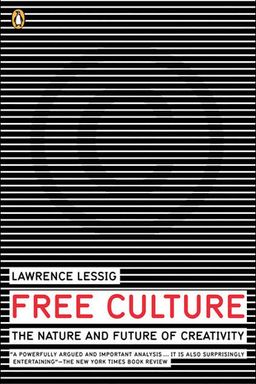
What happens when creativity itself requires permission? In Free Culture, Lawrence Lessig argues that we are living through a profound transformation: a shift from a free culture, where individuals could freely build upon prior art, to a permission culture, where every act of creation demands approval from powerful intermediaries. His central warning is that law, technology, and corporate concentration are converging to lock down the creative commons that once fueled innovation, learning, and democracy.
A tradition of freedom
Lessig defines a free culture not as lawless or anarchic but as one that balances property with freedom. Walt Disney could remix the Brothers Grimm and Buster Keaton because the cultural and legal environment allowed it. In this world, creativity builds upon shared materials. You can see modern analogues in Japan’s doujinshi manga scene, where amateur artists transform popular characters into new art within a culture that values participation more than permission. These ecosystems thrive precisely because they leave space for informal appropriation, remix, and learning by doing.
The rise of permission culture
Contrast that with today’s environment. The balance has tipped toward a permission culture—a world where every reuse, sample, or remix is legally risky. Digital technologies, from DRM to content ID systems, now make it possible to regulate every copy. The Digital Millennium Copyright Act (DMCA) transformed technical limits into legal mandates, making it illegal even to circumvent restrictions for valid fair uses. Teachers who want to show short film clips, musicians who sample beats, or critics who quote scenes all face the question: who must I ask, and what will it cost?
Innovation and industry capture
Lessig traces how entrenched industries exploit legal and political power to preserve outdated models. Radio pioneer Edwin Armstrong’s FM invention was suppressed by RCA through regulatory manipulation and litigation. Similar dynamics replayed when MP3.com, Napster, and other innovators faced ruinous lawsuits that frightened investors out of the music startup scene. Law becomes a competitive tool for incumbents, not a neutral arbiter of progress. The consequence is a chilling effect on entrepreneurs and technologists who might otherwise build new creative infrastructures.
When law turns citizens into criminals
File-sharing illustrates this crisis vividly. Tens of millions of people used Napster or Kazaa for many reasons: discovery, access to out-of-print works, or sharing authorized content. Yet enforcement treated all users as pirates, with statutory penalties up to $150,000 per infringement. This disparity between lived behavior and legal risk corrodes respect for law itself. As attorney Fred von Lohmann warned, when 40 to 60 million Americans can be classed as lawbreakers, civil liberties and privacy protections inevitably erode.
The constitutional stakes
Lessig’s legal argument returns to a founding principle: the U.S. Constitution’s Progress Clause authorizes exclusive rights only “for limited times” to promote progress. Yet successive term extensions—culminating in the Sonny Bono Copyright Term Extension Act—have effectively removed the horizon of the public domain. In the Eldred v. Ashcroft case, Eric Eldred challenged this drift, arguing that retroactive term extensions violated the constitutional bargain. Though the Supreme Court upheld the law, the case exposed how “limited times” has been stretched nearly to perpetuity, threatening cultural memory and scholarship.
Technology as law, and law as code
In the digital era, code itself regulates behavior. Software dictates what you can copy, print, or share—often more strictly than law would. Adobe’s eBook Reader even disabled copying and spoken reading for public-domain works like Alice in Wonderland, proving that technology can erase freedoms without legislative debate. When law, via the DMCA, then forbids circumventing such code, even for fair use, you get a system where freedom is not negotiated—it is precluded.
What’s at stake for democracy
Lessig ultimately links this contraction of freedom to threats against democracy itself. When media ownership consolidates—five firms controlling most music, movie, and news production—and when law enforces their control, cultural diversity diminishes. Fewer voices can participate in public dialogue. A permission culture is not just bad for artists; it is bad for citizens. The remedy, he suggests, combines political reform, grassroots licensing experiments like Creative Commons, and renewed attention to legal formalities that keep the public domain alive. By restoring the space to tinker, share, and build, societies can recover the innovation and pluralism that make culture thrive.