
Idea 1
The Power and Paradox of Free
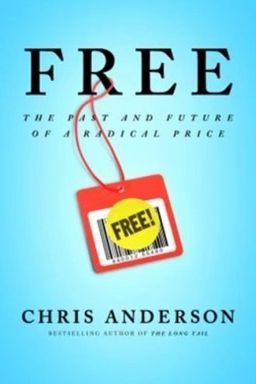
Why does the word “free” still make us stop, smile, and act before we even think? In Free: The Future of a Radical Price, Chris Anderson argues that the shift from atoms to bits—from physical goods to digital ones—has turned “free” from a marketing gimmick into an economic force. He contends that an age of near-zero costs is creating not just new industries but new ways of thinking. Understanding “free” isn’t about what you pay; it’s about how the world creates, measures, and trades value when money often no longer changes hands.
From Gimmick to Economic Principle
For most of human history, “free” was viewed with suspicion. There’s no such thing as a free lunch, right? Up through the twentieth century, free was a tactic—the free gift inside cereal boxes, free samples at grocery stores, or razors given away to sell blades. These were ways of nudging demand. Anderson begins with stories like Jell-O’s ingenious free cookbook campaign and King Gillette’s razor model to show that giving something away could build entire markets. But now, technology has changed the equation. Once the cost of distribution and reproduction fell toward zero—thanks to digital platforms, the internet, and Moore’s Law’s relentless march—free became not just feasible but inevitable.
Anderson calls this the rise of the bits economy, contrasted with the “atoms economy” of physical goods. In the atoms world, scarcity rules: every item costs something to reproduce. In the bits economy, abundance rules: once created, a digital copy costs almost nothing. The result? Free is no longer deceptive—it’s a natural consequence of cost curves collapsing. Moore’s Law doesn’t just double processing power; it halves the cost of storage, bandwidth, and computation every year. In digital spaces, zero becomes both a technical and economic reality.
The Examples that Changed Everything
Anderson’s prologue drives the point home through vivid real-world examples. When Monty Python found their comedy sketches pirated across YouTube, they tried an experiment: uploading high-quality versions themselves and giving them away for free, while inviting viewers to “click and buy” the official DVDs. Within three months, sales rose 23,000%. Free didn’t destroy value—it created it. Similarly, Google offers Gmail, Docs, and Maps gratis, yet earns billions because users’ attention fuels advertising. Linux powers much of the world’s tech infrastructure while remaining open source. The catch: free doesn’t mean profitless—it simply redefines how profit is made.
These examples illustrate Anderson’s paradox of free: “People are making lots of money by charging nothing.” As he puts it, you don’t make money from everything, but from enough of what surrounds the free. The web has created an economy as large as a small country built around $0.00 pricing. Anderson’s thesis follows his earlier book, The Long Tail, which explored how unlimited shelf space made niche products viable online. Free investigates another dimension—what happens when the cost of that infinite shelf space itself disappears.
The Psychology and Economics of Zero
Humans respond irrationally to zero. Anderson builds on behavioral economist Dan Ariely’s experiments: when chocolates dropped from one cent to free, people flipped their preferences instantly. “Zero is an emotional hot button,” Ariely said—it removes risk and triggers excitement. The author extends this to markets: between something and nothing, the difference isn’t one cent—it’s a chasm. This “penny gap” explains why Google thrives while micropayments fail. The mental transaction cost of deciding if something is “worth it” disappears when the price is zero, multiplying participation exponentially.
Free as a Catalyst of Creativity and Culture
But “free” isn’t merely economic—it’s cultural. With abundance comes democratization. Wikipedia, open source software, blogs, and the social web show that altruism, reputation, and community can drive production as powerfully as money. Anderson connects these trends to Adam Smith’s “enlightened self-interest”: people contribute freely because it benefits their identity or community. Free encourages experimentation, sharing, and innovation. In a deflationary digital world, the most successful companies learn to monetize around free: selling scarcity (status, premium versions, time saved, or customization) rather than fighting abundance.
Why Understanding “Free” Matters
The core argument of Free is that businesses must stop resisting zero and start managing abundance. Companies that cling to twentieth-century definitions of cost and competition will be left behind, while those that embrace “freemium” models, indirect monetization, and cross-subsidies will thrive. As Anderson concludes, free isn’t new—but digital technology has transformed it from marketing trick to operating principle. Understanding how to profit when prices collapse may be the essential skill for survival in the twenty-first century economy. The question isn’t whether free works; it’s whether you know how to use it.