
Idea 1
The Hidden Rules That Drive Human Behavior
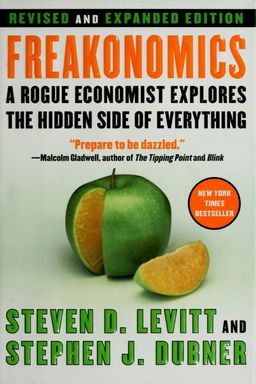
Why do people cheat, kill, or donate bagels? Why does crime fall when it shouldn’t, or honesty thrive where no one’s watching? In Freakonomics, Steven Levitt and Stephen Dubner reveal that the world runs on incentives and information far more than on morality or intuition. They argue that human behavior follows hidden economic rules—if you know where to look and how to measure them.
Rather than chasing abstract theory, Levitt acts as a detective economist. He hunts real-world data—test scores, police records, gang ledgers, birth certificates, and bagel payments—to uncover how incentives, asymmetries, and social signals shape everyday life. Along the way, the book demolishes conventional wisdom about crime, parenting, corruption, and choice.
Incentives as the engine of behavior
Levitt’s foundation is simple but radical: incentives rule. Whether economic (cash and fines), social (prestige and shame), or moral (guilt and fairness), incentives dictate what people actually do, not just what they say. The Israeli day-care experiment captures it perfectly: when a small late-pickup fine reframed lateness as a purchasable option, tardiness doubled. Once guilt became a price, parents paid it gladly. The book is filled with similar examples—from teachers altering answer sheets to sumo wrestlers fixing matches—showing how small rules can produce massive, unintended shifts in behavior.
Whenever you examine an outcome, Levitt urges you to ask three questions: Who benefits? What are they responding to? How is the system designed? Usually, the culprit isn’t human depravity—it’s poor incentives and opaque information.
Information asymmetries and the power of sunlight
Information is leverage; those who possess it hold power. Real-estate agents, funeral directors, and doctors all use superior information to nudge clients toward decisions that serve their own payoffs. Levitt’s study of Chicago realtors found they sold their own homes for 3% more than their clients’—a telling example of how privately held knowledge and commission incentives combine to shape outcomes. But information monopolies can crumble under sunlight. When Stetson Kennedy leaked Ku Klux Klan passwords to the Adventures of Superman radio show, ridicule and exposure destroyed the Klan’s mystique. Likewise, when Quotesmith.com revealed life-insurance rates online, prices dropped $1 billion a year. Transparency redistributes power.
Data as a truth machine
Levitt demonstrates that good data, even from unlikely places, can expose misbehavior and reveal truth. In Chicago, years of multiple-choice answer sheets allowed him and Brian Jacob to detect teacher cheating through improbable answer patterns. In Japan, match records uncovered sumo collusion. Paul Feldman’s bagel business—an honor-based office drop-off—became a laboratory for studying white-collar honesty. In each case, Levitt treats data as a lie detector: every anomaly tells a story about motive and constraint.
This empirical detective work depends on natural experiments—moments when life or policy creates near-random variation. Differences between states that legalized abortion earlier, or lotteries assigning students to schools, provide leverage to infer cause from correlation. Levitt’s genius lies in seeing experiments where others see noise.
Challenging intuition, revealing the hidden side
Throughout the book, Levitt insists that data should trump folklore. Politicians blamed the 1990s crime drop on tougher policing or booming economies, but his abortion analysis showed a deeper demographic mechanism. Parents agonized over reading schedules and museum visits, but the Early Childhood Longitudinal Study revealed those habits barely mattered compared to parental education and income. By separating correlation from causation, Levitt shows that what feels moral or obvious is often irrelevant when tested against the numbers.
What this means for you
You can apply the Freakonomics mindset anywhere: identify incentives, expose hidden data, and challenge popular stories with measurable evidence. When you do, you’ll see that drug dealers act like entrepreneurs, teachers cheat like economists, and names signal class more than they shape destiny. The book ultimately teaches a scientific version of skepticism—one focused less on grand theory and more on careful measurement and human motives.
Core insight
The world’s most puzzling human behaviors make sense once you uncover incentives and information. What seems irrational often isn’t—it’s hidden logic disguised by bad data or moral noise.
(Parenthetical note: Other behavioral economists like Dan Ariely and Richard Thaler also explore human irrationality, but Levitt’s contribution lies in his forensic, data-driven detective work. His freakonomics is less about psychology and more about peeling back social myths to reveal the economic wiring beneath.)