
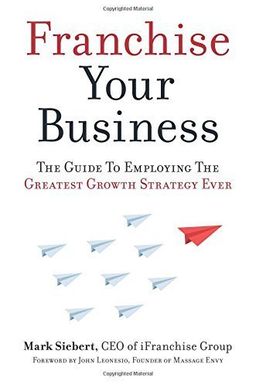
Franchise Your Business cover

Franchise Your Business

by Mark Siebert

Franchise Your Business unveils the secrets to successful franchising, guiding you through establishing strong franchisee relationships, maintaining brand standards, and expanding with minimal capital. It''s an essential toolkit for entrepreneurs ready to scale their business.

The Strategic Power and Structure of Franchising

How do you grow faster than your capital or manpower should allow? The central claim of this book is that franchising—when done legally and strategically—lets you scale by leveraging other people’s money, effort, and ambition, while retaining control of your brand. But the core challenge is balance: between compliance and creativity, control and trust, profit and partnership.

The book combines legal precision, financial modeling, and human psychology to map the full lifecycle of franchising—from deciding whether your concept can be cloned, to building systems, training people, recruiting franchisees, and managing long-term relationships. The journey it charts is both legal (governed by U.S. federal and state rules) and emotional (driven by the founder’s goals, temperament, and trust-building ability).

Franchising as a Growth Model

Franchising lets you expand with other people’s capital and labor. You grant franchisees the right to use your brand and system in exchange for fees and royalties. The trade: faster expansion and lower capital risk, but less per-unit profit and loss of direct control. The book highlights the tension between speed and control as the defining feature of the model.

You shift from being an operator to a coach. Your success depends on a network of independent owners whose motivation and performance affect you directly. Sterling Optical, for example, saw a 32% jump in sales when it converted managers into franchisees—showing how ownership can outperform employment. But this same independence means you can’t simply fire underperformers; you must manage through contracts, dialogue, and support systems.

The Legal Framework and Thin Line of Definition

Under the FTC’s “three-part test,” a relationship becomes a franchise if: 1) a common trademark is used, 2) you provide significant operating control or assistance, and 3) the franchisee pays at least $500 within six months. Even small arrangements that meet these criteria legally trigger franchise compliance. Cases like To-Am Equip. v. Mitsubishi Caterpillar show how minor supplier fees can unintentionally create franchise liability.

Complying means preparing a Franchise Disclosure Document (FDD)—a 23-item report detailing fees, territories, required suppliers, financials, and contracts. States vary widely: some require registration or waiting periods; others regulate advertising. The takeaway is clear—if others use your system and pay for that privilege, you are almost certainly a franchisor in the eyes of the law.

Before You Leap: Is It Right for You?

Franchising is not for everyone. The book insists that your decision must match your personal goals, capital, and disposition. If you crave total control, the model may frustrate you. If you enjoy coaching and can tolerate slower decision-making through others, it may fit perfectly. Using the book’s examples, a founder trying to reach an eight-figure exit must scale through others—while one seeking steady local income may prefer company-owned growth.

A simple scenario comparison clarifies this: one store earning $100K might double through a second company store, but could only reach multi-million valuation through franchising. Thus, choosing the model is not an emotional leap—it’s a calculated response to ambition and resources.

Determining Franchisability

A franchisable business must meet four tests: marketability (does anyone want to buy this?), cloneability (can it be taught and repeated?), profitability (is ROI attractive for franchisees?), and management capability (can headquarters support them?). Case studies like DoodyCalls and Five Guys show how low-cost entry or clear differentiation make systems compelling. Without credible franchisee ROI—roughly 15% in year two or three—growth falters.

The axiom repeated throughout: if franchisees fail, the franchisor will fail. That means testing every assumption—profitability, systems, and support—through pilot operations before scaling widely.

Integrating Compliance, Strategy, and People

This book’s framework integrates three worlds: legal compliance, financial analysis, and human relations. You can’t isolate them. The best systems—McDonald’s, Massage Envy, or Five Guys—excel because they treat franchising as a partnership, not a transaction. They use rigorous disclosure to build legal trust, invest in systems to ensure operational consistency, and sustain marketing to attract growth-minded partners.

Core idea

Franchising is both an expansion model and a relationship business. It is regulated like law, built like engineering, and lived like a marriage. Success requires seeing all three dimensions clearly, not just the one you’re most comfortable in.

Ultimately, this book argues that franchising is the most leveraged growth system in business when—and only when—you align compliance, culture, and capital strategy. If done carelessly, small omissions or bad fits multiply across the network. If done professionally, you build a self-replicating brand that grows far beyond you.


Deciding Whether to Franchise

Before you adopt franchising, you need brutal honesty about your goals, risks, and temperament. The book reframes this as a personal and strategic decision—not just a legal or financial one. Start with where you want to end up, and then engineer your model backward.

Clarify Personal and Financial Goals

Ask: how much do you want to earn or sell for, and in how many years? For example, if you own a single $600K unit that yields $100K profit, owning one more location might double that—but hitting an eight-figure goal in five years requires franchising or external equity. Your model should fit your ambition, not the reverse.

Assess Franchisability and Risk

Next, test your concept’s market demand and repeatability. A “Le Cordon Bleu” business requiring artistry won’t clone well; a process-driven model like DoodyCalls will. The acid test is ROI for franchisees—roughly 15% cash-on-cash return by year two or three. Then evaluate your own risk tolerance: franchising amplifies both upside and downside by scaling your results through others.

Temperament and Control

Franchising means becoming a leader and coach rather than a manager. You must persuade rather than dictate. If that excites you, franchising aligns with your style. If you’re authoritarian, keeping corporate stores may preserve sanity and brand control. McDonald’s hybrid model—maintaining 15% company stores—is cited as a balanced blueprint.

Alternatives and Hybrids

Alternatives like licensing, dealerships, joint ventures, or corporate expansion each have trade-offs. Trademark licensing minimizes control and brand value; dealer models suit manufacturers. Avoid half-measures that skirt legal definitions—such as deferred-fee “non-franchise” arrangements—which courts often reclassify anyway. Your model should follow strategy, not legal gymnastics.

Key takeaway

Don’t decide to franchise because you can’t grow otherwise; franchise because it aligns with your long-term goals, resources, and leadership strengths. The right reason protects you from the worst mistakes of speed, scale, or ego.

When your goals, model, and temperament align, franchising becomes a tool of choice. When they don’t, it becomes a liability. The decision is not simply whether you can franchise—but whether you should.


Franchise Law and Compliance Fundamentals

Legally, franchising is as much regulation as entrepreneurship. The book’s third pillar explains the FTC Rule, state laws, and disclosure mechanics that define your compliance foundation. Ignoring them can turn a promising expansion into a multimillion-dollar liability.

The FTC Rule 436 and its Triggers

A franchise exists if three things are present: use of a common brand, significant control or assistance, and a $500+ fee within six months. Even isolated support, like mandatory suppliers or an operations manual, may satisfy “significant assistance.” The Mitsubishi-To‑Am case illustrates how smaller vendor payments accidentally triggered Illinois franchise law, costing $1.5 million in damages.

The Franchise Disclosure Document (FDD)

Once your relationship qualifies as a franchise, you must deliver a Franchise Disclosure Document that covers 23 items—fees, territory, supply chains, and optionally, earnings (Item 19). You must present it 14 days before signing and provide the final contract at least seven days before closing. Noncompliance invalidates agreements and invites legal exposure.

State Variations and Registration Rules

Around thirty states overlay their own rules—some require registration, others ad approvals or cooling-off periods. Eight historically require ad filing before use, meaning your marketing materials must pass regulator scrutiny before launch in those regions. Location determines law—a major operational variable for national expansion.

Practical Compliance Steps

  • Hire an experienced franchise attorney for FDD preparation and updates.
  • Train every salesperson on disclosure timing and prohibited statements.
  • Record every lead interaction for transparency and defense.
  • Budget for registration, renewals, and audited financials.

Core message

If your partners use your name, follow your system, and pay you, assume franchise status until counsel proves otherwise. Preventing a mistake is cheaper than defending a lawsuit.

Compliance here is not bureaucracy—it’s brand insurance. The top franchises respect how closely law and trust intertwine. Legal precision underwrites credibility, which underwrites growth.


Building Systems and the Franchise Engine

Once you decide to franchise, you move from operator to system builder. The franchisor’s core function is to design, document, and deliver the playbook that makes replication possible. Planning, structure, and quality control shape whether your growth will scale cleanly or chaotically.

Planning from the End

Reverse-engineer goals: start with a desired valuation or income target and calculate how many active franchises and royalties you’ll need to reach it. Then model development pace, staffing, and marketing budgets backward. Growth without a quantified map is gambling, not strategy.

Choosing a Franchise Structure

Structures include single-unit systems (McDonald’s early playbook), conversion franchising, area development rights, or master franchises. Each trades control for speed. Early-stage brands usually benefit from single-unit growth nearby, while mature concepts use multi-area developers or masters for scale.

Fee and Territory Design

Setting fees is science, not guesswork. Benchmark competitors, test ROI models, and manage the royalty rate meticulously—a 1% mismatch compounds over years into lost millions. Similarly, build territories small enough for profitable density but large enough for a sustainable base. Cluster early units within a three-hour radius to maximize validation and field efficiency.

The Sales-Quality Flywheel

Quality drives sales and sales sustain quality. A professional marketing funnel attracts leads; strong franchisees validate the brand; new buyers follow proven results. Racing ahead without training and support breaks the cycle—amplifying errors instead of excellence.

Four Pillars of Operational Quality

Rigorous franchisee selection, documented systems, continuous training/support, and watertight legal documentation form the core of sustainable scaling. Each reinforces the other like steel beams in a structure.

Planning and process separate aspirational franchisors from enduring ones. When you treat every manual, metric, and territory as part of the brand’s architecture, your organization becomes not just bigger—but stronger.


Creating Exceptional Training Systems

Training is the franchise’s nervous system—it transmits knowledge, consistency, and confidence. The book frames training as the ultimate proof of system replicability: can you hand someone the keys and leave them running well for a month? If yes, your training works.

Train the Trainer

Effective programs don’t just teach franchisees to operate; they teach them to train employees. Create modules that prepare each franchisee to hire, instruct, and evaluate staff with fidelity to your system. Companies like iFranchise Group emphasize that training the trainer turns independent units into system multipliers.

Structure and Materials

Divide training into pre-opening (site selection, leasing, pre-launch operations), on-site opening week support, and post-opening refreshers. Use clear, photo-rich manuals and video aids for each frontline role. Keep these readable and practical for high-turnover environments.

Measurement and Legal Awareness

Test competence before opening; remediate underperformance fast. Measure average training completion time and correlate those metrics with unit profitability. Also watch training boundaries to avoid “co-employment” risks under NLRB guidance—support without direct control of franchisee staff.

Mental Model

Use the “keys to the shop” test: if you could give a new franchisee your keys and disappear for a month, would the operation hold up? Design training until the honest answer is yes.

Training signals credibility to prospects, stability to partners, and scalability to investors. In franchising, your system is only as strong as your worst-trained operator—so invest early and deeply in getting it right.


Marketing, Lead Generation, and PVF Thinking

Marketing a franchise brand is radically different from marketing its consumer product. You’re selling a business opportunity, not a burger or haircut. The core framework introduced is the Present Value of a Franchise (PVF)—the total lifetime revenue of one franchisee to you as franchisor.

Why PVF Matters

Thinking in PVF justifies professional marketing investment. If one franchise yields hundreds of thousands in lifetime royalties, you can rationally spend tens of thousands to acquire the right candidate. Brands that underinvest here, chasing cheap leads, burn cash on mismatches instead of scaling profits.

The Four Sales You Must Make

Franchise sales require four separate “sales”: convincing someone to become a business owner, to join your industry, to pick franchising over independence, and to choose you over competing systems. Each stage speaks to logic and emotion—financial freedom, control, trust, and identity.

Lead Generation and Budgeting

Start by defining desired sales, then multiply by cost per sale (~$8K average). Spread spending over a 12–14 week funnel. Track every stage: cost per lead, cost per application, cost per sale. Early clustering remains critical; it reduces travel costs, supports visibility, and strengthens franchisee validation.

Executing the Media Mix

Prioritize controllable, measurable channels—PPC advertising, SEO, PR, and video content. Invest in a high-conversion website with gated media (like teaser videos) to capture contacts. Brokers and portals add qualified volume but require strong follow-up discipline (“seven contacts in seven days”) to convert.

Action Principle

Spend—and measure—with PVF in mind. The value of one good franchise relationship runs through a decade or more; market with the long game at heart.

Franchise marketing’s art is consistency. You’re not selling scarcity or hype; you’re selling partnership and predictability. The numbers behind your funnel must reflect that mindset if you want sustainable growth.


Sales, Support, and Franchisee Success

Franchise sales begin where marketing ends—and success begins where contracts end. The book merges these phases into one governing principle: you don’t sell franchises; you award them. Selecting the right people and supporting them relentlessly anchors the brand’s long-term value.

Qualification and Process

Adopt a mutual due diligence process. Evaluate financial capacity, work ethic, and cultural fit—the “big three.” Define A, B, and C leads (Robert Stidham’s framework) so your team invests time intentionally. The strongest leads are often those who already act like owners, not job-seekers.

Discovery, Validation, and FPRs

Host Discovery Days to assess chemistry and commitment. Prepare candidates for “validation” calls with existing franchisees—these conversations make or break sales credibility. Decide carefully whether to include an Item 19 earnings claim; done right, it supports trust and protects you legally.

Field Support as the Brand’s Front Line

After the sale, field consultants carry your brand’s voice. The best combine seven roles: coach, compliance officer, marketing advisor, and morale booster. Visits should mix planned coaching and surprise quality checks. Training them in conflict resolution avoids legal escalation and strengthens trust.

Governance and Long-Term Scaling

As your base grows, build advisory councils for structured feedback. Foster multi-unit ownership by mentoring successful operators to expand. This “hockey-stick effect” turns satisfied franchisees into your best growth channel. Budget ongoing investments in people, advisors, and systems—since franchising is essentially a second enterprise alongside your core brand.

Philosophy of Partnership

Treat franchisee success as your KPI. A contract you never invoke is your most profitable one.

Franchising is a people business disguised as a legal one. The better your relationships, the less you’ll rely on lawyers, and the faster your network will grow through reputation and trust.

Dig Deeper

Get personalized prompts to apply these lessons to your life and deepen your understanding.

Go Deeper

Get the Full Experience

Download Insight Books for AI-powered reflections, quizzes, and more.