
Idea 1
The Machinery of Wrongful Conviction
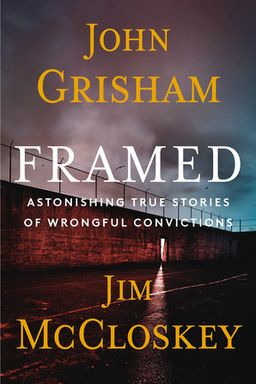
How do innocent people end up in prison for decades? This book argues that wrongful convictions are not freak accidents; they are the foreseeable outputs of a machine. That machine runs on coercive interrogations, tunnel vision, junk forensics, incentivized witnesses, suppressed evidence, and racial bias, all reinforced by institutional incentives to close cases fast. You see the pattern across cases as different as the Norfolk Four (Dan Williams, Joe Dick, Eric Wilson, Derek Tice), Clarence Brandley in Texas, Kennedy Brewer and Levon Brooks in Mississippi, Joe Bryan in Texas, and Ellen Reasonover in Missouri.
You watch detectives like Glenn Ford in Norfolk deploy time, deception, and threats to manufacture confessions; you observe medical examiners like Steven Hayne and dentists like Michael West deliver confident but unfounded forensics; you see prosecutors sit on exculpatory tapes (Reasonover) or a confession and DNA linking the actual perpetrator (Omar Ballard in Norfolk). Then you follow the human cost: 16, 26, 34 years lost; near-executions; lifelong trauma. The core claim is stark: unless you reform the inputs, the outputs will keep repeating.
The recurring playbook
Cases start with a hunch and a single-suspect focus. Investigators push long, unrecorded interrogations, fake polygraph results, and promises of leniency until someone breaks. In Norfolk, Williams was questioned for over fifteen hours, told he failed a polygraph he passed, and fed details later repeated in his statement (like a shoe planted by Detective Gray). Derek Tice and Joe Dick followed similar paths. Even Omar Ballard, the actual killer, described Detective Ford steering him to name accomplices.
Next, pattern-based forensics or thin motive fill the evidentiary hole. In Joe Bryan’s case, a 40-hour–trained analyst, Robert Thorman, transformed specks on a flashlight into a gripping story of back-spatter and a midnight drive in a storm, while prosecutors inflated life insurance numbers and floated innuendo about secret lives. In Mississippi, Hayne and West claimed bite-mark matches and high-volume autopsy certainty that crumbled under scientific review (later echoed by the National Academy of Sciences 2009 report and NIST reviews).
Institutional blind spots
Tunnel vision and confirmation bias keep the machine humming. In Norfolk, DNA pointed to a lone offender, but police clung to an Eight-Man Gang theory. In Conroe, Texas, Brandley, a Black janitor, became the immediate target; white janitors avoided even basic testing while prosecutors and judges met ex parte and stuffed racial bias into jury selection. In Savannah, political pressure after racial tensions pushed police to secure quick convictions of three soldiers (Mark Jones, Kenny Gardiner, Dominic Lucci), while a critical Yamacraw report about other violent actors was suppressed for years.
Suppression and snitches
When the record looks shaky, suppression and incentivized testimony take center stage. Ellen Reasonover’s prosecutors kept taped statements in their files that contradicted the State’s witness; Judge Hamilton later listed 21 ways those tapes would have gutted the case. In New Iberia’s Hasty Mart murder, prosecutors traded immunity for shifting, sometimes coerced stories (Mary Arceneaux; Herbert Derouen, IQ 61), while confessions from the real perpetrators were marginalized. The pattern is consistent: hide exculpatory leads, reward helpful witnesses, and let the adversarial process limp along half-blind.
The human toll and belated repair
You feel the damage: Joe Bryan loses 34 years and visits his wife’s grave only after parole; the Savannah soldiers miss 26 years of life milestones; the Norfolk Four suffer stigma even after conditional pardons; Brandley comes within a week of execution. Exonerations arrive through DNA (the Chester case’s 2021 straw and semen testing finally pointing to Unknown Male #1), relentless advocacy (Centurion, Innocence Project), media spotlights (60 Minutes, The New Yorker), and judicial courage (Judge Perry Pickett for Brandley; the Georgia Supreme Court; the Texas Court of Criminal Appeals vacating Kerry Cook’s conviction in 2024).
What you can do
As a juror, lawyer, or policymaker, you can demand recorded interrogations from start to finish, validated forensic methods with known error rates, open-file discovery, and independent forensic oversight. You can support conviction integrity units, evidence preservation statutes, and services for exonerees (medical, mental health, job training). And you can learn to spot the red flags—fake polygraph failures, long unrecorded gaps, pattern-based expert overreach, and undisclosed witness deals—before they harden into a wrongful verdict.
Key claim
False confessions appear in roughly a quarter of DNA exonerations; when paired with junk forensics and Brady violations, they turn suspicion into decades of loss.
(Note: The book’s critique aligns with wider scholarship from the Innocence Project and the National Academy of Sciences. See also Balko and Carrington’s work on Hayne and West, and NAS 2009 on pattern forensics.)